Content
For fabrication engineers, procurement specialists, and industrial workshop managers, selecting an MMA welding machine requires technical evaluation beyond basic specifications. Manual Metal Arc (MMA) welding, also known as Shielded Metal Arc Welding (SMAW), remains a cornerstone process for structural steel, pipeline construction, and heavy fabrication. This article provides an engineer-level analysis of power source characteristics, duty cycle engineering, and selection criteria for bulk buyers.
A mma welding machine converts input power to a controlled welding current. Modern units fall into distinct technology categories, each with specific performance characteristics that affect arc stability, efficiency, and application suitability.
Transformer-based machines use copper or aluminum windings to step down voltage. Inverter-based units employ high-frequency switching circuits. For applications requiring a heavy-duty MMA welding machine for industrial use, inverter technology offers superior power efficiency and arc control.
Different working environments demand specific power source characteristics. Workshop installations prioritize duty cycle, while mobile applications emphasize portability and input power flexibility.
Engineering specifications determine whether an MMA welding machine meets production requirements. Professional buyers must evaluate parameters beyond basic amperage ratings.
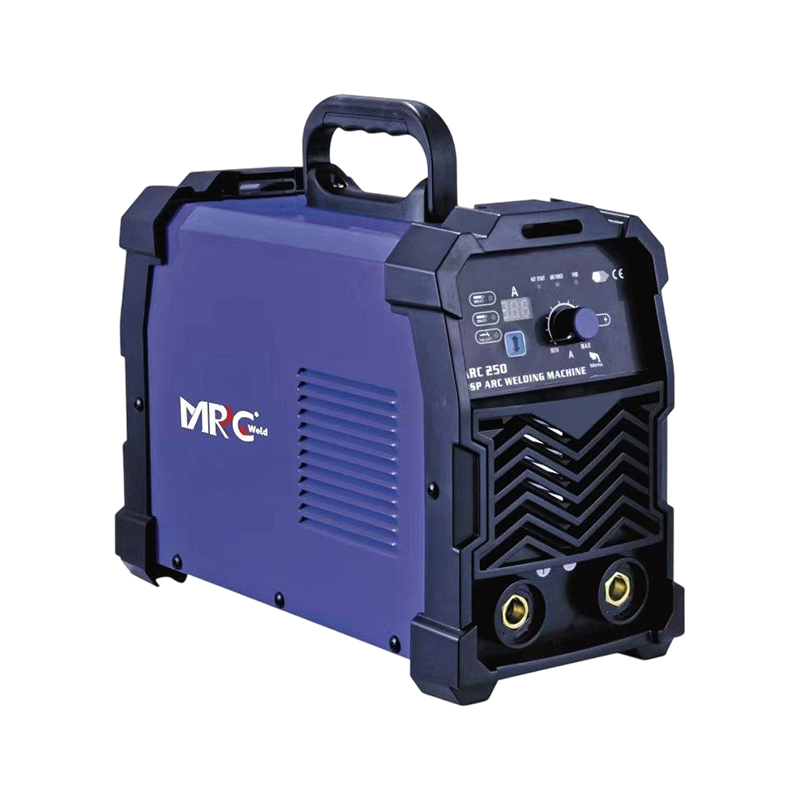
Duty cycle represents the percentage of time a machine can operate at rated current within a 10-minute cycle without overheating. A 60% duty cycle at 200 amps allows 6 minutes of welding followed by 4 minutes of cooling. Thermal management systems, including fan-on-demand and oversized heat sinks, directly impact real-world performance.
Open circuit voltage (OCV) influences arc initiation characteristics. Higher OCV improves arc starting reliability, particularly with cellulose-based electrodes. Hot start and arc force controls allow operators to fine-tune arc characteristics for specific electrode types.
The following table compares technical specifications across typical machine classes. These parameters help procurement professionals match equipment to application requirements.
| Machine Class | Rated Output | Duty Cycle @ 40°C | Input Power | Typical Electrode Diameter |
|---|---|---|---|---|
| Light Industrial | 140-180A | 30-40% | 230V Single Phase | 2.0-3.2mm |
| Industrial | 200-300A | 60-80% | 400V Three Phase | 2.5-4.0mm |
| Heavy Industrial | 350-500A | 100% | 400V Three Phase | 3.2-6.0mm |
| Pipeline Spec | 250-400A | 100% | 400V Three Phase/Generator | 3.2-5.0mm |
Different electrodes require specific arc characteristics. A well-designed MMA welding machine provides adjustable parameters to optimize performance across electrode classifications.
Rutile electrodes (E6013) operate smoothly with a lower open circuit voltage. Basic electrodes (E7018) require higher OCV and specific arc force settings for optimal performance. Cellulosic electrodes (E6010) demand high OCV and aggressive arc characteristics for deep penetration.
Modern inverter machines provide adjustable arc force control, which increases current during short-circuit conditions to prevent electrode sticking. The hot start function provides an initial current boost for easy arc initiation. These features significantly improve weld quality, particularly for less experienced operators using a portable MMA welding machine for field repairs.
Electrical infrastructure compatibility represents a critical procurement factor. Improper power supply selection leads to circuit breaker tripping, voltage instability, and reduced welding performance.
Single-phase 230V machines suit small workshops and mobile applications. Three-phase 400V systems provide stable power delivery for continuous operation. Generator compatibility requires inverter technology with wide voltage tolerance, typically ±15% of rated input.
Inverter technology achieves a power conversion efficiency of 80-85%, compared to 60-65% for transformer machines. For facilities operating multiple units, the efficiency difference translates to significant operational cost savings. A heavy-duty MMA welding machine for industrial use with an inverter topology reduces energy consumption while delivering superior arc characteristics.
Professional buyers implement verification protocols to ensure equipment meets specified performance criteria. International standards provide frameworks for quality assessment.
Relevant standards include IEC 60974 for arc welding equipment safety, ISO 9001 for quality management systems, and CE marking for European market compliance. Procurement specifications should reference these standards as minimum requirements.
Quality verification typically includes output calibration verification, duty cycle testing at rated ambient temperature, and insulation resistance measurement. Documentation requirements should include test reports and calibration certificates traceable to national standards.
Continuous industrial applications require machines with 100% duty cycle at the maximum rated current. For fabrication shops with intermittent welding cycles, 60% duty cycle at 200-250 amps typically provides adequate performance. The duty cycle specification must be verified at 40°C ambient temperature, as some manufacturers rate performance at lower temperatures for inflated specifications.
Inverter machines use high-frequency switching technology that reduces weight by 60-70% compared to transformer units. Inverter technology provides better arc stability, lower energy consumption, and adjustable arc force controls. Transformer machines offer simpler construction and potentially longer service life in dusty environments, but lack advanced arc control features and weigh significantly more.
Electrode diameter determines required amperage. A general guideline is 30-40 amps per millimeter of electrode diameter. A 3.2mm electrode requires approximately 100-130 amps. The machine must provide stable output within this range with an adequate duty cycle for the intended weld length. For ac/DC MMA welding machine for specialty alloys, consider that different materials require specific electrode types and amperage ranges.
Inverter-based machines with wide input voltage tolerance can operate from generators. The generator must provide stable voltage with adequate capacity, typically 1.5-2 times the machine's rated input kVA. Transformer machines generally do not perform well with generator power due to voltage sensitivity and higher inrush current requirements.
1. How Does an MMA Welding Machine Work? Explanation of the basic operation and princi...
View MoreI. Introduction Welding is a fundamental process in countless industries, joining metals ...
View MoreI. Introduction: The key guardian of car energy In the complex system of the car, the Car...
View MoreWhat is car battery charger fully Car battery charger fully is a device specially used to...
View More
Copyright © TAIZHOU MIRACHER MACHINERY CO., LTD. All Rights Reserved Custom Industrial Welding Equipment Manufacturers



 English
  Português
 sale@miracher.com
 0086-15988994409