The plasma cutter has become one of the most strategically important tools in modern industrial fabrication — combining speed, precision, and material versatility in a way that no other thermal cutting technology can fully replicate. From automotive body panel trimming and structural steel fabrication to HVAC ductwork, shipbuilding, and on-site construction repair, the plasma cutter delivers clean, fast cuts through virtually any electrically conductive material at a fraction of the operating cost of laser systems and with far greater material thickness range than waterjet alternatives in the lower-cost segment.
Yet the commercial and technical breadth of the plasma cutter market — spanning handheld portable units under 5 kg through to automated CNC plasma cutting tables producing multi-meter structural components — means that selecting the wrong specification for a given application results in poor cut quality, excessive consumable consumption, inadequate duty cycle for production demands, or avoidable compliance failures in export markets. This article provides a comprehensive, specification-grade analysis of plasma cutter technology across its full engineering and commercial dimensions, designed to support B2B procurement managers, workshop engineers, and industrial distributors in making technically informed sourcing decisions.
What Is a Plasma Cutter and How Does It Work?
The Physics of Plasma Cutting
A plasma cutter operates on the principle of creating a fourth state of matter — plasma — by ionizing a compressed gas stream with a high-energy electrical arc. The process begins when the plasma torch establishes an arc between the electrode (cathode) and either the workpiece (transferred arc mode, used in all cutting applications) or the nozzle (non-transferred arc, used only for non-conductive material applications). The arc energy heats the gas stream — compressed air, nitrogen, oxygen, or argon-hydrogen blends depending on application — to temperatures of 15,000–25,000°C, fully ionizing the gas molecules and creating a high-velocity plasma jet.
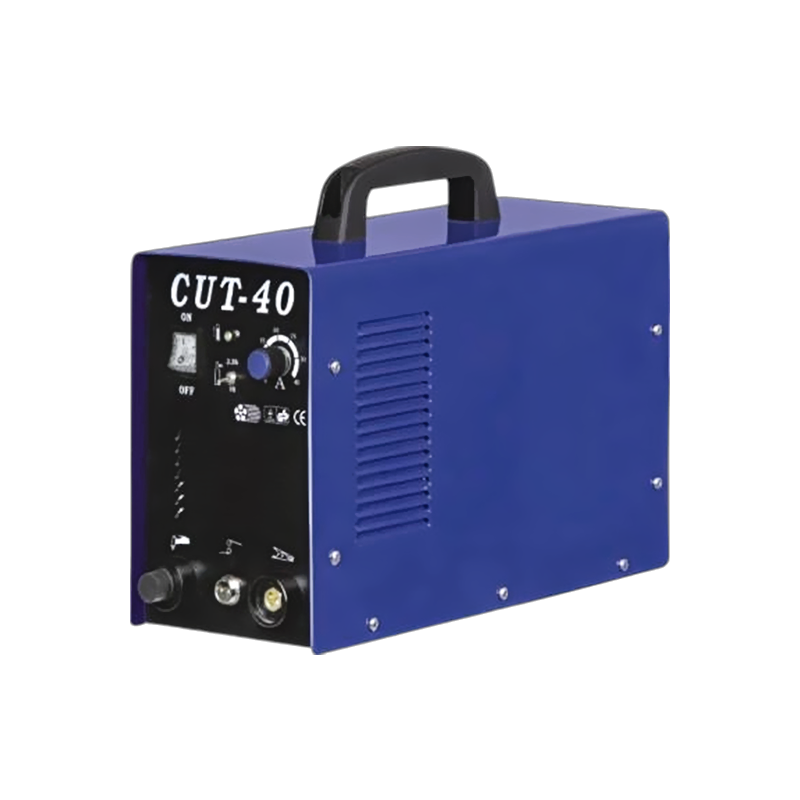
This plasma jet performs two simultaneous functions: the thermal energy melts the workpiece metal at the cut point (melting point of steel: ~1,538°C; stainless steel: ~1,400–1,450°C; aluminum: ~660°C — all well below the plasma jet temperature), while the kinetic energy of the high-velocity gas stream (exit velocity: 300–600 m/s at the nozzle orifice) expels the molten material downward through the kerf, producing a clean cut with minimal heat-affected zone (HAZ) compared to oxyfuel cutting.
| Cutting Technology |
Max Material Thickness |
Cut Speed (10mm steel) |
HAZ Width |
Typical Operating Cost |
Conductive Materials Only? |
| Plasma cutting |
Up to 160mm (industrial) |
500–2,500 mm/min |
0.5–2.0 mm |
Low–Medium |
Yes |
| Oxyfuel (flame) cutting |
Up to 300mm |
250–600 mm/min |
2.0–6.0 mm |
Low |
Ferrous only |
| Fiber laser cutting |
Up to 30mm (steel) |
1,000–10,000+ mm/min |
0.1–0.3 mm |
High |
Yes |
| Waterjet cutting |
Up to 200mm |
50–500 mm/min |
None (cold cut) |
High |
No |
Key Components of a Plasma Cutter System
Understanding the function of each subsystem in a plasma cutter enables buyers to evaluate product quality beyond surface specifications:
- IGBT inverter power module: The IGBT (Insulated Gate Bipolar Transistor) inverter is the core electrical architecture of modern plasma cutters. Operating at switching frequencies of 20–100 kHz, the IGBT inverter converts single-phase or three-phase AC mains input to a precisely controlled DC cutting output with response times measured in microseconds. Compared to conventional silicon-controlled rectifier (SCR) transformer-based power sources, IGBT inverter designs achieve power conversion efficiencies of 85–92% (vs. 60–75% for transformer-based units), reduce unit weight by 60–70%, and provide far superior arc stability through fast closed-loop current regulation. The IGBT module brand and specification — major suppliers include Infineon Technologies, Mitsubishi Electric, and Fuji Electric — is the primary indicator of power module quality and long-term reliability.
- Plasma torch (torch body, nozzle, electrode, shield cup): The torch converts electrical and pneumatic energy into the plasma cutting arc. The electrode (typically hafnium-tipped copper for air plasma) is the primary consumable — hafnium oxidizes progressively during cutting, creating a pit that degrades arc stability and cut quality when pit depth exceeds 1.5–2.0 mm. The nozzle (copper with precision orifice, typically 0.8–1.6 mm diameter) shapes the plasma jet — worn or damaged nozzles cause double-arc, plasma deviation, and increased dross. Consumable quality is the most significant ongoing operating cost variable in plasma cutter ownership.
- Gas supply system: Compressed air is the standard gas for general-purpose plasma cutters, providing an economical and widely available cutting medium. Required supply pressure: 4.5–6.5 bar at the torch inlet (higher pressure for higher-current machines). Moisture contamination in the compressed air supply is the primary cause of electrode and nozzle premature failure — compressed air must pass through a moisture separator (coalescing filter, minimum 40 µm) before entering the torch. The distinction between units requiring an external compressor and air plasma cutters with built-in compressors is a critical application selection variable discussed in Section 5.
- Control system and arc initiation: High-frequency (HF) arc initiation uses a high-voltage spark (2,000–5,000 V, 2–3 MHz) to ionize the gas and establish the pilot arc without physical contact — enabling cutting of expanded metal, grating, and other non-continuous surfaces. Contact (scratch) start systems initiate the arc through momentary electrode-to-workpiece contact — lower electromagnetic interference but limited to solid, continuous workpiece surfaces. Pilot arc (non-transferred) capability enables cutting without continuous workpiece contact — essential for CNC automation and cutting expanded metal where arc transfer would otherwise be interrupted.
How to Read a Plasma Cutter Specification Sheet
Cutting Current and Material Thickness
Current output — measured in amperes (A) — is the fundamental performance parameter of any plasma cutter. The relationship between current, material type, and achievable cutting thickness follows predictable engineering relationships, though the specific values vary by machine design quality:
| Parameter |
30A Unit |
50A Unit |
60A Unit |
80A Unit |
100A Unit |
| Rated cut — mild steel |
8 mm |
12 mm |
16 mm |
20 mm |
25 mm |
| Max pierce — mild steel |
6 mm |
10 mm |
14 mm |
18 mm |
22 mm |
| Rated cut — stainless steel |
6 mm |
10 mm |
12 mm |
16 mm |
20 mm |
| Rated cut — aluminum |
5 mm |
8 mm |
10 mm |
14 mm |
18 mm |
| Typical input power |
3.0 kW |
5.5 kW |
7.0 kW |
10 kW |
14 kW |
A critical distinction that specification sheets frequently obscure: rated cutting thickness (the thickness at which the machine produces a clean, production-quality cut at rated speed) vs. maximum severance thickness (the maximum thickness the machine can physically cut through, typically at greatly reduced speed and with degraded cut quality). Always specify against rated cutting thickness for production applications — a machine rated at 16mm severance may produce acceptable cut quality only to 10mm in practice.
Duty Cycle — The Most Misunderstood Specification
Duty cycle (DC%) specifies the percentage of a 10-minute cycle during which the machine can operate at rated current without triggering thermal protection. A plasma cutter rated at 60A / 60% duty cycle can operate at 60A for 6 minutes continuously, then requires 4 minutes of cooling before the next 6-minute arc-on period. Key engineering implications:
- Production volume impact: At 60% duty cycle, a machine produces 6 minutes of cutting per 10-minute period — equivalent to 36 minutes of cutting per hour. A 100% duty cycle unit produces 60 minutes of cutting per hour. For high-volume fabrication shops running continuous cutting operations, the duty cycle difference between a 60% and 100% rated unit at equivalent current directly translates to throughput capacity and machine count requirements.
- Duty cycle testing temperature: IEC 60974-1 specifies that duty cycle ratings are measured at 40°C ambient temperature. Machines used in hot environments (foundries, outdoor summer use in tropical climates) experience thermal derating — effective duty cycle at 50°C ambient may be 15–25% lower than the nameplate rating at 40°C.
- Current derating for 100% duty cycle operation: Most plasma cutters can be operated at 100% duty cycle by reducing output current below the rated value. Specification sheets for quality machines will specify both the rated current at rated duty cycle and the current available at 100% duty cycle — for example: 60A at 60% duty cycle; 45A at 100% duty cycle.
Input Power and Voltage Compatibility
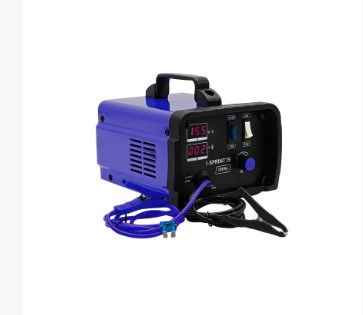
Input voltage compatibility is the most commercially critical specification variable for plasma cutters exported to international markets — and the most common source of warranty failures in incorrectly specified equipment:
- Single-phase 220–240V / 50–60Hz: Standard for units up to approximately 50–60A output. Compatible with standard industrial single-phase supply available in most markets. Suitable for workshops, light fabrication, and portable field applications.
- Three-phase 380–415V / 50Hz (or 460V / 60Hz for US/Canada): Required for high-current units (80A and above) to keep input current within practical cable and socket limits. Three-phase supply provides more stable input voltage and lower current per phase for equivalent power output.
- Multi-voltage (universal input) designs: Premium units feature auto-ranging input circuits (e.g., 85–265V single-phase or 170–460V three-phase) that automatically adapt to available supply voltage without manual reconfiguration — critical for equipment used across multiple geographic markets or powered from generators with variable output voltage. This capability is one of the key parameters in OEM customization requests from international distributors.
- Generator compatibility: For field use with portable generators, the plasma cutter must be compatible with the generator's power quality — including voltage regulation accuracy (±10% of nominal) and waveform distortion (THD <10%). IGBT inverter designs with active power factor correction (PFC) circuits tolerate generator power quality better than older SCR-based designs.
Cut Quality Parameters — Beyond the Specification Sheet
ISO 9013:2017 (Thermal cutting — Classification of thermal cuts — Geometrical product specification and quality tolerances) provides the industry framework for quantifying plasma cutter output quality. Key parameters:
- Perpendicularity and angularity tolerance (u): The maximum deviation of the cut face from perpendicular to the workpiece surface. ISO 9013 defines quality ranges 1–5 (Range 1 being tightest). Plasma cutting typically achieves ISO 9013 Range 3–4 (u = 0.6–1.5 mm on 10mm plate) — better than oxyfuel but below laser.
- Average height of profile (Rz5): Surface roughness of the cut face. Plasma cutting: Rz5 = 10–100 µm depending on current, speed, and material — acceptable for most structural and fabrication applications, requiring light grinding for precision-fit applications.
- Kerf width: The material removed during cutting, determined by nozzle orifice diameter and cutting parameters. Typical kerf width for air plasma: 1.5–4.0 mm depending on current and material thickness. CNC programming must offset the tool path by half the kerf width for accurate finished dimensions.
- Heat-affected zone (HAZ) width: The metallurgically altered zone adjacent to the cut face. Plasma HAZ width: 0.5–2.0 mm for mild steel at standard cutting parameters — significantly narrower than oxyfuel (2.0–6.0 mm), reducing distortion in thin-material applications and preserving material properties closer to the cut edge.
Plasma Cutter for Stainless Steel and Aluminum — Special Considerations
Why Stainless Steel Demands Precise Parameter Control
Stainless steel presents a unique combination of challenges for plasma cutter operators that distinguishes it sharply from mild steel cutting:
- Low thermal conductivity: Austenitic stainless steel (304, 316) has thermal conductivity of approximately 16 W/m·K — less than one-third of mild steel's 50 W/m·K. This means heat generated at the plasma arc concentrates locally rather than dissipating through the workpiece. The result: heat-affected zone temperatures remain elevated for longer, increasing risk of sensitization (chromium carbide precipitation at grain boundaries in 304 at 450–850°C, reducing corrosion resistance) and thermal distortion in thin sheet (below 3mm).
- Oxidation and discoloration: The chromium oxide passive layer on stainless steel that provides corrosion resistance is disrupted by plasma cutting with compressed air — the oxygen in the air reacts with chromium at the cut face and HAZ, producing visible heat tinting (gold, blue, purple, black color progression with increasing temperature). For applications requiring full corrosion resistance retention at the cut edge (food processing equipment, marine fittings, pharmaceutical vessels), nitrogen or argon-hydrogen plasma gas eliminates the oxygen component and minimizes oxidation.
- Recommended parameters for plasma cutter for stainless steel and aluminum:
- 3mm stainless: 25–35A, cutting speed 1,200–1,800 mm/min, air pressure 5.0 bar
- 6mm stainless: 45–55A, cutting speed 600–900 mm/min, air pressure 5.2 bar
- 10mm stainless: 60–70A, cutting speed 350–500 mm/min, air pressure 5.5 bar
- 16mm stainless: 80–90A, cutting speed 180–280 mm/min, air pressure 6.0 bar
Aluminum Cutting — Managing Reflectivity and Conductivity
Aluminum presents different but equally significant challenges for plasma cutter operation:
- High thermal conductivity: Aluminum's thermal conductivity of 205 W/m·K (approximately 4× stainless steel, 13× higher than stainless) means the plasma arc's thermal energy dissipates rapidly through the workpiece — requiring higher current or slower cutting speed to maintain the arc energy density needed for clean cutting. In practice, aluminum cutting typically requires 15–20% higher current settings than equivalent-thickness mild steel.
- Natural oxide layer (Al₂O₃): Aluminum's surface oxide layer (melting point 2,072°C — far above aluminum's 660°C) must be penetrated before the arc can cut the base material. This creates arc initiation challenges and can cause the arc to wander along the oxide surface rather than cutting cleanly. Starting the cut from the edge of the material (rather than piercing) eliminates this initiation challenge for most applications.
- Dross formation: Aluminum's high surface tension in the molten state causes the expelled cut material to adhere to the bottom edge of the cut as "dross" — a common defect that requires mechanical removal for quality-critical applications. Dross formation is minimized by optimizing cutting speed (too slow increases dross; too fast causes incomplete cut) and maintaining clean, unworn nozzle geometry.
- Common defects and prevention:
- Double arc: Caused by worn nozzle (excessive pit depth or orifice enlargement) allowing the arc to transfer to the nozzle body rather than sustaining through the orifice. Prevention: replace nozzle when orifice shows measurable enlargement (>0.2mm above nominal) or after prescribed cut-hours (typically 2–4 hours of arc-on time for standard air plasma nozzles).
- Incomplete cut (lag lines): Caused by excessive cutting speed, insufficient current, or low gas pressure. Diagnostic: increase current 5A or reduce speed 10% — if cut cleans up, the setting was the issue; if not, check consumable condition.
- Excessive HAZ / distortion in thin aluminum (<3mm): Use minimum effective current and maximum practical cutting speed. Consider using a guide rail or standoff guide to maintain consistent torch-to-work distance (nominal 3.0–4.0 mm for most torches) which significantly affects HAZ width.
Portable Plasma Cutter for Metal Fabrication — Field Use Engineering
Weight, Portability, and Power Trade-offs
The portable plasma cutter for metal fabrication market has been transformed by IGBT inverter technology, which has reduced the weight of a 40–50A cutting unit from 25–35 kg (conventional transformer design) to 4–8 kg — a reduction that has fundamentally changed the deployment possibilities for plasma cutting in field maintenance, mobile fabrication, and job-site construction work:
- Weight vs. output power engineering balance: IGBT switching at 20–100 kHz allows the transformer core to be reduced in size by a factor of 100–1,000 compared to line-frequency (50/60 Hz) transformer designs — the physics of transformer core size scaling inversely with switching frequency. A 5 kW IGBT inverter operates with a transformer core of approximately 50–100 cm³; an equivalent 5 kW line-frequency transformer requires 5,000–10,000 cm³. This is the fundamental engineering reason why a 50A IGBT inverter plasma cutter can weigh under 6 kg while delivering equivalent cutting performance to a 25 kg SCR transformer unit.
- IP protection ratings for field use: Per IEC 60529, the IP (Ingress Protection) rating of the plasma cutter enclosure defines its suitability for different field environments:
- IP21: Protected against vertically falling water drops — minimum acceptable for workshop use; not suitable for outdoor use in rain
- IP23: Protected against water spray at up to 60° from vertical — suitable for light outdoor use and most workshop environments
- IP34: Protected against solid objects >2.5mm and water spray from any direction — suitable for construction site use and dusty environments
- IP54: Dust-protected and water-spray resistant — recommended for demanding outdoor and construction site deployment
- Power factor and generator compatibility: IGBT inverter plasma cutters with passive power factor correction (PFC) achieve power factor of 0.70–0.80. Units with active PFC circuits achieve PF 0.90–0.99 — reducing the apparent power drawn from a generator by 15–25% at equivalent real power output. For field use where generator capacity is the limiting resource, active PFC is a significant operational advantage.
Air Plasma Cutter with Built-in Compressor — Advantages and Limitations
The air plasma cutter with built-in compressor integrates the compressed air supply within the same enclosure as the power source — eliminating the need to source, transport, and maintain a separate industrial air compressor:
- Built-in compressor output characteristics: Typical integrated compressor in a portable air plasma cutter with built-in compressor unit: piston compressor, free air delivery (FAD) 40–80 L/min, maximum pressure 5.5–6.5 bar. This is adequate for continuous cutting at 20–30A current levels (air consumption: 35–55 L/min at 4.5 bar) but may be marginal for sustained cutting at higher currents (50A requires approximately 70–100 L/min at 5.0 bar).
- Pressure stability comparison: Industrial rotary screw compressors (FAD 200–500+ L/min) provide substantially more stable supply pressure under sustained cutting demand than piston-type built-in compressors, which exhibit pressure cycling (±0.5–1.0 bar) that causes arc instability and inconsistent cut quality at maximum current settings. For production cutting applications where consistent cut quality is the priority, external industrial compressor supply is preferred.
- Ideal use cases for built-in compressor units: On-site maintenance and repair where portability is paramount; occasional cutting tasks in locations where compressed air supply is unavailable; small workshops with limited infrastructure investment. Not recommended as the primary cutting platform for production fabrication requiring consistent cut quality at maximum rated current.
- Moisture management in built-in systems: Piston compressors generate higher moisture content in compressed air than rotary screw compressors — the built-in moisture separator must be maintained (drained every 1–2 hours of use) to prevent torch consumable contamination and premature failure.
Safety Standards for Portable Plasma Cutting Units
- IEC 60974-1:2021 (Arc welding equipment — Welding power sources): The primary international safety standard for plasma cutter power sources. Covers insulation class (Class F, 155°C maximum winding temperature), protection against electric shock (IP2X minimum for internal components under normal operation), thermal protection (auto-shutdown at specified component temperature), and output no-load voltage limits. CE marking for EU market requires documented compliance with IEC 60974-1 and supporting test reports from an accredited laboratory.
- EMC compliance — EN 55011 (CISPR 11): Plasma cutter IGBT switching circuits generate conducted and radiated electromagnetic interference. EN 55011 Class A (industrial environment) limits apply to equipment sold for use in industrial locations. Class B limits (more stringent, for residential/commercial environments) apply to equipment sold for general use. Radiated emission testing at an accredited EMC laboratory (3m or 10m semi-anechoic chamber) is required for CE marking — a cost that varies from USD 3,000–15,000 per product variant depending on frequency range and test configuration.
- High-frequency arc initiation and electromagnetic interference: HF arc start circuits (2–3 MHz, 2,000–5,000 V) generate broadband RF interference that can disrupt sensitive electronic equipment including CNC control systems, medical devices, and PLCs in the vicinity. For use in environments with sensitive electronics, contact start (non-HF) or pilot arc (non-HF initiation) configurations should be specified.
OEM Plasma Cutter Manufacturer Custom Voltage — Procurement Framework
What True OEM Customization Capability Requires
For distributors and industrial buyers sourcing from an OEM plasma cutter manufacturer, the depth and technical credibility of available customization separates genuine development partners from catalog resellers with cosmetic labeling changes:
- Voltage adaptation — engineering depth matters: True multi-voltage adaptation requires redesign or selection of the IGBT inverter input stage — specifically the rectifier and bulk capacitor bank sizing, PFC circuit (if applicable), and IGBT gate drive circuit parameters — to accommodate the target input voltage range safely and efficiently. A machine "adapted" to 110V by simply changing the power cable and claiming compatibility — without redesigning the input stage for lower-voltage, higher-current operation — will draw excessive input current at 110V (P = V × I: same power at half voltage requires double current), causing cable overheating, circuit breaker tripping, and potential IGBT failure. Request documentation of the input stage design changes for any claimed voltage adaptation.
- Functional module customization: Credible OEM plasma cutter manufacturer custom voltage providers support the following functional modifications:
- Pilot arc (non-transferred arc) addition/removal — required for CNC automation and expanded metal cutting
- Post-flow gas time adjustment (0–30 seconds programmable) — extends electrode life in intermittent cutting applications by cooling the electrode tip after arc extinction
- Remote current control interface (0–10V analog or potentiometer) — enables integration with CNC height control systems
- Arc OK signal output (digital, 24V or dry contact) — provides CNC controller confirmation of stable arc establishment before motion begins
- Soft-start current ramping (current ramps from pilot arc level to set cutting current over 0.2–1.0 seconds) — reduces piercing dross on thick plate
- Certification support for target markets: Each export market has mandatory safety and EMC certification requirements:
- EU: CE marking — requires IEC 60974-1, EN 55011, EN 60974-10 (EMC for arc welding) compliance, technical file, and Declaration of Conformity
- Australia/New Zealand: SAA (RCM mark) — ACMA registration + AS/NZS 60974-1 compliance
- Canada: CSA certification — CAN/CSA-E60974-1 compliance via CSA-accredited laboratory
- China domestic: CCC (China Compulsory Certification) — GB 15579.1 compliance via CNCA-authorized laboratory
- Russia/CIS: EAC (Eurasian Conformity) — TR CU 010/2011 and TR CU 020/2011 compliance
TAIZHOU MIRACHER MACHINERY CO., LTD. — OEM Manufacturing Profile
TAIZHOU MIRACHER MACHINERY CO., LTD. (MSCI), located in Taizhou, Zhejiang — one of China's most significant manufacturing centers for electrical and mechanical equipment — has built its technical identity around the integration of engineering depth and commercial flexibility in the industrial welding and cutting equipment sector.
The company's core product portfolio spans three major categories: welding machines (manual arc / MMA, MIG/MAG, TIG, automated welding equipment), plasma cutters (including IGBT inverter air plasma cutters across 30–100A output range), and supporting industrial equipment (air compressors and industrial heaters) — giving OEM customers a single-source capability for complete workshop equipment programs rather than requiring separate supplier relationships for each equipment category.
MSCI's manufacturing infrastructure — intelligent production equipment, precision inspection systems, and a team of senior engineers — supports a quality management system certification framework that ensures traceability and consistency across production lots. The company's designation as a Custom IGBT Inverter Air Plasma Cutter Supplier and China IGBT Inverter Air Plasma Cutter Factory reflects a focused investment in the inverter technology platform that defines modern plasma cutter performance.
The company's OEM/ODM customization capability — covering voltage adaptation (110V/220V/380V/440V and multi-voltage universal input), functional module configuration, and market-specific certification support — enables distributors in Southeast Asia, the Middle East, and Europe to develop product offerings precisely matched to their market's electrical infrastructure, regulatory requirements, and application profile. The full lifecycle service system — pre-sales technical consultation, installation and commissioning guidance, and after-sales maintenance support — provides the commercial infrastructure that international distributors require to operate branded equipment programs with confidence.
Supplier Qualification Checklist for OEM Plasma Cutter Sourcing
- Quality management system: Request current ISO 9001:2015 certificate with scope statement explicitly covering design, manufacture, and testing of plasma cutting equipment. Verify certificate issuing body is an IAF-accredited certification body.
- IGBT module traceability: Request Bill of Materials (BOM) extract confirming IGBT module brand (Infineon, Mitsubishi, Fuji — tier-1 suppliers), part number, and rated parameters (collector-emitter voltage VCES, collector current IC, junction temperature Tj max). Substitution with unbranded or counterfeit IGBT modules is a significant quality risk in lower-cost plasma cutter production.
- Sample qualification protocol: Minimum test program for pre-production sample approval:
- Output current accuracy: measure actual output at all current settings vs. dial indication — maximum deviation ±5%
- Duty cycle verification: operate at rated current continuously, verify thermal cutout activates at or above rated duty cycle
- IP rating verification: conduct IP test per IEC 60529 relevant method
- EMC pre-compliance scan: radiated and conducted emissions measurement at accredited laboratory to confirm within EN 55011 limits before committing to full CE certification testing
- Cut quality benchmark: cut 10mm mild steel, 6mm stainless steel, and 5mm aluminum plate at rated parameters — measure kerf width, perpendicularity, and surface roughness against ISO 9013 specification




 English
  Português
 sale@miracher.com
 0086-15988994409