Content
You set a 200 A MIG welder to 190 A on a 3 mm steel joint. The machine nameplate says 200 A at 60% duty cycle. Six minutes into the pass, the fan spins harder and the output cuts out. Inside that 10-minute test window, the machine expects 6 minutes of welding and 4 minutes of cooling. Pull the trigger again and you are forcing the inverter to work outside its designed thermal envelope.
Every welding machine has a duty cycle rating for a reason. Knowing why it must never be exceeded is the difference between an inverter that runs for five years and one that fails in five weeks.
A duty cycle is the number of minutes in a 10-minute interval that a welding machine can run at its rated output amperage without exceeding its thermal limit. The IEC 60974-1 standard carries out this measurement at 40 degrees C ambient temperature, with nominal input voltage and the output set to the marked current.
So a 60% duty cycle at 200 A allows 6 minutes of welding and requires 4 minutes of cooling at that current. If you drop the output, the duty cycle rises. A 200 A machine rated 60% typically reaches 100% duty around 155 A, because lower current produces less heat in the IGBT module, the transformer and the rectifier stack.
| Output Current | Duty Cycle | Continuous Welding Time | Rest Time Required |
| 155 A | 100% | 10 min | 0 min |
| 200 A | 60% | 6 min | 4 min |
| 233 A | 40% | 4 min | 6 min |
| 250 A | 30% | 3 min | 7 min |
The inverse relationship is why experienced operators always read current and duty cycle together instead of looking at maximum amperage alone. A machine promoted as 250 A may only hold that level for 30% of the test window.
Crossing the duty cycle does not give a clean shutdown on most inverter machines. It starts a cascade: heat generation outpaces heat rejection and each internal component crosses its design threshold in sequence.
IGBT modules degrade first. The junction temperature limit for industrial IGBTs is around 150 degrees C, and thermal cycling damage is cumulative. For every 10 degrees C rise above the rated limit, the expected life of the power module drops by roughly half. This damage does not appear on the display. It shows up as unstable arc output over weeks or months.
DC link electrolytic capacitors fail second. Data sheets rate them for 2000 to 5000 hours at 85 degrees C. At 105 degrees C that life drops to one quarter. Capacitor failure produces voltage ripple, erratic arc behavior and eventually a non-repairable main board.
Transformer and choke windings are third. The enamel coating on the copper softens or melts at elevated temperature. Shorted turns develop and the transformer cannot be repaired at component level. Most manufacturers classify this as a full board replacement, and the cost outweighs the value of many entry-level machines.
The thermal overload function is the machine's last line of defence. It is not a safeguard against slow degradation. Running just under the trigger threshold repeatedly still burns through the thermal budget of the IGBT and the capacitors.
The cost is not just a repair invoice. Damage shows up in four places: the machine, the production schedule, the safety record and your consumable budget.
| Cost Category | Typical Consequence | Severe Case |
| Component repair | IGBT module $80 to $200 | Main board replacement, machine scrapped |
| Fire risk | Dust and spatter ignite inside case | Workshop fire, equipment loss |
| Electrical hazard | Insulation breakdown exposes live voltage | Electric shock injury |
| Production downtime | Thermal shutdown mid-weld | Delayed delivery, idle crew |
Fire is the highest risk. Overheated internal components, accumulated dust and loose connections can ignite. A hot case also makes welding spatter stick and build up, and that spatter burns at more than 1200 degrees C.
Electrical safety degrades too. When winding and cable insulation breaks down, the case can become live with input voltage. In a humid workshop this is a shock hazard no PPE can prevent.
Respecting the duty cycle does not mean standing beside the machine and waiting. It means planning the weld sequence so the thermal budget is preserved while the torch stays in your hand.
For MIG work, machines with double pulse and synergic control reduce arc time per weld, which keeps heat down and preserves duty cycle. Taizhou Miracher Machinery Co., Ltd. builds multistation MIG machines with dual voltage input for continuous fabrication work.
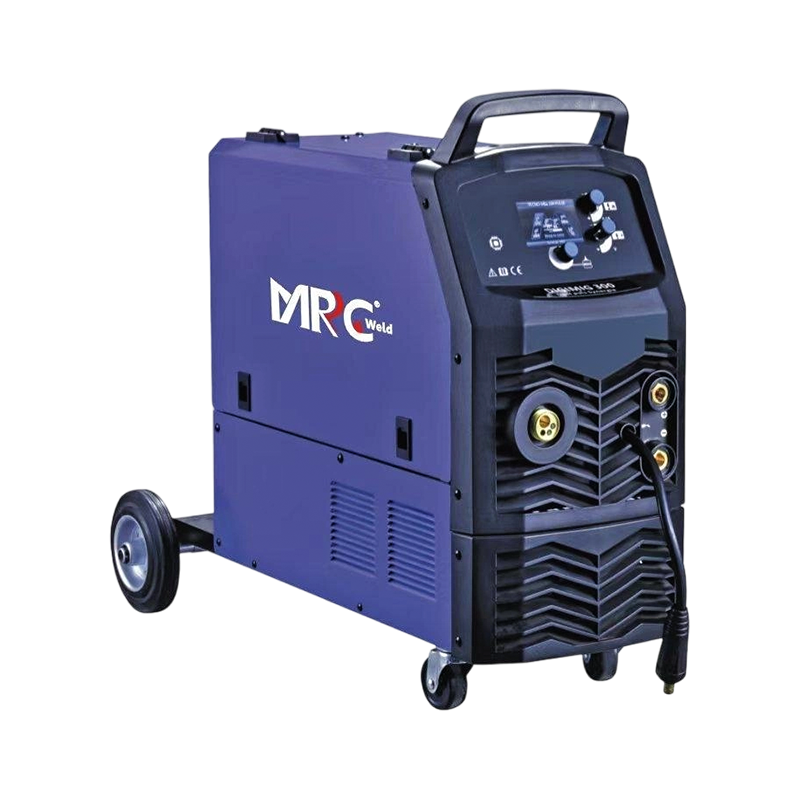 Multi-Station MIG Welding Machine with Dual-Pulse and Dual-Voltage ControlThis multi-station MIG welder combines dual-pulse technology with dual-voltage input for continuous fabrication, delivering low-spatter precision on aluminum and thin-to-medium steel while preserving duty cycle efficiency.View Product →
For stick welding, anti-stick and multi-knob control prevent the electrode from sticking to the workpiece. A stuck electrode pulls maximum amperage and burns through the duty cycle budget quickly.
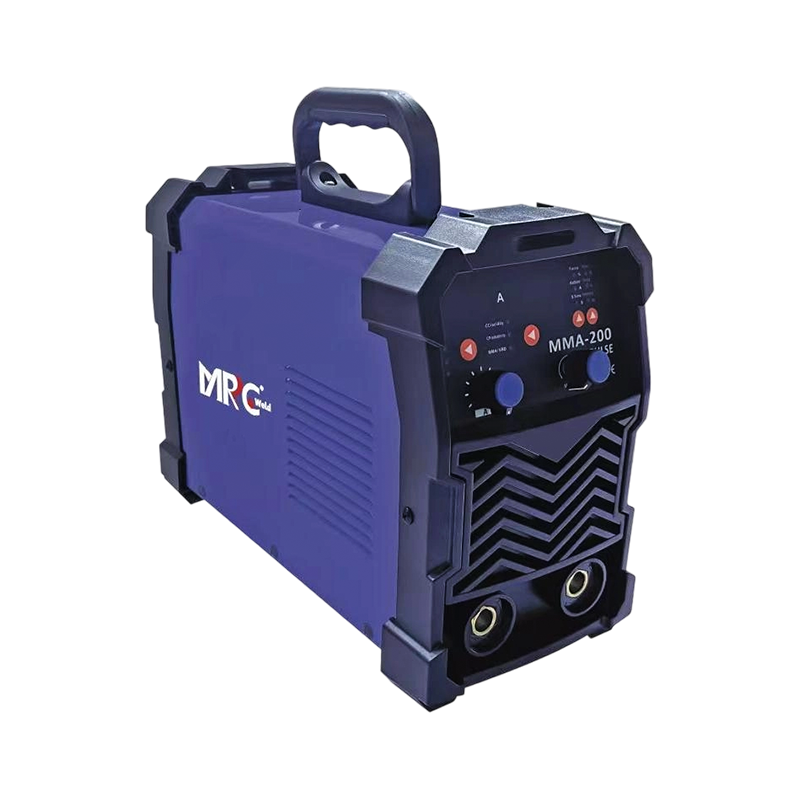 Anti-Stick IGBT Inverter Stick Welder with Multi-Knob ControlThis portable IGBT inverter stick welder features automatic anti-stick protection and multi-knob control to prevent electrode sticking, reducing downtime and maintaining stable arcs for consistent weld quality.View Product →
Duty cycle is expressed differently across welding process categories. MMA stick welding, MIG/MAG, TIG and plasma cutting all carry different thermal ratings even at the same amperage.
For MMA manual arc welding, portable machines are usually rated 60% at maximum output. A 160 A machine at full current gives 6 minutes on and 4 minutes off. The MMA200P/250P inverter welders include anti-stick and multi-knob control that keep the arc stable and the current matched to the joint. For a deeper look at MMA machine selection, read this guide on manual metal arc welding machines.
For MIG/MAG, the wire feeder motor also heats up. Synergic control shortens arc time by optimising voltage and wire speed, which wastes less energy. Double pulse reduces heat input on thin material without lowering deposition rate.
For TIG, torch cooling and high-frequency ignition rating matter more than the transformer duty cycle. A TIG torch rated at 150 A will overheat before many inverter power sources reach their limit.
For plasma cutting, compressed air quality and torch cooling determine continuous cutting time. The CUT60 plasma cutter operates at 60 A output and cuts up to 22 mm, but it must receive clean dry compressed air to maintain its rated cycle.
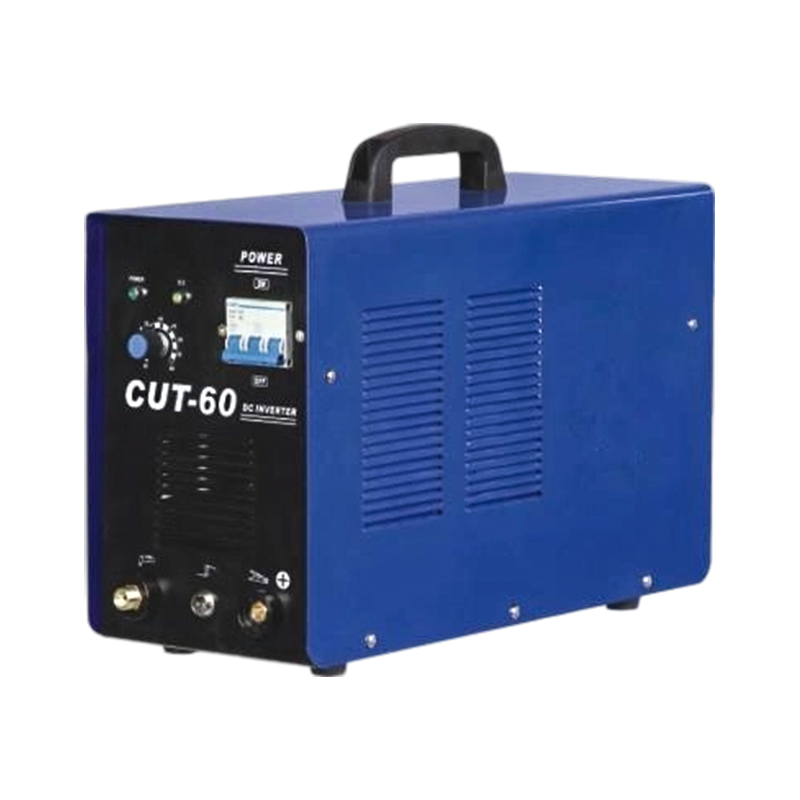 IGBT Air Plasma Cutter 60A for 22mm Cutting CapacityThis 60 A IGBT inverter plasma cutter offers 22 mm cutting capacity with high precision and multi-material compatibility, requiring clean dry compressed air to sustain its rated duty cycle and performance.View Product →
Yes. The duty cycle curve is inverse. On a 200 A machine rated 60%, reducing output to about 155 A typically allows 100% duty. Check the nameplate because the exact current varies between machine models.
Probably not. Thermal overload triggered earlier because ambient temperature, input voltage or ventilation differ from the test condition. If it resets after 10 to 15 minutes of cooling, the protection is working correctly.
Yes. Most manufacturers exclude thermal overload damage from warranty claims. During repair diagnosis they measure IGBT and capacitor stress patterns. If the signature matches duty cycle abuse, the claim is rejected.
It depends on your work pattern. If you weld continuous passes longer than six minutes with less than four minutes of cooling between them, a 100% machine saves money over time. If you do short tack welds and fit-up between passes, a 60% machine is sufficient.
1. How Does an MMA Welding Machine Work? Explanation of the basic operation and princi...
View MoreI. Introduction Welding is a fundamental process in countless industries, joining metals ...
View MoreI. Introduction: The key guardian of car energy In the complex system of the car, the Car...
View MoreWhat is car battery charger fully Car battery charger fully is a device specially used to...
View More
Copyright © TAIZHOU MIRACHER MACHINERY CO., LTD. All Rights Reserved Custom Industrial Welding Equipment Manufacturers



 English
  Português
 sale@miracher.com
 0086-15988994409