Content
A farm tractor cracks a hydraulic bracket in the middle of planting season. A maintenance crew repairing a steel handrail on a building roof has no way to lower it safely. A plumbing contractor has to brace a pipe in a basement with one 220 V socket and no welding machine on site. These are the jobs a portable welder is built for.
A portable welder is a welding power source built with inverter technology, delivering the output of a much larger machine from a package light enough to carry one-handed. The practical benchmark is simple: a capable portable unit weighs roughly 4 to 12 kg, runs on single-phase household voltage, and fits in the back of a service van.
The short answer for most buyers: choose a 120-200 A inverter machine that runs on the voltage available at your worksite, supports the process you use most (MMA, MIG, or TIG), and shows a duty cycle of at least 60% at the current you actually work with.
Inverter technology is the reason portable welders exist. A conventional transformer welder uses a heavy iron core to reduce mains voltage, which is why older machines weigh 30 kg or more. An inverter welder converts incoming AC to DC, switches it at high frequency, and transforms it through a much smaller ferrite core. The result is a lower weight, better arc control, and lower energy consumption in standby.
Three things define whether a welder is genuinely portable. First, weight. A machine that is technically carryable but too heavy to lift up a ladder defeats the purpose; practical portability means roughly 12 kg or less. Second, input voltage. Portable units are designed for single-phase 110 V or 220 V supply, which is why they suit farms, workshops, and construction sites rather than plants with three-phase power. Many current models are dual-voltage and detect the socket automatically. Third, process. Portable welders cover three main processes, and each has a distinct best-use profile.
Manual metal arc welding, or stick welding, is the most forgiving process for a portable machine. It handles rusted, painted, and dirty steel better than any other method, needs no shielding gas, and has the lowest equipment cost of the three processes. For repairs on gates, trailers, machinery, and structural steel, stick welding is usually the right answer.
Most compact stick welders cover 120 to 200 A of DC output, which suits electrodes from 2.5 to 4.0 mm, enough for common repair and fabrication jobs. The MMA120/160/200 Mini portable inverter stick welder is a representative model, light enough for one-hand carry and with a current range that matches workshop electrodes. Electrode selection and technique are covered in more detail in our practical guide to MMA welding machines.
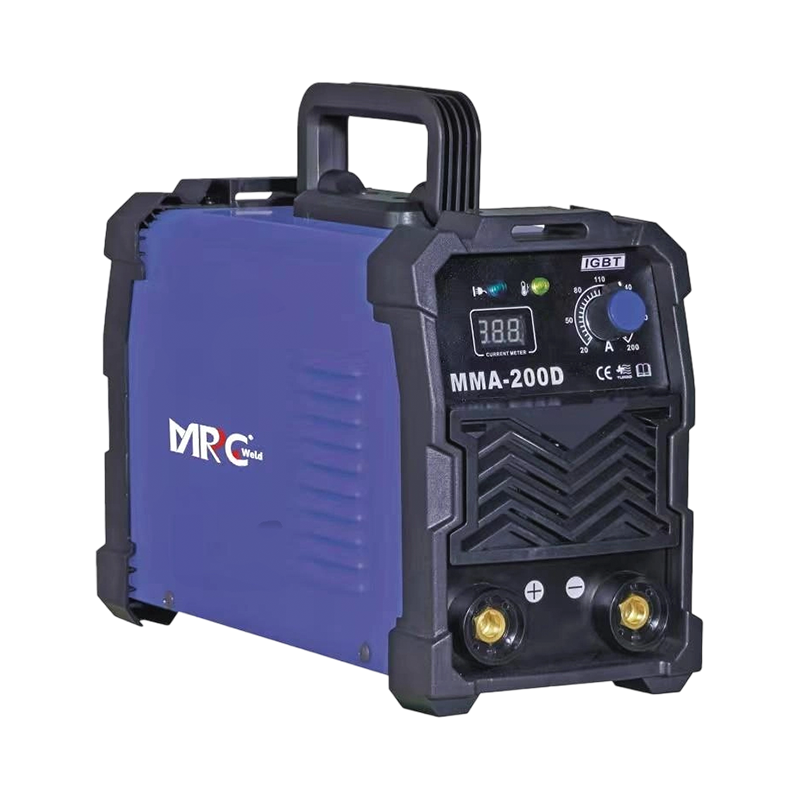 Wholesale MMA-120/160/200 MINI INVERTER MANUAL ARC WELDING MACHINE, PORTABLE DC TAIZHOU MIRACHER MACHINERY CO., LTD is China wholesale MMA-120/160/200 MINI INVERTER MANUAL ARC WELDING MACHINE, PORTABLE DC WELDING MACH...View Product →
When you want the speed of MIG welding but cannot carry a gas cylinder around a site, flux-core welding is the answer. Solid-wire MIG needs shielding gas; flux-cored wire carries its own shielding inside the core and burns without external gas, so it works outdoors even in wind. This is why gasless FCAW is the standard choice for portable MIG machines.
The trade-off is slag to chip off and slightly more spatter than gas-shielded MIG, but the convenience on a roof, a pipeline, or a remote farm outweighs the cleanup. A portable MIG unit in the 120-160 A range feeding from a small 1 kg spool is practical for sheet metal, trailers, and light steel frames. The MIG120 flux-core lightweight portable welder shows how compact this class has become. For the differences between portable and full-size MIG sets, including wire feed speed and synergic control, our in-depth look at MIG welding machines explains the practical points.
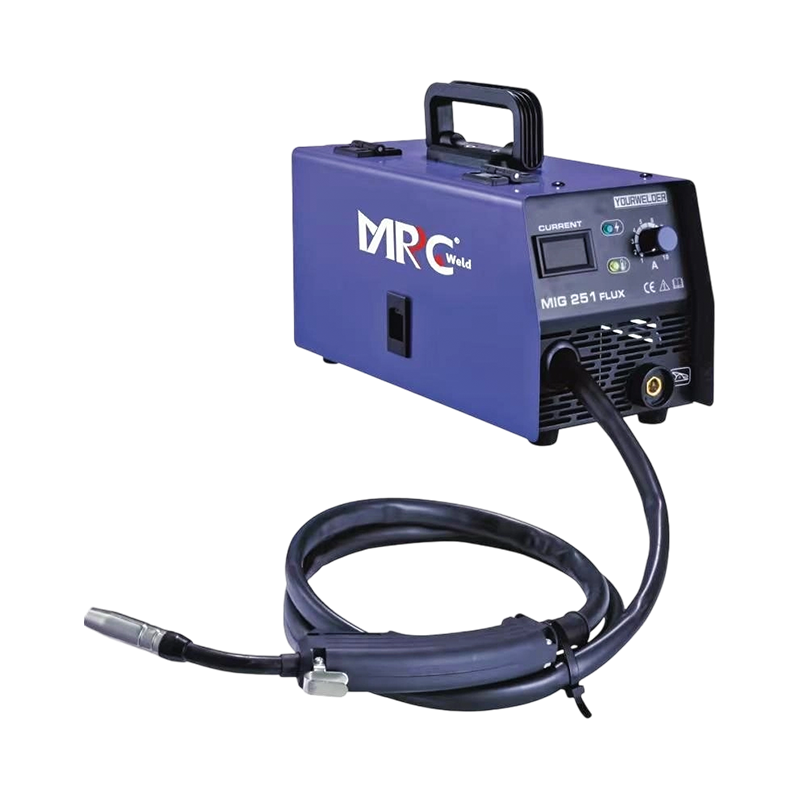 Wholesale MIG-120 FLUX LIGHTWEIGHT PORTABLE 120A DOMESTIC INVERTER WELDING MACHITAIZHOU MIRACHER MACHINERY CO., LTD is China wholesale MIG-120 FLUX LIGHTWEIGHT PORTABLE 120A DOMESTIC INVERTER WELDING MACHINE Manufactu...View Product →
TIG is the process to choose when appearance and precision matter: stainless steel handrails, thin-walled tubing, repair sections on food equipment, and detailed fabrication. Portable TIG machines are almost always DC units with high-frequency start, so the arc begins without touching the tungsten electrode to the workpiece, which prevents contamination.
Many portable TIG welders combine TIG and MMA in one unit, doubling their usefulness. The TIG160/200 portable DC welder with high-frequency ignition is built this way, covering both processes in one case. Note that DC TIG handles steel and stainless steel; aluminum generally requires AC TIG, which is only available on larger machines.
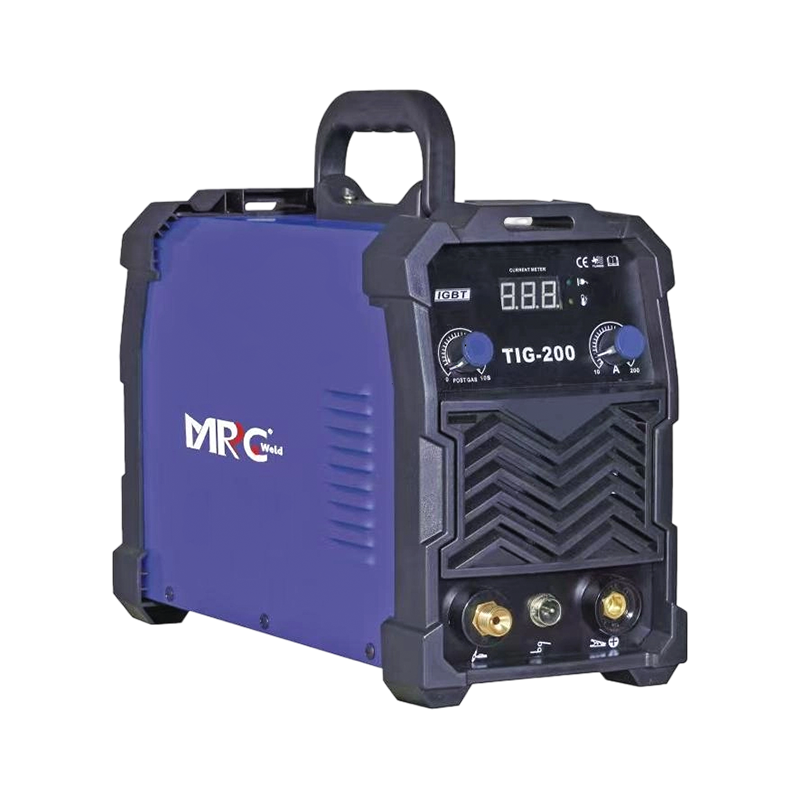 Wholesale TIG/MMA-160/200 PORTABLE DC WELDING MACHINE WITH AN AUTOMATIC HIGH-FRETAIZHOU MIRACHER MACHINERY CO., LTD is China wholesale TIG/MMA-160/200 PORTABLE DC WELDING MACHINE WITH AN AUTOMATIC HIGH-FREQUENCY IGNIT...View Product →
The table below summarizes how the three portable process types compare in normal commercial practice.
| Specification | MMA stick | Flux-core MIG | TIG DC |
|---|---|---|---|
| Typical amperage | 120-250 A | 120-200 A | 160-200 A |
| Input voltage | Single-phase 110/220 V | Single-phase 220 V or dual | Single-phase 220 V |
| Shielding gas needed | No | No (gasless FCAW) | Argon |
| Typical weight | 4-8 kg | 6-12 kg | 6-9 kg |
| Best for | Outdoor repairs, dirty steel | Sheet metal, thin plate | Precision work, stainless |
Read the table with one caution: amperage alone is not a quality rating. A 200 A machine that sustains its maximum for only 20% of the time is less useful than a 160 A machine that sustains its rating at a 60% duty cycle. You are buying sustained work, not just a peak number.
Duty cycle is the percentage of a 10-minute period that a welder can operate at a specified current before thermal protection stops the output. A 60% duty cycle at 160 A means six minutes of welding and four minutes of rest in every 10 minutes at that current. At lower currents, the duty cycle rises, which is why portable welders are perfectly adequate for intermittent repair work but not for continuous production.
Check the duty cycle at the current you actually plan to use. If you run a 120 A machine flat out on thick plate, thermal protection will cut in frequently. For repair and maintenance work, 60% duty cycle at rated current is a sensible minimum.
Portable welders are often the only machine on a site, so they get plugged into whatever socket exists. Dual-voltage models with automatic detection protect the machine when you switch between 110 V and 220 V systems, and wider input tolerance helps when running from a generator or a long extension cord. If you work in more than one market, confirm which input standard the unit you are considering accepts.
Open the box before you buy: the machine should come with a torch or electrode holder, work clamp, shoulder strap, consumables, and for MIG units either a gas valve or clearly documented gasless capability. Buy from a supplier that publishes specifications honestly and stocks spares, because a portable welder is more likely to travel than any other power tool you own.
Portable welders are bought for specific jobs, not as a speculative addition to the workshop.
Evaluate a portable welder the same way you evaluate any tool: by the jobs you do, how often, and what power you have to run it. For maintenance and repair work across farms, workshops, and construction sites, a 120-200 A inverter machine that runs on your local single-phase supply and supports the process you use most will cover the great majority of jobs in the portable class.
Start with the process, confirm the duty cycle, then compare weight and voltage compatibility. If you are still deciding, browse our full line of portable welding machines and filter by process type.
1. How Does an MMA Welding Machine Work? Explanation of the basic operation and princi...
View MoreI. Introduction Welding is a fundamental process in countless industries, joining metals ...
View MoreI. Introduction: The key guardian of car energy In the complex system of the car, the Car...
View MoreWhat is car battery charger fully Car battery charger fully is a device specially used to...
View More
Copyright © TAIZHOU MIRACHER MACHINERY CO., LTD. All Rights Reserved Custom Industrial Welding Equipment Manufacturers



 English
  Português
 sale@miracher.com
 0086-15988994409