Content
An inverter welding machine almost never fails because the arc ran too long. It fails because heat, dust or moisture pushed its internal parts outside the conditions its duty-cycle plate assumes.
Every welder is rated at a duty cycle for a stated ambient temperature, most commonly 40 C under the IEC 60974-1 rating system. A 60% rating at 200 A means six minutes of arc in every ten-minute window at that ambient. That figure is not a suggestion; it is the edge of the thermal design. Run the same machine inside a steel container at 45 C and it has less usable current before the thermal switch opens.
Electrolytic capacitors, which smooth the DC bus in any IGBT inverter, follow a harsh rule of thumb: every sustained 10 C of extra internal temperature roughly halves their expected service life. Dust is the usual delivery mechanism. A mat of grinding dust across a heatsink or a clogged fan filter can add 15 C or more inside the case without any change in the welding current shown on the display.
Five minutes at the start of a shift removes most of what stops a welding machine in the middle of a job.
A workable schedule combines a weekly airflow check, a monthly connection check and a full internal service at 500 arc hours or 12 months, whichever comes first.
| Interval | Task | Tools | Failure it prevents |
| Weekly | Blow out fan filter and louvres with dry air at low pressure | Air line, soft brush | Thermal trips, accelerated capacitor aging |
| Monthly | Re-torque terminal lugs and inspect cable insulation | Screwdriver, visual check | Voltage drop, arcing at terminals |
| Every 3 months | Check drive roll tension, replace contact tips, inspect liner | Pliers, spare tips | Birdnesting, porosity, burnback |
| Every 6 months | Leak-test gas hose, regulator and torch body with soapy water | Leak-test fluid | Porosity, wasted shielding gas |
| 12 months or 500 h | Internal service: clean boards and heatsink, inspect fan and capacitors | Service technician | Sudden board or fan failure mid-project |
On a MIG welding machine, most symptoms blamed on the power source start in the wire feed path or the gas supply.
A liner is a consumable with a service life measured in spools, not years. Replace it when the wire stutters, when the current display jumps on a synergic set, or when the torch cable has been kinked. Match the liner length to the cable length and keep the torch run as straight as the job allows.
Set drive roll tension so the wire can be stopped by pinching it between two fingers; tighter tension flattens flux-cored wire and creates feed surges. Contact tips should match the wire diameter, 0.8 mm wire in a 0.8 mm to 0.9 mm tip, and should be replaced as soon as the bore turns oval.
Shielding gas leaks are cheap to find and expensive to ignore. A flow that will not hold steady between 10 and 15 litres per minute usually means a split hose or a worn regulator seat. On gasless flux-cored work, check polarity and keep a dedicated liner and drive roll set for flux wire.
Synergic machines with auto-feed, such as the MIG200SYN with its LED/LCD display, remove part of the setup risk by matching voltage and wire speed to material and thickness. The feed path still needs the same attention. If you want the process background first, this guide to MIG welding machines covers the fundamentals.
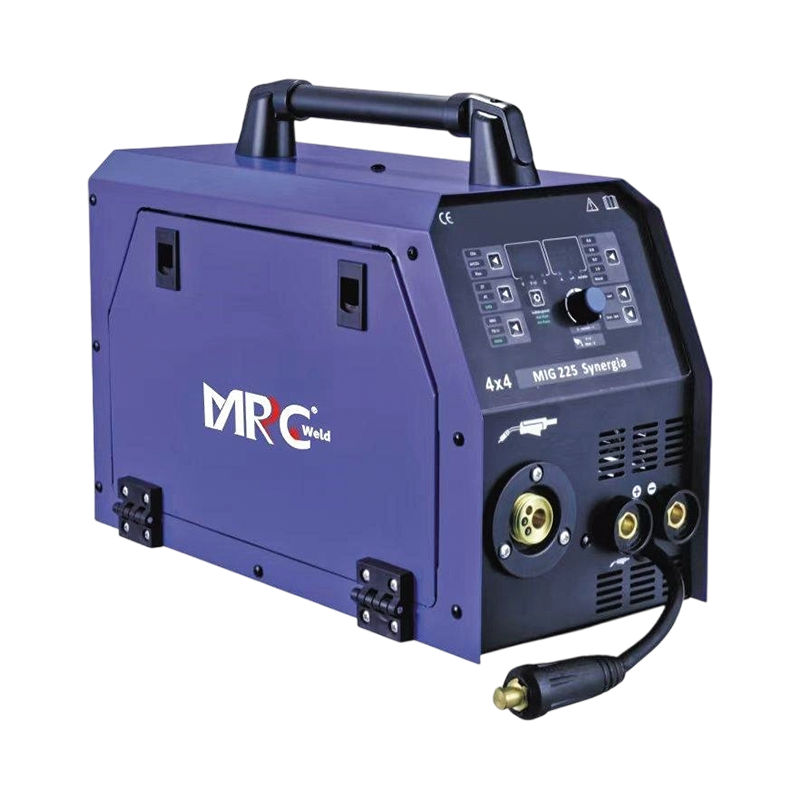 MIG-200SYN (LED/LCD) SYNERGIC MIG WELDER WITH AUTO-FEED LIGHTWEIGHT PORTABLE WELDING SYSTE● Digital display and knob, adjust parameters intuitive and convenient. ● The integrated SYNERGIC parameter optimization system ensures intuitive operation and streaml...View Product →
A stick welder has no wire feed and no gas path, so its maintenance is almost entirely about connections, holders and dust.
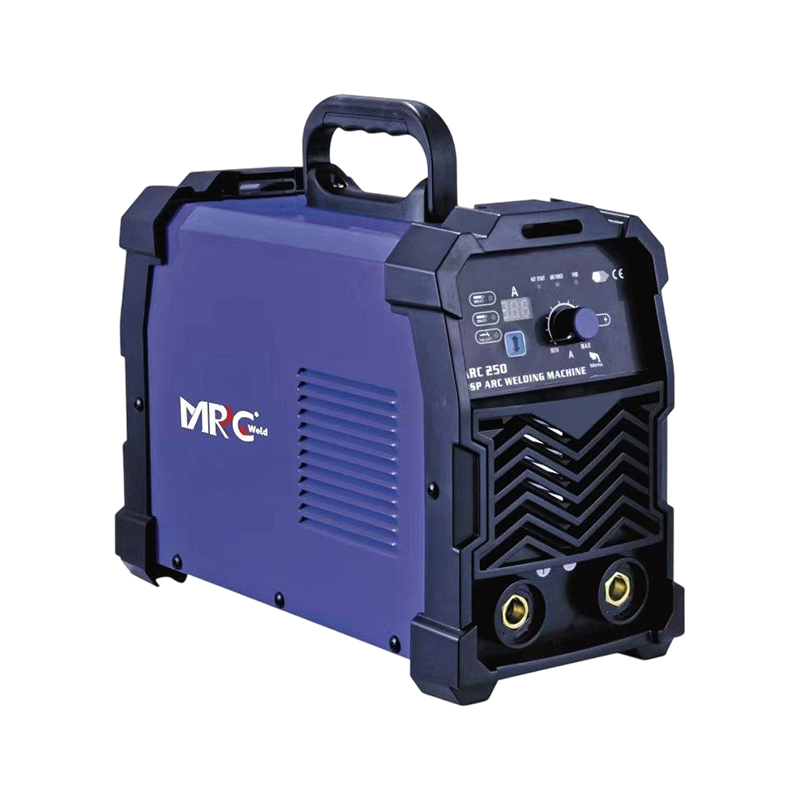 MMA-160/200/250 IGBTINNOVATIVE INVERTER WELDING MACHINE ENERGY-SAVING ANTI-STICK WELDING M● Instant arc ignition with 150% initial current boost for cold metal starts. ● Adopt IGBT inverter technology, stable output current, in line with international safet...View Product →
TIG problems usually appear at the torch before the power source shows any fault: a weak high-frequency start, an unstable arc at low current, or a cup that keeps contaminating the tungsten.
Grind tungsten longitudinally, never across the tip, and match the diameter to the current, roughly 1.6 mm for 70 to 150 A on DC work. Replace collets and collet bodies when the tungsten no longer sits straight, and keep spare ceramic cups on the bench rather than welding with a cracked one.
A fading HF start is normally worn points or a dirty gap inside the machine, which is a technician job rather than a workshop repair. Gas coverage faults are more common and cheaper to fix: a blocked gas lens screen or a torn torch o-ring will produce grey, oxidised welds at any amperage.
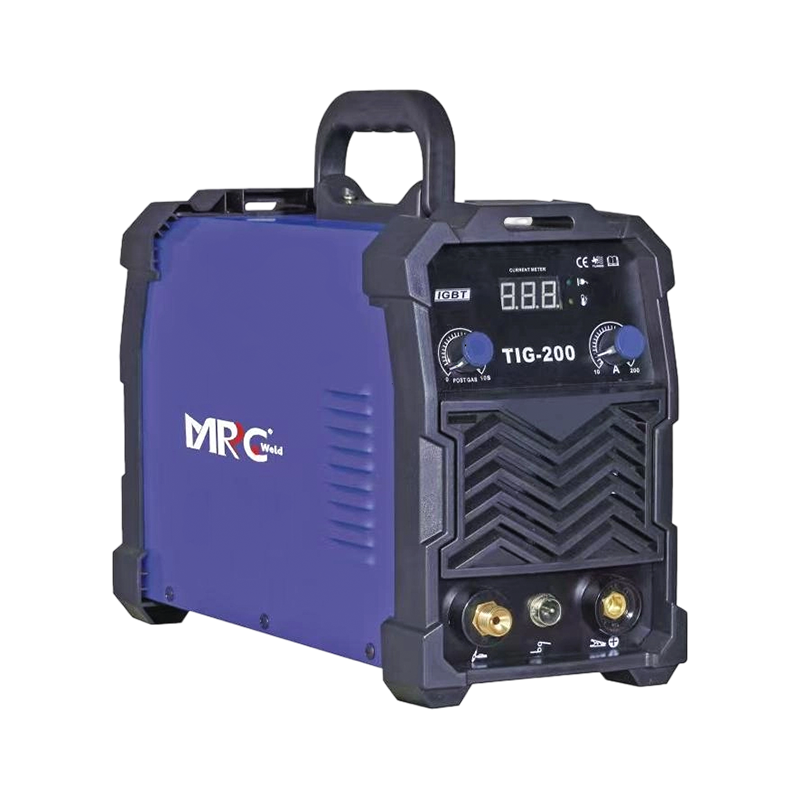 TIG/MMA-160/200 PORTABLE DC WELDING MACHINE WITH AN AUTOMATIC HIGH-FREQUENCY IGNITION● This multi-functional welding equipment features high-precision TIG welding and versatile MMA welding capabilities. ● It supports dual-mode welding, suitable for a c...View Product →
Where a welding machine sleeps decides how long it lives, especially in humid or coastal workshops.
A machine brought from a cold van into a warm humid room should be left to reach room temperature before it is switched on. Powering a condensing board is how a working welder becomes a repair job.
The same discipline applies to cutting equipment on the same site. Moisture and oil in a compressed-air line attack the consumables of a plasma cutter long before the power electronics show any strain, so drain the air line and replace the filter element on the same schedule you use for the welder.
A full internal service is due at 500 arc hours or every 12 months, whichever comes first, with a weekly airflow check and a monthly connection check in between. Any machine that trips thermal protection more than once in a shift should be inspected immediately rather than at the next interval.
Yes, with dry air at reduced pressure, roughly 2 to 3 bar, held at a distance so the nozzle does not drive dust deeper into the boards. Use a soft brush on the heatsink fins and never touch components with the air nozzle. Disconnect power and allow capacitors to discharge before opening the case.
It needs a different kind of maintenance. Humidity and condensation age an idle machine, and electrolytic capacitors benefit from being energised periodically. Run an unused welder for a few minutes each month, keep it in a dry space and inspect cable insulation before every use.
Most perceived power loss comes from outside the power source: a worn contact tip, a partially blocked liner, a dirty work clamp, loose lugs or an undersized extension lead. Check those first, because a genuine drop in power source output usually points to a failing capacitor bank or a fan that no longer moves enough air.
1. How Does an MMA Welding Machine Work? Explanation of the basic operation and princi...
View MoreI. Introduction Welding is a fundamental process in countless industries, joining metals ...
View MoreI. Introduction: The key guardian of car energy In the complex system of the car, the Car...
View MoreWhat is car battery charger fully Car battery charger fully is a device specially used to...
View More
Copyright © TAIZHOU MIRACHER MACHINERY CO., LTD. All Rights Reserved Custom Industrial Welding Equipment Manufacturers



 English
  Português
 sale@miracher.com
 0086-15988994409