Content
Consider two machines on a shop floor: one is a 180 kg transformer unit, and the other is an inverter based welding machine from Taizhou Miracher Machinery Co., Ltd. that weighs under 30 kg while delivering the same 200 A output. Both can weld mild steel, but the way they reach the arc is fundamentally different. That difference affects your duty cycle, your electricity bill, and your welder's stamina by the end of a working day. When a supervisor needs to move a welder between bays or keep a station running longer, the choice is not cosmetic.
The answer is not just portability. At a basic level, an inverter unit takes the 50 Hz or 60 Hz mains supply, rectifies it to DC, then switches that DC at 20-100 kHz through an IGBT. The high frequency allows a much smaller transformer core to handle the same power. The result is a compact power source with a faster arc response and smoother direct current. That smoother DC reduces spatter and arc starting problems, which directly translates into less grinding later.
On an 8-hour shift, a 20% energy saving might not sound huge, but for a workshop running 40 hours a week it can reduce annual electricity costs by hundreds of dollars.
The practical rule is to match the output current to the material thickness and the duty cycle to your shift pattern. For a workshop doing sheet metal repairs, a 160 A portable inverter MMA machine works well. For frames and heavy steel, a 250 A or 300 A MIG with synergic control gives repeatable settings. If you are working in a remote site or a cramped maintenance shop, weight matters more than absolute output. A portable 160 A MMA inverter welder can be carried with one hand and plugged into a standard wall socket. You do not need a three-phase supply or a dedicated 60 A breaker.
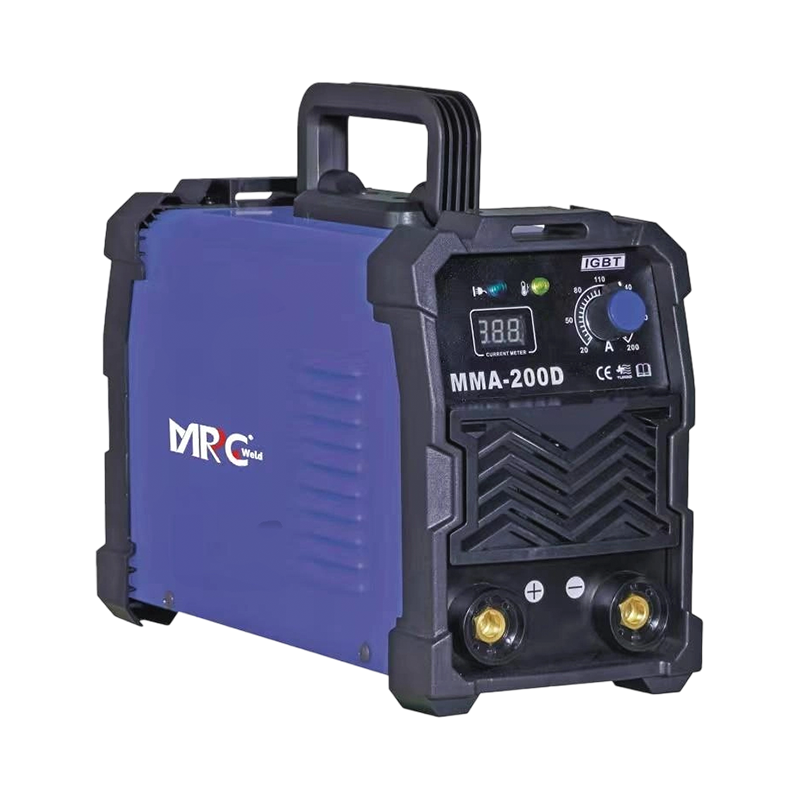 Portable Inverter MMA Welder for Site WorkThis compact 160 A inverter machine weighs as little as 5–10 kg, runs on single-phase power, and features hot start and anti-stick for easy arc initiation—a practical choice for quick repairs and beginner use.View Product →
 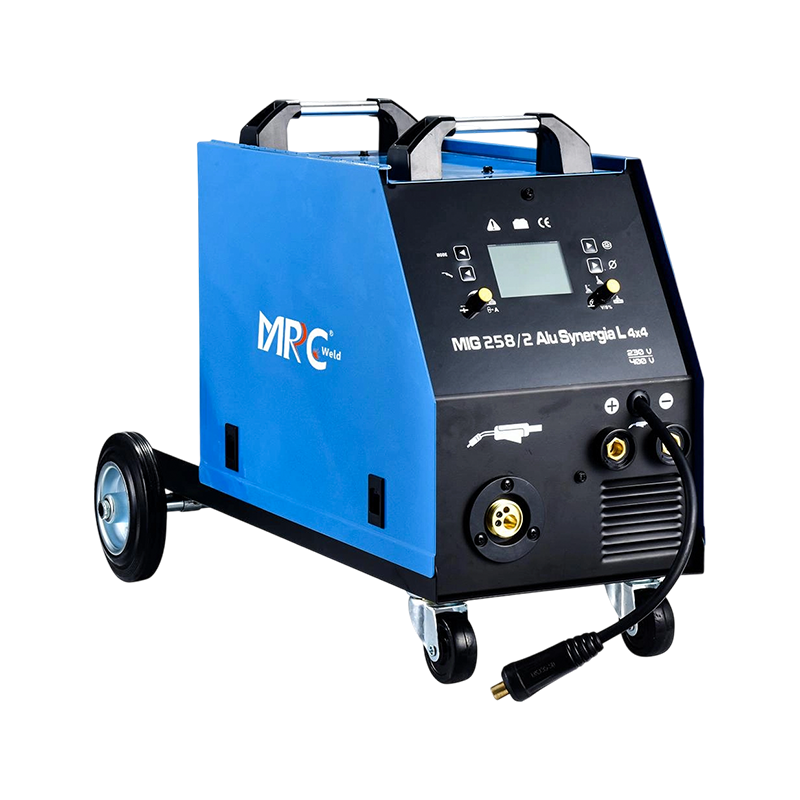 Synergic MIG Welder for Heavy SteelWith 250 A output, adaptive voltage and wire feed, and digital waveform control, this MIG welder reduces spatter and material loss—ideal for structural frames and thick plate welding.View Product →
| Output Current | Typical Material | Recommended Process |
| 120-160 A | 1-6 mm sheet | TIG / MMA |
| 200-250 A | 3-12 mm plate | MMA / MIG |
| 300-350 A | 8-20 mm structure | MIG / Double Pulse |
One more consideration is the spool size. A 1 kg spool machine is convenient for small repairs and quick changeovers, while a 5 kg spool welder keeps production going for longer stretches without downtime. If you switch between thin sheet and thick plate, a dual-voltage synchronous MIG welder with automatic wire feed will save setup time and reduce errors.
120-160 A inverter welders are easy to move and run on 220V single-phase. They are ideal for repair shops, fences, gates and thin-wall pipes.
250-350 A units with double pulse and synergic control allow aluminum and thick steel welding with fewer defects and less rework.
Start with duty cycle. A 200 A machine rated at 60% duty cycle can weld for 6 minutes out of every 10 before it needs cooling. Then check input voltage and phases. Many factory environments have both 220V single-phase and 380V three-phase available, so a dual-voltage model can be tested in any bay. Another spec buyers often overlook is whether the machine accepts a spool gun. If you plan to weld aluminum, look for a MIG machine that supports a 4-roll wire feeder and double pulse. The double pulse function helps control heat input and produces a clean, uniform weld bead, which is critical for thin aluminum sections.
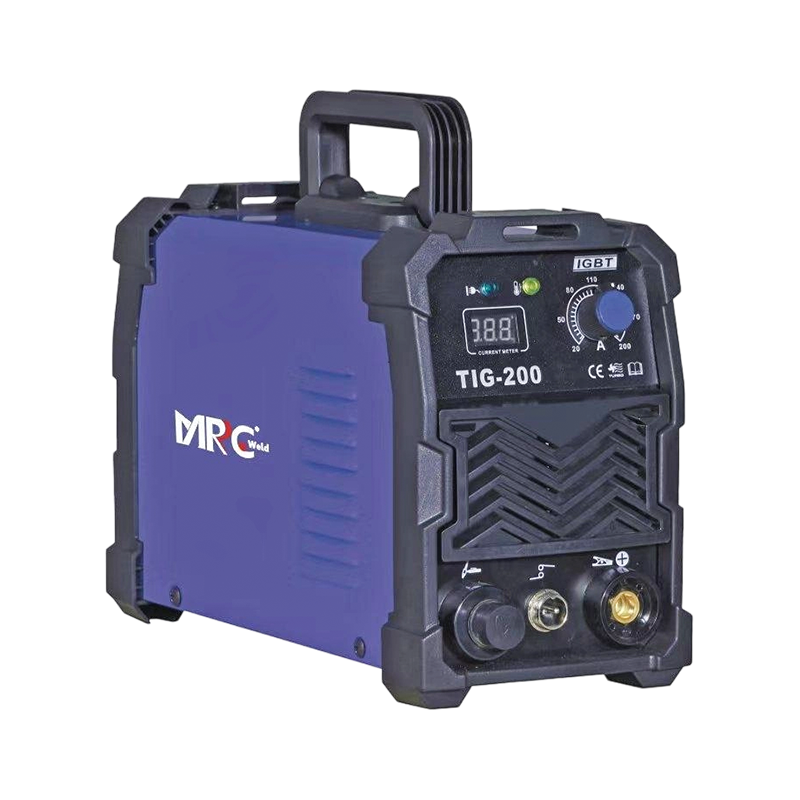 IGBT TIG Welder with Digital ControlFeaturing high-frequency ignition, stable DC output, and a digital display, this TIG welder provides precise current regulation for clean welds on steel, stainless steel, and cast iron, with built-in protections.View Product →
Also compare the cooling system. Some inverter welders use forced-air fans that should be cleaned weekly in dusty environments. Others have thermal overload protection. The machine's protection class, often IP21 or IP23, tells how much dust and splashes it can handle indoors. When a digital display is present, you can lock in voltage and wire speed, which helps the next welder repeat the same good weld. That is exactly what a synergic MIG machine does: it adjusts wire feed to match voltage automatically.
For contractors moving the machine between sites, a built-in handle and a solid case with rubber feet are more practical than a heavy, wheel-mounted transformer unit.
Inverter electronics fail differently than transformer coils. They need clean power, good ventilation, and a supplier who can supply spare IGBT modules and PCBs. Miracher's factory in Taizhou builds and tests its own machines, so you can ask for voltage adaptations, digital displays, or function modules before shipment. Before you commit to a supplier, ask about spare parts availability, the warranty period, and whether the digital display is protected against dust. For a long production line, downtime is the real cost driver.
Check the practical guide to MIG welding machines if you want to see how these machines perform in real fabrication scenarios.
The most expensive machine is the one that stops the line. A few extra dollars for a reliable dual-voltage inverter welder is cheaper than a lost production day.
Duty cycle is the number of minutes out of a 10-minute cycle a machine can weld at rated output. A 200 A inverter welder may have a 60% duty cycle, meaning 6 minutes of welding and 4 minutes of cooling.
Yes. Many inverter models accept 220V single-phase, and some offer dual-voltage capability for 380V three-phase. Check the machine's input voltage range before ordering.
An inverter welder uses high-frequency switching to convert AC to DC with a much smaller transformer, making the unit lighter and more energy-efficient. A transformer welder is heavier and holds a large thermal mass that limits duty cycle.
Clean the cooling fans monthly, keep vents clear of metal dust, and check cables. If an IGBT module fails, a professional can replace it. Correct duty cycle use extends the service life for many years.
1. How Does an MMA Welding Machine Work? Explanation of the basic operation and princi...
View MoreI. Introduction Welding is a fundamental process in countless industries, joining metals ...
View MoreI. Introduction: The key guardian of car energy In the complex system of the car, the Car...
View MoreWhat is car battery charger fully Car battery charger fully is a device specially used to...
View More
Copyright © TAIZHOU MIRACHER MACHINERY CO., LTD. All Rights Reserved Custom Industrial Welding Equipment Manufacturers



 English
  Português
 sale@miracher.com
 0086-15988994409