Content
When a metal fabrication shop in Ningbo accepted an order for 300 aluminum bicycle frames, the first weld pass on 6mm 6061 tube produced porosity on every seam. The problem was not the welder's technique. A conventional 200A MIG welding machine simply could not deliver the rapid current rise and molten pool stirring that aluminum demands. An aluminum welding machine is a welding power source designed specifically for aluminum and its alloys, using fast-changing current output and controlled heat input to counteract aluminum's high thermal conductivity and oxide film. Miracher, operating as Taizhou Miracher Machinery Co., Ltd., builds its aluminum-capable line around double-pulse MIG and pulse TIG units that address these challenges head-on.
Aluminum requires a dedicated welding machine because its thermal conductivity is three to four times that of steel, its oxide film melts at 2072°C, and its coefficient of thermal expansion is twice that of carbon steel. A standard steel MIG unit cannot maintain a stable arc under these conditions.
Those three numbers drive every equipment decision. Aluminum conducts heat away from the weld zone at approximately 234 W/m·K, while carbon steel sits near 46 W/m·K. The arc must deposit heat faster than the base material dissipates it. The aluminium oxide layer, Al2O3, forms instantly on exposed surfaces and melts at 2072°C, far above aluminum's 660°C melting point. Without a stable high-frequency starting waveform, the electrode can stick and the weld pool becomes erratic.
A machine built for aluminum must therefore provide three capabilities: a steep current rise time, a controlled arc starting sequence, and fine-grained heat input adjustment. Inverter-based IGBT power sources meet these requirements because they switch at tens of kilohertz and correct the output within microseconds, which is positively necessary when welding 2mm sheet one day and 10mm plate the next.
Double pulse MIG is the most practical aluminum welding machine configuration because it uses low-frequency molten pool oscillation to reduce porosity and distortion without adding a separate process step.
Inside a double pulse cycle, a high-frequency pulse train controls droplet transfer, while a lower-frequency envelope at roughly 1 to 3 Hz alternates the arc between a strong phase and a weak phase. This periodic change stirs the molten pool, allowing dissolved hydrogen to escape before solidification. In practical aluminum fabrication, a double pulse machine can cut weld porosity by approximately 50% compared to a single pulse source operating at the same average current.
The second benefit is direct control over heat input. Because the low-frequency cycle pauses peak current briefly, the pool can cool in a controlled pattern. This reduces grain growth and lowers residual stress on butt joints. For age-hardenable alloys such as 6061-T6, it also narrows the heat-affected zone, which is where most strength loss occurs.
Synergic control works hand in hand with double pulse. Aluminum wires vary significantly in feeding behavior: 4043 and 5356 have soft, low-friction surfaces that can slip in a two-roller feeder. A synergic system automatically matches wire speed to current, cutting parameter setup time from more than ten manual adjustments to one dial selection.
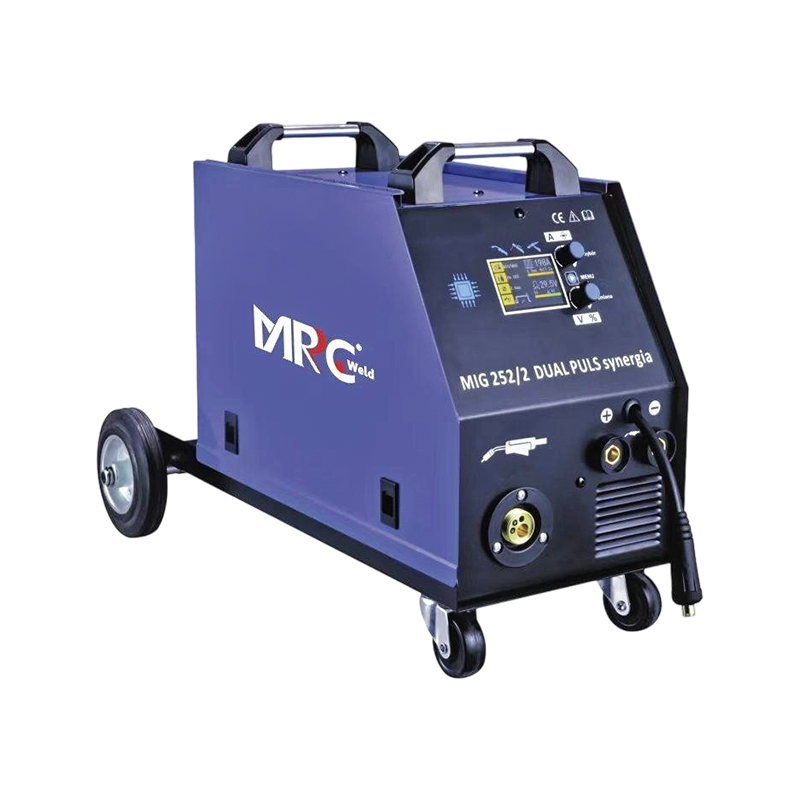 Inverter MIG Welder with Dual Pulse and Synergic ControlThis multi-process machine features microprocessor control and built-in synergy programs, simplifying aluminum welding setup. Its double pulse capability suits production work on thicker aluminum, complementing the discussion on synergic control.View Product →
For production work, MIG double pulse handles aluminum thicker than 3mm at 80 to 120 cm/min, while TIG pulse dominates on 0.5 to 3mm sheet where precision heat control matters more than speed.
One fabrication workshop reported a 4x increase in welding speed by switching from TIG to double pulse MIG on 6mm aluminum plate, with distortion staying within acceptable tolerances for structural framing.
| Test Metric | Double Pulse MIG | TIG Pulse |
| Typical welding speed | 80 to 120 cm/min | 20 to 40 cm/min |
| Heat input control | Good with synergic tuning | Excellent, operator-controlled |
| Operator skill needed | Medium, parameter setup | High, manual torch technique |
| Recommended material thickness | 3mm and above | 0.5 to 3mm |
| Surface preparation | Clean oxide layer required | Thorough cleaning required |
| Consumable cost driver | Wire feeder roller wear | Tungsten electrode replacement |
For welding engineers who want a deeper dive into how MIG machines behave under continuous load and duty cycle stress, Miracher's technical guide to MIG welding machines covers the performance envelope in detail.
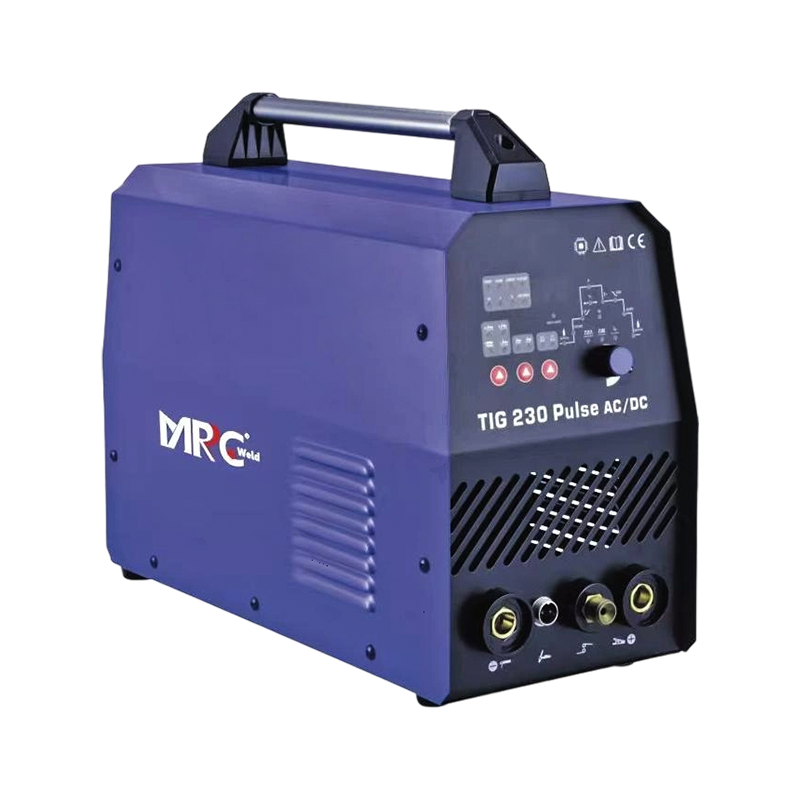 Pulse TIG Welder with AC/DC and Multi-Function ControlThis IGBT-based TIG welder offers AC/DC output and stable arc performance, making it suitable for precise welding. It addresses duty cycle concerns by delivering efficient operation, as discussed in the context of continuous load.View Product →
Duty cycle is the single most overlooked aluminum welding machine specification, and a unit rated at 40% at 40°C will overheat repeatedly when a shop pushes it through a full day of aluminum work.
The duty cycle definition is simple: it represents the number of minutes in a 10-minute window a machine can weld at a specified current and ambient temperature before the protection circuit intervenes. Aluminum welding operates at 150 to 350A depending on plate thickness, and heat builds up quickly in the primary and output rectifiers. At a 40% rating, a machine welds for four minutes and cools for six. On a single large weld joint, that becomes a constant production stop.
For aluminum shops, the practical target is 60% or higher at the current level they plan to use. Dual voltage input and multistation designs also help distribute heat across larger heat sinks. An aluminum welder rated 60% at 250A can run a 6mm fillet weld continuously without derating, which keeps the schedule moving and prevents the quality variability that follows intermittent starts and stops.
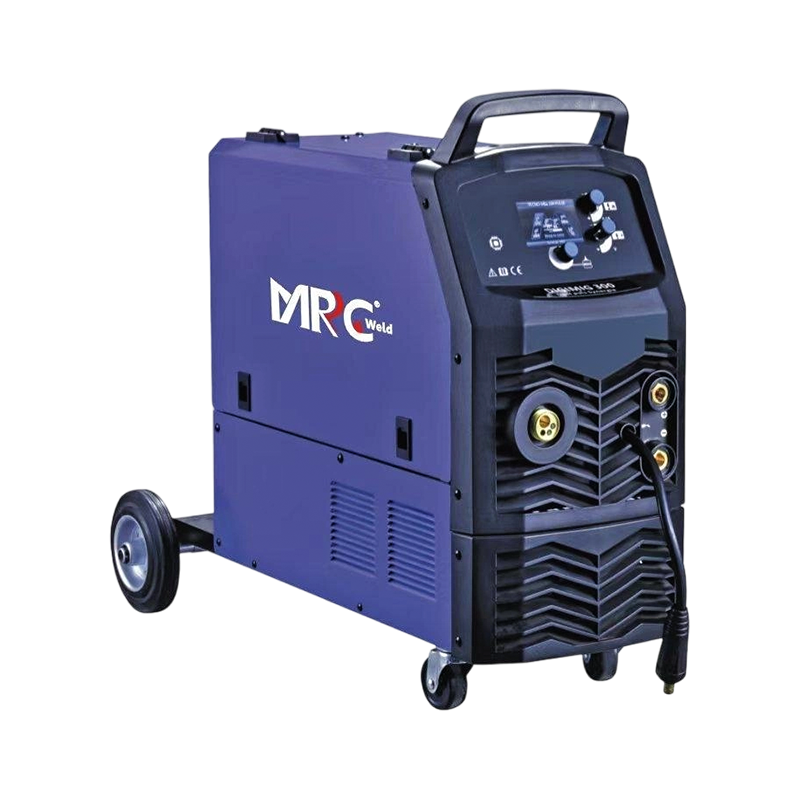 Multi-Station Dual-Voltage Welder with Dual-Pulse MIGThis machine supports high duty cycles and multiple stations, reducing overheating risks and cost per hour. Its dual-pulse technology and digital interface make it a practical choice for production aluminum welding.View Product →
Aluminum welding machine cost performance depends on total lifecycle spend, and a machine with insufficient duty cycle raises hourly running cost by roughly 35% on long production runs because of overheating and rework.
Power, shielding gas, and filler wire represent the largest slice. But the hidden cost appears in downtime. A machine that trips its thermal switch every 20 minutes on a 250A weld forces the operator to wait, rework the restart crater, and often grind the joint again. A four-roller wire feeder and a properly sized nozzle extend uptime, and those items are the ones that determine whether maintenance stays near 15% or climbs above 25%.
Selection decisions also depend on how the power source is set up and tuned. Each of Miracher's aluminum welding machines is shipped with a practical guide to choosing, setting up, and mastering the unit for shop floor conditions.
Six clear criteria determine whether a welding machine is genuinely suitable for aluminum work, and every one of them can be verified from the spec sheet before purchase.
These are the four questions that shop owners and purchasing managers ask most often when selecting an aluminum welding machine for continuous production.
Current requirement is thickness-dependent. A 3mm aluminum plate typically needs 150 to 180A, while 6mm plate needs at least 250A. Miracher's MIG250DP double pulse welder holds a 60% duty cycle at 250A and covers most small to medium aluminum fabrication jobs.
Double pulse is not strictly mandatory, but it is currently the most effective way to reduce porosity. Test data on 6061 aluminum shows a porosity reduction of about 50% when double pulse is engaged compared with single pulse. For any shop running production aluminum work regularly, double pulse plus synergic control is the configuration I recommend without hesitation.
The core difference is current output behavior and wire feeding precision. An aluminum welding machine must deliver a faster current rise time and a more stable arc start. Aluminum conducts heat at roughly three to four times the rate of steel, so the pulsing profile of a standard steel MIG unit cannot control the molten pool effectively.
For 0.5 to 3mm sheet, a TIG pulse machine or a double pulse MIG with lower minimum current gives the best heat control. For anything above 3mm, a double pulse MIG rated at 250A or higher is the practical choice. Miracher's TIG160P and TIG200P handle thin-gauge precision work, while the MIG300DP and MIG350DP units support thick plate and batch production.
If the core material of your project is aluminum, starting with a machine optimized for that metal is more economical than retrofitting a steel welder later.
1. How Does an MMA Welding Machine Work? Explanation of the basic operation and princi...
View MoreI. Introduction Welding is a fundamental process in countless industries, joining metals ...
View MoreI. Introduction: The key guardian of car energy In the complex system of the car, the Car...
View MoreWhat is car battery charger fully Car battery charger fully is a device specially used to...
View More
Copyright © TAIZHOU MIRACHER MACHINERY CO., LTD. All Rights Reserved Custom Industrial Welding Equipment Manufacturers



 English
  Português
 sale@miracher.com
 0086-15988994409