Content
Aluminium oxide melts at 2,072 degrees Celsius while the base metal melts at 660 degrees Celsius. That 1,412 degree gap is the reason a welding machine configured for steel produces porosity and burn-through on the first aluminium job. A purpose-built aluminium welding machine does not add more power; it uses pulse control, wire feed stability and duty cycle to shape the arc around the heat behaviour of aluminium. This guide explains what those specifications do, how to choose between MIG and TIG, and what to verify before you spend money.
A steel-rated machine drives a continuous arc into a pool that dissipates heat too quickly. The result on aluminium is unstable penetration, spatter and inconsistent bead shape. The machine has to deliver power in controlled pulses and maintain an arc that cleans the oxide layer before the filler metal can fuse. Pulse MIG, for example, cycles current between a high peak value and a low background value, which is the cleanest definition of how an aluminium welding machine controls heat input.
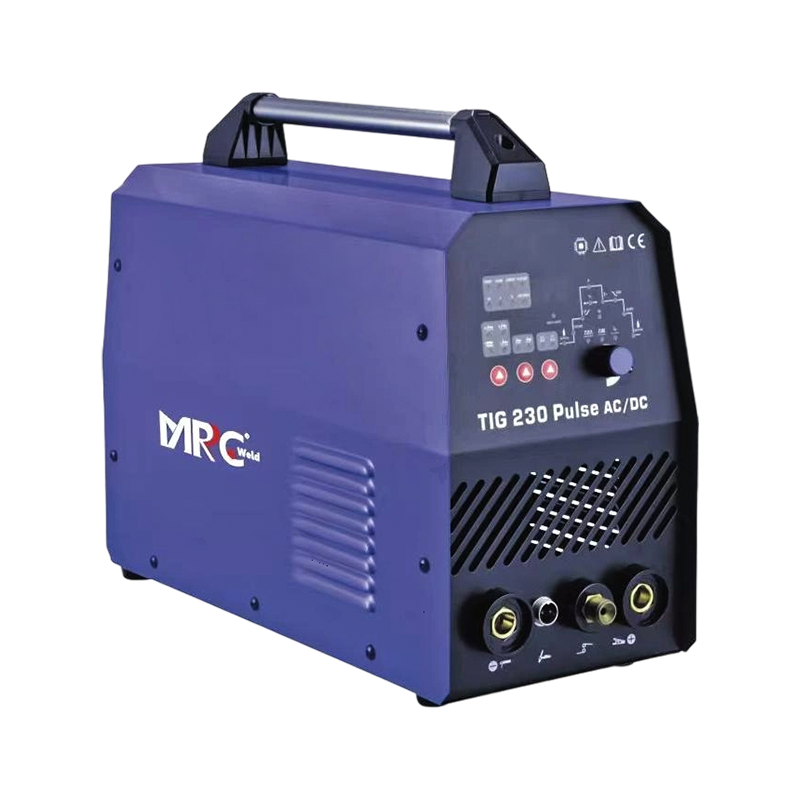 TIG-160P/200P IGBT INVERTER WELDING MACHINE PULSE DC/AC MULTI-FUNCTION KEY CONTROL● Supports multi-process welding. ● Incorporates advanced inverter technology to deliver premium output quality and optimized energy efficiency. ● AC/DC output capabil...View Product →
Why the rejection rate jumps
Most aluminium rejects are not wire problems. They are machine-selection problems emerging from an arc that cannot be shaped around the thermal profile of the material.
Pulse MIG is the practical default for fabricators producing structural components, trailers and multi pass seams, because it deposits metal faster. AC TIG is better for thin wall tubing, precision repairs and cosmetic welds where heat input must stay low. If you run a mix of 1 mm panels and 6 mm structural sections, the right machine is one with enough continuous output to cover both ranges without dropping duty cycle.
Pulse MIG
AC DC TIG
Deposition rate by process on 4 mm aluminium
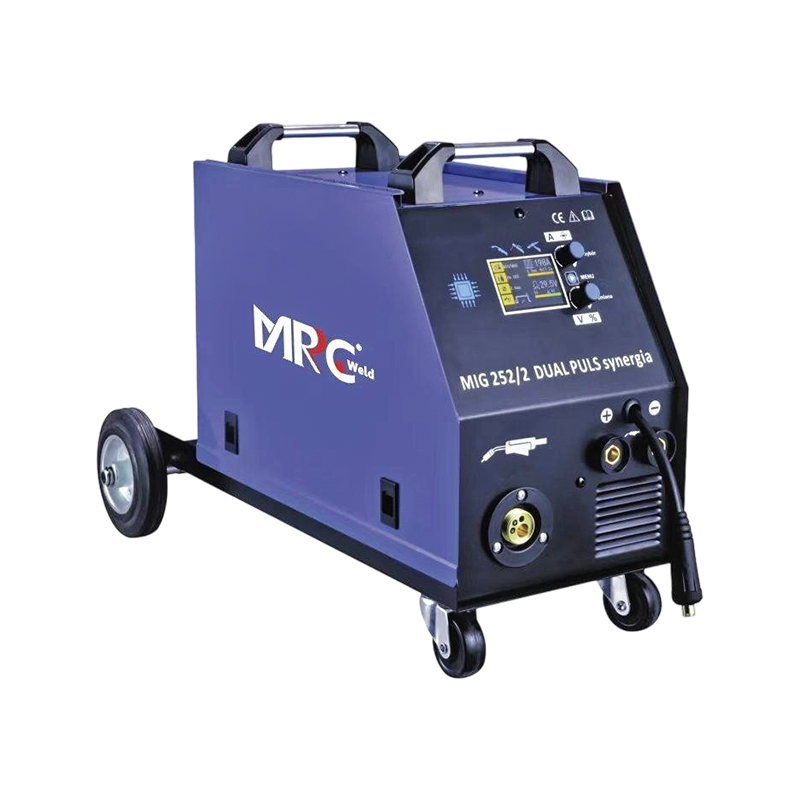 A INVERTER WELDING MACHINE MIG-250DP (LCD) DOUBLE PULSE WELDER● Microprocessor-controlled multi-process welder. ● Built-in synergy programmes. ● Adjustable gas outflow time. ● Adjustable pulse rate.View Product →
For most workshops producing 2 to 5 mm aluminium components, a 250 A double pulse MIG machine is the most cost effective single purchase.
Amperage only tells you the maximum potential of the machine. For aluminium, the useful specifications are the ones that affect arc stability, heat input consistency and wire feeding. These are the five that matter on a technical data sheet.
| Specification | What it controls | Practical impact |
| Amperage range | Current density and penetration | 1.5 mm needs 50 to 60 A; 6 mm needs 180 to 230 A |
| Synergic pulse logic | Voltage and wire feed coordination | Keeps the arc stable when operator settings change |
| Duty cycle at rated amperage | Continuous work time before shutdown | 60% at 250 A allows multi pass welding with cooling breaks |
| Wire feed stability | Feeding consistency on soft wire | Four roll feed or spool gun reduces burnbacks and birdnesting |
| Spool gun readiness | Handling aluminium wire over long distances | Prevents feeding problems in long torch runs |
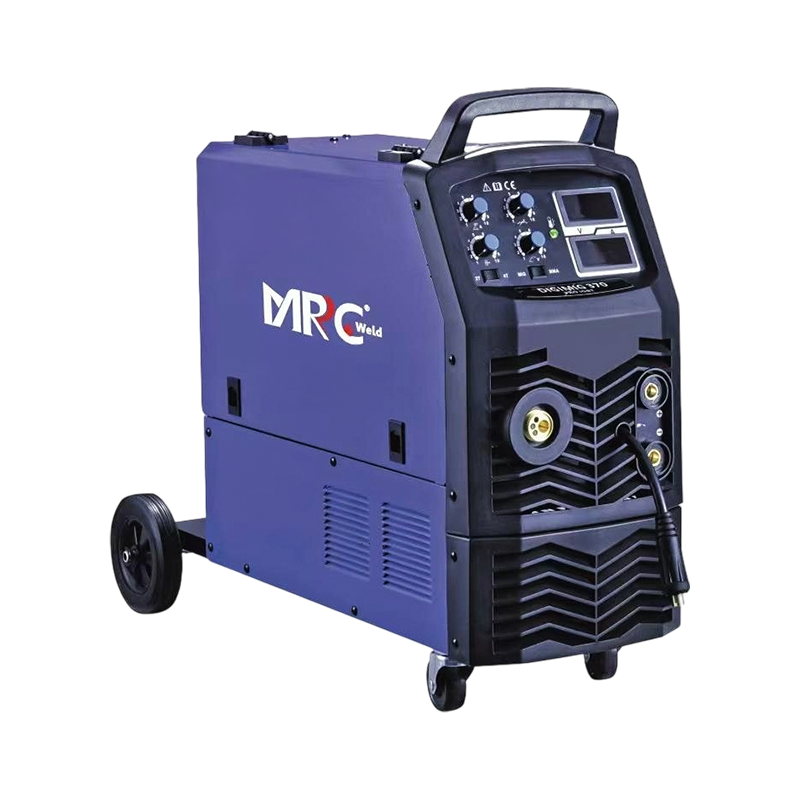 INVERTER MIG-250/300/350 MULTI-MATERIAL WELDING CAPABILITY WELDING MACHINE● IGBT module inverter technology with compact portability and energy-efficient performance. ● Precision digital regulation. ● Supports three-phase AC input and DC out...View Product →
A 250 A machine with 60% duty cycle covers most 2 to 5 mm aluminium fabrication. Step up to 300 to 350 A if you routinely weld 8 mm or thicker sections.
Porosity, burn-through and lack of fusion are the three defects that appear most on aluminium fabrications. Each one traces back to a specific machine setting, which means they can be corrected by adjusting the machine rather than replacing the wire.
Set gas flow to 15 to 20 L per minute for MIG. A gas flow below 10 L per minute increases porosity and spatter.
Use fresh, clean wire. Aluminium wire oxidises on the surface, and old spools are a primary source of porosity.
Balance pulse parameters. For a 2 mm weld, the pulse on time must stay short enough to avoid burn-through but long enough to fuse the side walls.
Adjust travel speed. Too slow concentrates heat and causes root drop through; too fast results in lack of fusion.
Aluminium defects are parameter problems more often than wire problems. The machine's pulse and feed functions control the complete relationship between heat, penetration and bead shape.
The aluminium capability of a machine is not always visible in the product name. The verification process should focus on the actual weld range, voltage compatibility and the ability of the supplier to configure the machine for your market.
The most common mistake is buying a machine based on maximum amperage alone, then discovering that the duty cycle at that amperage is only 20%. If a manufacturer builds double pulse and synergic features into its standard MIG lineup, as Taizhou Miracher Machinery Co., Ltd. does with its 250 to 350 A range, aluminium has been a design consideration from the start. For a deeper look at how synergic control changes arc behaviour, read our article on MIG welding machines.
Supplier verification when you are buying an aluminium welding machine is about the ability of the machine to hold a stable pulse, not about the marketing brochure.
A constant voltage MIG machine can weld aluminium on a good day, but the soft wire and oxide layer make the arc unstable, and the result is frequent burnbacks and porosity. A synergic pulse machine, or a machine with an aluminium specific programme, is the safer choice.
For a 3 mm plate with a V groove, look for 120 to 140 A with 1.0 mm or 1.2 mm wire. A machine with synergic control calculates the combination automatically and adjusts wire speed as conditions change.
For small workshops running 1 kg or 5 kg spools, a four roll wire feeder is often enough. A spool gun is useful for long torch runs or for production environments that need clean pulses. Some machines can be configured for either setup.
AC TIG handles most alloys, including 6061 and 5083, because the AC cycle cleans the oxide layer. A DC-only TIG machine without AC is not a practical choice for aluminium welding.
1. How Does an MMA Welding Machine Work? Explanation of the basic operation and princi...
View MoreI. Introduction Welding is a fundamental process in countless industries, joining metals ...
View MoreI. Introduction: The key guardian of car energy In the complex system of the car, the Car...
View MoreWhat is car battery charger fully Car battery charger fully is a device specially used to...
View More
Copyright © TAIZHOU MIRACHER MACHINERY CO., LTD. All Rights Reserved Custom Industrial Welding Equipment Manufacturers



 English
  Português
 sale@miracher.com
 0086-15988994409