Content
Shielded Metal Arc Welding (SMAW), universally known as MMA (Manual Metal Arc) welding, remains a cornerstone technology in fabrication, construction, and repair. Its enduring popularity stems from a powerful combination of simplicity, ruggedness, and versatility. An MMA welding machine, often called a stick welder, is a relatively straightforward piece of equipment that can tackle a vast array of metals and thicknesses in virtually any environment, from a windy construction site to a home garage. However, navigating the purchase and mastering the use of one can be daunting for newcomers. This comprehensive guide is designed to demystify the entire process. We will delve deep into the critical factors for selecting the right machine—from understanding why a portable MMA welding machine 220v might be ideal for many users to analyzing a realistic MMA welding machine price list. Beyond purchase, we provide a thorough operational manual, including the essential skill of how to set amperage on an MMA welding machine, and maintain your investment with insights into common inverter MMA welding machine repair issues. Whether you are searching for the best MMA welding machine for beginners or aiming to refine your technique, this article provides the professional, in-depth knowledge needed to make informed decisions and achieve strong, reliable welds.
MMA welding is a manual arc welding process where an electric current, generated by the welding power source (MMA welding machine), is used to form an arc between a consumable electrode (the "stick") and the base metal. The electrode's metal core acts as the filler rod, while its flux coating vaporizes to create a shielding gas that protects the molten weld pool from atmospheric contamination. This self-shielding characteristic is a key differentiator. Unlike MIG welding, which requires an external gas cylinder, or TIG welding, which demands precise control of a separate filler rod and gas flow, MMA equipment is more self-contained and less sensitive to drafts. This makes the process exceptionally portable and robust for field work. The trade-off is that it typically requires more skill to produce clean welds, generates more spatter, and involves frequent stops to change electrodes.
The resilience of MMA welding machine technology in a market filled with advanced options is no accident. Its primary advantages solve fundamental challenges in metalworking. First and foremost is unparalleled versatility. With the right electrode selection, an MMA welder can join mild steel, stainless steel, cast iron, and even some nickel alloys. Second is its durability and simplicity. Traditional transformer-based machines have few electronic parts, making them virtually indestructible in harsh conditions. Even modern inverter machines are built to be tough. Third is the cost-effectiveness. The initial equipment investment is generally lower than for MIG or TIG setups, and the ongoing consumable (electrode) cost is competitive. This combination of being able to weld almost anything, almost anywhere, for a reasonable cost, secures its place in workshops worldwide.
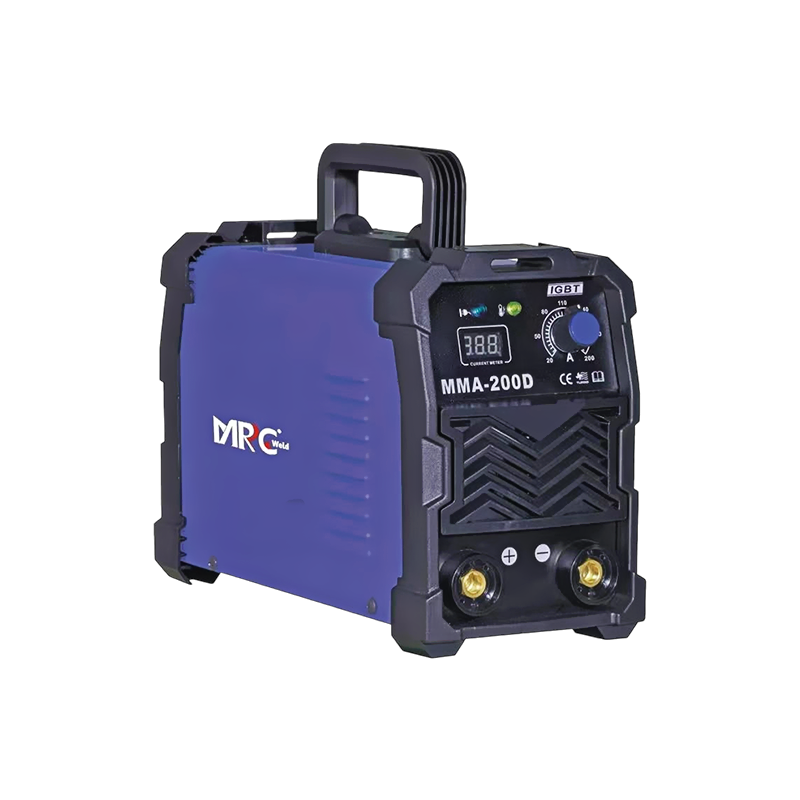
Selecting an MMA welding machine is a balance between your intended applications, available power supply, skill level, and budget. The market offers a spectrum from heavy industrial units to compact hobbyist models. A critical first step is assessing your power source; most home and small shop users will be looking for a machine that runs on standard single-phase power, making a portable MMA welding machine 220v a highly relevant and popular search term. Beyond voltage, understanding key specifications like amperage range and duty cycle is paramount to avoid underbuying or overspending. This section will break down these technical aspects into understandable concepts, compare the fundamental technologies, and provide clear guidance tailored to common user profiles, helping you navigate from the MMA welding machine price list to the machine that represents the best value for your specific needs.
Three numbers define the capability of any MMA welding machine: its amperage range, duty cycle, and input voltage requirement. The amperage output, measured in amps, directly controls the heat input and penetration. A wider range (e.g., 30-200A) offers more flexibility for thin sheet metal up to thicker plate. Duty cycle, expressed as a percentage at a given amperage (e.g., 60% @ 160A), is perhaps the most misunderstood but critical spec. It indicates how many minutes out of a 10-minute cycle the machine can weld at that current before it overheats and shuts off. A higher duty cycle at your常用 amperage means less downtime. Input voltage must match your supply; 110V/120V machines offer ultimate portability but limited power, while 220V/240V models provide the robust output needed for serious work.
| Specification | What It Means | Why It Matters |
| Amperage Range | The minimum and maximum current output of the machine. | Determines the range of material thicknesses you can effectively weld. |
| Duty Cycle | The welding time within a 10-min period before overheating. | Defines productivity; crucial for prolonged welding sessions. |
| Input Voltage | The electrical supply required (e.g., 120V, 220V, 240V). | Must match your workshop outlet to operate correctly and safely. |
The core technology inside the welder has evolved significantly. Traditional transformer machines use a heavy copper coil to step down input voltage and increase current. They are famously robust and simple but are also heavy, less energy-efficient, and offer limited control. Inverter technology uses advanced electronics to convert AC power to DC at a very high frequency, allowing for a drastic reduction in the size and weight of the transformer. This results in the lightweight, feature-rich machines dominating the market today. Inverters provide a smoother, more stable arc, better performance with difficult electrodes like 6010, and often include additional functions like TIG lift start capability. For most users, especially those valuing portability and arc quality, an inverter MMA welding machine is the superior choice.
For a novice, the ideal MMA welding machine prioritizes forgiveness, safety, and ease of use to build confidence. Key features to seek include a wide, easy-to-adjust amperage range with a clear dial or digital display—this directly aids in learning how to set amperage on an MMA welding machine. "Hot Start" is a crucial feature that provides a temporary current boost to ignite the arc easily, preventing the electrode from sticking—a common frustration for beginners. "Arc Force" or "Dig" control helps maintain a stable arc during welding and prevents sticking when the arc length gets too short. A good duty cycle (at least 20-30% at a mid-range amperage) allows for longer practice sessions. Finally, a machine that includes both 120V and 240V plug adapters offers tremendous flexibility to start learning at home and grow into more demanding projects.
Prices for MMA welding machine units vary widely, from under one hundred to several thousand dollars. Understanding what drives cost helps you allocate your budget effectively. At the entry-level, you find basic, often transformer-based, low duty-cycle machines suitable for very light, intermittent use. The mid-range is dominated by capable inverter machines from reputable manufacturers, offering good duty cycles, useful features, and reliable performance for DIY and light professional work. The high-end encompasses industrial-grade inverters and specialized units with exceptional duty cycles, advanced controls, and multi-process capabilities. It's rarely wise to buy the absolute cheapest machine; investing in a reliable mid-range inverter from a company with good support will result in a better learning experience and a tool that lasts for years.
| Price Tier | Typical Features & Technology | Ideal User Profile |
| Budget (Low) | Basic transformer, limited amperage range, low duty cycle (10-20%). | Occasional user for very thin materials, tight budget priority. |
| Mid-Range (Medium) | Inverter, wide amperage range, 30-60% duty cycle, Hot Start, Arc Force. | DIY enthusiast, beginner, farm/ranch repair, light fabrication. |
| Professional (High) | Industrial inverter, 60-100% duty cycle, advanced controls, rugged build. | Daily professional use, welding thick materials, demanding environments. |
Successful MMA welding begins long before striking an arc. Proper preparation is critical. First, clean the workpiece at and around the weld joint. Remove rust, paint, oil, and mill scale using a grinder, wire brush, or chemical cleaner to prevent contamination and porosity in the weld. Second, ensure a solid electrical connection by attaching the ground clamp directly to clean, bare metal on the workpiece or welding table. A poor ground causes erratic arcing and weak welds. Third, select the correct electrode. For general-purpose steel welding with an MMA welding machine, E6013 electrodes are excellent for beginners due to their easy arc striking and smooth operation. For deeper penetration on thicker or dirty metal, E7018 is a common choice. Always check the electrode packaging for the recommended amperage range as your starting point.
Setting the correct amperage is the single most important adjustment on your MMA welding machine. It directly controls heat input, penetration, and the fluidity of the weld pool. A simple starting point is the "rule of thumb": use about 1 amp of current for every thousandth of an inch (0.001") of electrode diameter. For a common 1/8" (3.2mm) electrode, this suggests about 125 amps. However, this is only a guide. Fine-tune based on the specific electrode type (check its data sheet), welding position (use lower amps for vertical/overhead), and your observation of the arc. Signs of correct amperage include a crisp, crackling sound (not a loud roar or soft hiss), easy maintenance of a short arc without sticking, and good fusion at the edges of the weld bead (toe line).
Regular, simple maintenance ensures your MMA welding machine operates safely and reliably for years. Always disconnect the machine from power before performing any maintenance. Periodically inspect all cables, connectors, the electrode holder, and ground clamp for signs of wear, fraying, or loose connections—these are common failure points. Use compressed air to blow out dust and metal particles from the machine's cooling vents and internal components (if accessible), as accumulated debris can cause overheating. For inverter machines, store them in a dry, clean environment to protect sensitive circuit boards from moisture and corrosion. Keeping a log of operating hours can help anticipate service needs.
While generally reliable, inverter MMA welding machine units can encounter issues. Understanding basic diagnostics can save time and money. A frequent problem is failure to strike an arc. First, check the obvious: power supply, on/off switch, and all cable connections. If these are sound, internal issues like a blown input fuse or a faulty rectifier may be the cause. Another common issue is unstable or erratic arc, which can stem from a poor ground connection, damaged welding cables, or failing internal capacitors. Overheating and automatic shutdown point to exceeded duty cycle or blocked cooling fans. Many modern inverters have diagnostic LED indicators; consult the manual for error codes.
| Symptom | Likely Causes | User-Checks & Actions |
| No Power / No Arc | Tripped circuit breaker, blown fuse, faulty power cord or switch. | Verify outlet power, check/replace fuse, inspect cord for damage. |
| Electrode Sticking Frequently | Amperage set too low, faulty "Hot Start" circuit, poor ground. | Increase amperage slightly, ensure ground clamp on clean metal. |
| Machine Overheats Quickly | Exceeding duty cycle, blocked air vents, failing cooling fan. | Allow to cool, clean all vents, listen for fan operation. |
| Erratic, Unstable Arc | Loose cable connections, worn electrode holder, internal component failure. | Tighten all connections, inspect holder jaws, professional service needed. |
Welding aluminum with a standard DC MMA welding machine is challenging and generally not recommended for quality results. Aluminum requires specialized electrodes (often classified as E4043) and, crucially, a machine capable of DCEN (Direct Current Electrode Negative) polarity, as most stick welding of steel uses DCEP. Even with the right settings and electrodes, aluminum MMA welding is difficult due to aluminum's high thermal conductivity, oxide layer, and the tendency of the flux to absorb moisture, leading to porosity. For consistent, quality aluminum welds, AC TIG or MIG welding with argon gas is the preferred and far more controllable method.
These are AWS (American Welding Society) classification codes that convey vital information. The first two digits indicate the minimum tensile strength of the weld metal in thousands of pounds per square inch (psi). A "60" electrode has 60,000 psi tensile strength, while a "70" has 70,000 psi. The third digit indicates the welding position: "1" means all-position (flat, horizontal, vertical, overhead), while "2" is for flat and horizontal positions only. The last digit (and sometimes a suffix) describes the flux coating type and the required welding current (AC, DC+, DC-). For example, E6013 is a 60ksi, all-position electrode with a high-titania potassium flux, good for AC or DC, known for easy striking. E7018 is a 70ksi, all-position, low-hydrogen electrode requiring DCEP current, known for high-quality, strong, ductile welds.
Porosity—gas pockets trapped in the solidified weld—is a common defect that severely weakens the joint. In MMA welding, the primary cause is contamination interfering with the flux's shielding. Specific culprits include: moisture in the electrode flux (always store electrodes in a dry, sealed container), dirt, rust, oil, or paint on the base metal, excessive arc length which draws air into the pool, or welding in a strong draft that blows away the shielding gas created by the flux. To fix it, ensure your workpiece is impeccably clean, use fresh, dry electrodes, maintain a tight, short arc length, and shield your work area from wind.
Not necessarily. While a very cheap, poor-quality machine can lead to immense frustration and hinder learning, the most expensive industrial unit is overkill. The sweet spot for a beginner is a mid-range, feature-focused inverter MMA welding machine. These machines offer the arc stability and user-friendly features (like Hot Start) that make learning easier, without the complexity and cost of professional-grade controls. Investing in a reliable mid-priced machine from a known manufacturer ensures good performance, durability, and access to customer support, which is far more valuable for a beginner than the ultimate power or duty cycle of a top-tier machine. The goal is a tool that facilitates skill development, not one that intimidates or limits it.
1. How Does an MMA Welding Machine Work? Explanation of the basic operation and princi...
View MoreI. Introduction Welding is a fundamental process in countless industries, joining metals ...
View MoreI. Introduction: The key guardian of car energy In the complex system of the car, the Car...
View MoreWhat is car battery charger fully Car battery charger fully is a device specially used to...
View More
Copyright © TAIZHOU MIRACHER MACHINERY CO., LTD. All Rights Reserved Custom Industrial Welding Equipment Manufacturers



 English
  Português
 sale@miracher.com
 0086-15988994409