Content
Few pieces of equipment in the fabrication and repair world possess the sheer robustness and uncomplicated efficiency of the MMA Welding Machine, also universally known as a stick welder. This foundational welding process, formally Manual Metal Arc (MMA) welding, is celebrated for its ability to handle challenging environments, rusty or dirty material, and heavy plate thicknesses with a persistence that other processes often can't match. Whether you're a seasoned fabricator or a hobbyist just setting up your first home workshop, the stick welder offers a reliability and simplicity that makes it an indispensable tool. Its minimal setup requirements—typically just the machine, an electrode holder, a ground clamp, and electrodes—allow for immediate deployment across construction sites, farm equipment repair, and general maintenance tasks. This guide dives deep into what makes this machine a powerful choice, from technological comparisons to essential maintenance, ensuring your investment truly becomes "the welder that doesn't quit."
The MMA Welding Machine has endured as a workshop favorite primarily due to its remarkable resilience and straightforward operational principle. Unlike processes that require a continuous wire feed and an external shielding gas supply, stick welding uses a flux-coated consumable electrode. This flux creates the necessary protective gas shield as it burns, making the process inherently more forgiving when dealing with external factors like wind or base metals that are less than perfectly clean. This characteristic freedom from external gas bottles significantly boosts its portability and utility in outdoor or remote field work. Furthermore, the range of electrodes available allows a single machine to weld a vast array of materials, from mild steel and cast iron to stainless steel, simply by switching the electrode type. This versatility, combined with the low initial cost of the equipment, cements the MMA welder's status as a fundamental tool in both professional and novice environments.
When selecting a stick welder, the primary decision revolves around the machine’s internal architecture: inverter or transformer technology. The transformer-based welder is the traditional workhorse—heavy, simple, and incredibly durable, relying on bulky copper or aluminum windings to regulate the current. Its main draw is its reliability and lower purchase price, but it often comes with lower energy efficiency and is much less portable due to its substantial weight. In stark contrast, modern inverter-based MMA Welding Machines utilize sophisticated electronic circuitry, including semiconductors, to rectify and control the welding current. This results in a much lighter, smaller, and more energy-efficient unit. Inverter machines also offer superior arc control features, such as 'Hot Start' for easier arc ignition and 'Arc Force' to prevent the electrode from sticking, which are invaluable for beginners and complex welds alike. While the initial cost may be higher, the benefits in performance, weight, and reduced energy consumption often justify the investment, representing a significant technological leap in welding equipment design. This difference is crucial for anyone prioritizing either raw, field-ready durability or nuanced, portable performance.
| Technology Feature | Transformer-Based MMA Welder | Inverter-Based MMA Welder |
| Weight/Portability | Heavy, low portability | Lightweight, high portability |
| Energy Efficiency | Lower efficiency, higher power draw | High efficiency, lower operational cost |
| Arc Control Features | Basic, minimal features | Advanced (Hot Start, Arc Force, Anti-Stick) |
| Purchase Cost | Generally lower | Generally higher |
The search for the best budget MMA welding machine for beginners requires a balanced approach, where cost-effectiveness meets adequate feature sets and safety. A 'budget' machine should not be interpreted as a 'cheap' or unreliable one; rather, it should be a unit that delivers reliable performance for typical hobbyist and light repair tasks without unnecessary high-end features. For a beginner, the focus should be on an inverter-based model with an accessible amperage range (e.g., 10-140 Amps), which is sufficient for welding common thicknesses of steel (up to 1/4 inch). Critical features include a decent duty cycle at the common working amperage (e.g., 60% at 100 Amps), which indicates how long the machine can weld continuously within a 10-minute period before needing to cool down. Furthermore, the inclusion of "Anti-Stick" technology is nearly essential for beginners, as it helps prevent the electrode from fusing to the workpiece, significantly smoothing the learning curve. Choosing a machine with robust internal protection circuits against over-voltage and thermal overload is also a key factor in ensuring longevity, even in the lower price brackets. By focusing on these core performance indicators over brand name or maximum amperage, a beginner can secure a capable machine that offers a high return on a modest investment.
| Beginner Budget Priority | Description/Minimum Requirement |
| Technology | Inverter-based for arc quality and portability |
| Duty Cycle | Minimum 60% at 100 Amps |
| Features | Must include Anti-Stick technology |
| Voltage | 120V (Single-Phase) or Dual-Voltage 120V/240V |
Mastering the stick welding process is a journey that emphasizes control, consistency, and understanding the arc. Unlike TIG or MIG, MMA welding requires the operator to maintain a precise, consistent arc length as the electrode shortens—a skill often described as simultaneously feeding the electrode and moving forward. The arc length is perhaps the most critical variable; too long, and the arc becomes unstable, creating excessive spatter and poor penetration; too short, and the electrode sticks repeatedly. A good rule of thumb is to keep the arc length roughly equal to the diameter of the electrode core wire. Beyond arc control, the electrode angle is also vital, typically held at a 10-30 degree 'drag' angle in the direction of travel to ensure the slag flows behind the weld pool, shielding it as it solidifies. The travel speed must be slow enough to allow the weld puddle to fully penetrate the base metal and fill the joint but fast enough to prevent excessive heat input that could lead to burn-through or distortion. Achieving a consistent, clean weld bead is the direct result of harmonizing these three elements: arc length, angle, and travel speed. Regular practice with different electrode types and positions is the only true path to proficiency, leveraging the inherent portability of the MMA Welding Machine for varied applications.
The rising popularity of compact, powerful inverter units has made portable MMA welder reviews for home use a highly sought-after category. The core appeal of a portable stick welder for a homeowner, DIY enthusiast, or small repair shop lies in its unmatched convenience—the ability to easily move the machine from the garage to the driveway, a shed, or even a friend's house for an off-site job. A truly portable machine should weigh under 20 lbs and often comes equipped with a carrying handle or shoulder strap. While small in stature, modern portable units do not sacrifice performance; many can operate efficiently off a 120V circuit, providing enough power for welding materials up to 3/16 inch thick, which covers most residential and light commercial projects. Look for models with digital amperage meters, as they allow for far more precise adjustments than analog dials, which is particularly beneficial when attempting to weld thinner gauge materials where current settings are more sensitive. The best portable units offer the reliability of a much larger machine in a format that easily tucks away on a shelf when not in use, truly maximizing the utility of the MMA Welding Machine in a limited space. The ease of use and reduced footprint are the two primary drivers for positive feedback in portable welder reviews.
| Feature | Benefit for Home Use |
| Digital Ammeter | Precise current setting critical for thin metal welding. |
| Fan-On-Demand | Reduces dust ingestion and noise when the machine is cool. |
| IP Rating (e.g., IP21S) | Indicates protection against solid foreign objects and dripping water, essential for garage or outdoor use. |
Achieving a quality stick weld is fundamentally dependent on proper setup, a process that begins long before the arc is struck. Joint preparation is paramount; the welding area must be clean of all contaminants—rust, oil, paint, and mill scale—as these impurities introduce gases into the molten weld pool, leading to defects like porosity and slag inclusions. Using a wire wheel or grinder to expose bright, clean metal is a non-negotiable step. Secondly, proper electrode selection for the base metal and welding position is vital; for instance, E6010 electrodes offer deep penetration for dirty metal, while E7018 electrodes are low-hydrogen, offering high-strength welds for critical applications. Once the joint and electrode are ready, the ground clamp must be secured to clean metal, as a poor ground connection is the number one cause of an unstable or 'wandering' arc. Finally, the amperage setting must be correctly matched to the electrode diameter and type, as specified by the electrode manufacturer. Too low a setting makes the arc difficult to strike and maintain (sticking), while too high a setting causes excessive spatter and undercutting. By methodically addressing these pre-weld factors, the operator sets the stage for a smooth, deep-penetrating, and structurally sound weld, regardless of the MMA Welding Machine model being used.
The robust design of the MMA Welding Machine often leads users to neglect routine maintenance, yet consistent care is the key to maximizing the lifespan and consistent performance of the unit. The machine's environment plays a significant role in its health; dust, metal filings, and humidity are the primary adversaries of internal electronic components. Regularly using compressed air to blow out the internal components, particularly the heat sinks and circuit boards, is essential, ensuring that the cooling fans can operate efficiently and prevent thermal damage. Beyond the machine body itself, the cables and connections—the lifeline of the welding circuit—require constant inspection. Frayed insulation, loose connections at the machine's output terminals, and corrosion on the ground clamp can all cause resistance, leading to power loss, overheating, and a severely degraded arc quality. A properly maintained stick welder ensures that the current flowing from the machine to the arc remains clean and stable, which is the foundation of high-quality welding. A proactive maintenance schedule drastically reduces the risk of unexpected downtime and costly repairs, guaranteeing that your MMA Welding Machine delivers reliable power for years.
Knowing how to maintain an MMA welding machine for longevity is about adopting a systematic approach to cleaning and inspection, treating the welder not just as a tool, but as a critical piece of power equipment. Over time, the internal cooling channels and fans become clogged with conductive metal dust and debris drawn in by the fan, which drastically reduces the welder's ability to dissipate heat. This leads to premature thermal cutouts and long-term damage to the inverter components. A quarterly inspection should involve opening the casing (only after disconnecting from the mains power and allowing time for capacitors to discharge) and gently cleaning with a soft brush and dry compressed air. Crucially, the welding leads—the electrode holder and the ground clamp—must be kept in pristine condition. The ground clamp's contact surfaces should be regularly cleaned with a wire brush to ensure a perfect electrical connection, as a poor ground connection is one of the most common causes of low voltage and instability. Finally, adhering to the machine's rated duty cycle is a maintenance practice in itself; exceeding the duty cycle regularly subjects the internal components to thermal stress that accelerates wear and significantly reduces the overall service life of the MMA Welding Machine.
| Component | Maintenance Task | Frequency |
| Internal Fans/PCBs | Blow out with compressed air (low pressure) | Quarterly or Bi-annually |
| Welding Cables/Connectors | Check for cuts, fraying, and secure connections | Before every use |
| Ground Clamp Contact Area | Wire brush clean surfaces and connection point | Weekly |
| Ventilation Grilles | Wipe clean to ensure unimpeded airflow | Monthly |
Even the most reliable MMA Welding Machine will occasionally present issues, and knowing how to diagnose and implement quick fixes is a hallmark of a proficient welder, particularly when facing troubleshooting common MMA welding machine problems. One of the most frequent issues is the electrode sticking repeatedly to the workpiece. This can usually be traced back to an amperage setting that is too low for the specific electrode and metal thickness, a poor arc starting technique, or a very long arc length. The immediate solution is often to slightly increase the amperage, ensuring the Hot Start feature (if present) is functioning, or practicing a short 'scratch' or 'tapping' motion to initiate the arc. Another common fault is excessive spatter and porosity in the weld bead, which often points to poor joint preparation—i.e., attempting to weld over rust, dirt, or paint. The quick fix here is to stop, grind the metal back to clean, bright surfaces, and ensure the electrode itself is dry (E7018 electrodes in particular must be kept dry). If the arc is erratic or lacks power, the first and simplest step in troubleshooting is checking the ground clamp connection; a loose or dirty ground is an easy fix that solves a surprisingly high percentage of welding issues. By systematically checking the variables—amperage, cleanliness, and connection—most common problems can be resolved quickly, minimizing downtime.
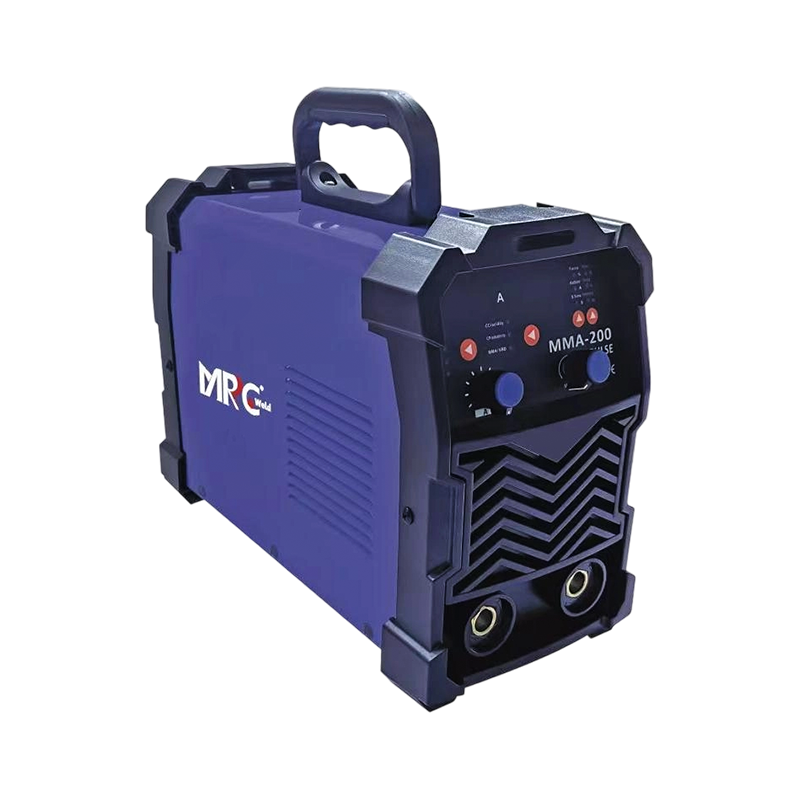
The optimal current for any given electrode is not a single number but a range that depends heavily on the electrode diameter, the welding position (flat, vertical, overhead), and the thickness of the base metal. For general-purpose, easy-to-run electrodes like E6013, the rule of thumb is approximately 40-80 amps for a 3/32 inch (2.5mm) electrode and 75-125 amps for a 1/8 inch (3.2mm) electrode. However, for high-strength, low-hydrogen electrodes like E7018, which demand higher heat, these ranges typically increase by about 10-20 amps to ensure proper slag removal and deep penetration. Always consult the electrode manufacturer's specifications printed on the box, which provide the tested and certified operating range. Running the MMA Welding Machine within the middle of this specified range generally yields the most stable arc, best penetration profile, and minimal spatter. Adjustments should always be made incrementally—no more than 5 amps at a time—to fine-tune the arc for the specific job's heat requirements.
Yes, a quality portable MMA welder reviews for home use unit can absolutely weld both stainless steel and cast iron, which is one of the key advantages of the stick welding process. The ability to weld these specialized materials is entirely dependent on using the correct, corresponding electrode, not the inherent capacity of the MMA Welding Machine itself, provided the machine is a DC output model (which most modern inverters are). For stainless steel, the appropriate electrode is typically a 308L or 309L-series rod, and welding must be done with DC power. For cast iron repair, specialized nickel-based electrodes are used to combat the metal's poor ductility and tendency to crack. The portability of the machine is a huge benefit here, as cast iron repairs often involve large, immobile pieces of machinery. The current settings for these specialized materials are typically lower than for mild steel, and preheating the base metal is often required, making the precise control offered by an inverter MMA Welding Machine highly advantageous.
Arc sticking—where the electrode fuses to the workpiece, effectively short-circuiting the welder—is the most common frustration for beginners. It primarily happens because the arc length is too short and the operator does not pull the electrode away quickly enough. The Anti-Stick feature, standard on most modern best budget MMA welding machine for beginners, is a corrective safety and convenience mechanism. When the machine senses a near-zero voltage state (indicating a short circuit/stick), it instantly and automatically reduces the welding current to a minimal level. This cooling action prevents the electrode from overheating and fusing permanently to the workpiece, allowing the welder to easily snap the electrode free without damaging the holder or the base metal. This feature is invaluable as it dramatically speeds up the learning process by removing a common point of failure and frustration, enabling the beginner to quickly re-strike the arc and continue welding.
The single most important factor when troubleshooting common MMA welding machine problems related to poor arc quality is the integrity of the ground clamp connection. A poor or inconsistent connection in the welding circuit creates high resistance, leading to voltage drops and a fluctuating, unstable arc that is difficult to strike, prone to sticking, and results in a weak, inconsistent weld bead. Before checking amperage settings, electrode choice, or even the machine's internal components, a seasoned welder will always inspect the ground. This involves ensuring the clamp is fastened tightly to clean, bare metal—free of rust, paint, and scale—and that the cable connection to the clamp and to the MMA Welding Machine terminal is secure and free of corrosion. A solid ground connection is the silent foundation of a strong, stable, and reliable welding arc.
1. How Does an MMA Welding Machine Work? Explanation of the basic operation and princi...
View MoreI. Introduction Welding is a fundamental process in countless industries, joining metals ...
View MoreI. Introduction: The key guardian of car energy In the complex system of the car, the Car...
View MoreWhat is car battery charger fully Car battery charger fully is a device specially used to...
View More
Copyright © TAIZHOU MIRACHER MACHINERY CO., LTD. All Rights Reserved Custom Industrial Welding Equipment Manufacturers



 English
  Português
 sale@miracher.com
 0086-15988994409