Content
In the world of metal fabrication and industrial manufacturing, the MIG Welding Machine stands as a cornerstone technology. Known for its speed, versatility, and relative ease of use, MIG (Metal Inert Gas) welding has revolutionized how we join metals. This comprehensive guide delves deep into the intricacies of MIG welding machines, from understanding their core functionality to selecting the right equipment for your specific needs. We will explore the process, compare technologies, and address common challenges, empowering you with the knowledge to make informed decisions for your projects.
MIG welding, also called Gas Metal Arc Welding (GMAW), is a semi-automatic or automatic arc welding process. It uses a continuous solid wire electrode fed through a welding gun, which is shielded by an inert or semi-inert gas mixture to protect the molten weld pool from atmospheric contamination. This fundamental principle makes it exceptionally efficient for producing high-quality, clean welds on a variety of metals.
Selecting the ideal MIG Welding Machine is critical for achieving optimal results, ensuring operator safety, and maximizing return on investment. The choice depends on multiple factors related to your intended applications, workspace, and skill level.
When comparing different models, these specifications are paramount. To clarify the differences, here is a breakdown:
Understanding the technical differences is key. For instance, a machine with a higher amperage range and duty cycle is built for heavy-duty fabrication, while a lightweight machine with lower output suits automotive repair or DIY tasks.
| Specification | What It Means | Why It Matters |
|---|---|---|
| Amperage Range | The spectrum of welding current the machine can produce. | Determines the thickness of metal you can weld effectively. A wider range offers more versatility. |
| Voltage Settings | Adjusts the heat input of the arc, often via taps or infinite control. | Fine-tunes the weld for different wire speeds and materials, affecting penetration and bead profile. |
| Wire Feed Speed Control | Regulates how fast the electrode wire is fed into the weld pool. | Critical for maintaining a stable arc and controlling deposition rate. Digital controls offer precision. |
| Gas vs. Gasless Capability | Ability to use shielding gas (MIG) or flux-cored wire (FCAW) without gas. | Gasless operation is advantageous for outdoor welding where wind might disperse shielding gas. |
Even with the best equipment, operators can face issues that compromise weld quality. Here we address five common challenges, which also correspond to valuable search queries for those seeking specific troubleshooting advice.
Porosity—small holes or pits in the weld—is a common defect often caused by contamination.
Welding thin sheet metal (under 3mm) requires precise control to avoid burn-through and warping.
Shielding gas selection is critical for achieving the corrosion resistance and clean appearance of stainless steel welds.
For newcomers to welding, choosing the right process is essential for building confidence and skill.
Let's compare the two processes to highlight their suitability for beginners. For example, MIG welding is often considered easier to learn initially due to its continuous feed and simpler arc control, whereas stick welding requires more skill in striking and maintaining the arc.
| Aspect | MIG Welding | Stick (MMA) Welding |
|---|---|---|
| Ease of Learning | Generally easier. The continuous wire feed and stable arc make it simpler to start and maintain a bead. | Has a steeper learning curve. Requires practice to strike an arc and maintain the correct arc length. |
| Equipment Setup | More complex, involving wire spool, gas cylinder, and regulator setup. | Simpler setup; just the machine, electrode holder, work clamp, and electrodes. |
| Versatility & Environment | Excellent for thin metals and indoor use. Sensitive to wind due to gas shielding. | Highly portable and excellent for outdoor, windy, or rusty/dirty conditions. |
| Cleanup & Slag | Typically produces no slag (with solid wire), minimizing post-weld cleanup. | Produces a slag covering that must be chipped off after welding. |
The demand for capable, user-friendly welders for DIY enthusiasts, hobbyists, and small workshops is growing.
Beyond basic fabrication, MIG Welding Machines are engineered for specialized tasks across various sectors.
Choosing a reliable equipment partner is as crucial as understanding the technology. TAIZHOU MIRACHER MACHINERY CO., LTD., located in China's key manufacturing hub of Zhejiang, embodies the synergy of innovation, quality, and customer-centric service in the welding equipment industry.
Our commitment extends beyond selling machines. We specialize in the R&D, production, and export of a full spectrum of welding solutions. Our core MIG Welding Machine portfolio is designed to meet diverse industrial demands, from standard manual units to automated systems. As a practitioner of technological innovation, our team of senior engineers ensures every product, whether it's a robust machine for heavy fabrication or a versatile portable MIG welder for home use, meets stringent quality certifications.
We understand that challenges like how to prevent porosity in MIG welding often stem from both technique and equipment performance. Therefore, our intelligent production and precision detection systems are geared toward delivering reliable, consistent machines that help minimize such issues. Furthermore, we offer extensive customization—from voltage adaptation to functional module adjustments—ensuring our welders perform optimally in any market or specific application scenario.
Upholding our philosophy of "Quality Drives Efficiency," we provide a full-life-cycle service system. From initial consultation where we help clarify dilemmas like MIG vs stick welding for beginners, to installation, debugging, and after-sales support, we stand by our partners globally. It is this dedication to comprehensive customer success that has established our long-term partnerships with industrial enterprises worldwide and driven our exports to markets across Southeast Asia, the Middle East, and Europe.
Yes, but only if the machine is set up for Flux-Cored Arc Welding (FCAW). This process uses a tubular wire filled with flux that generates its own shielding gas when burned. It's often referred to as "gasless" MIG, though technically it's a different process. It's ideal for outdoor, windy conditions.
There is no single most important setting; voltage and wire feed speed are interdependent and equally critical. They must be balanced correctly. Incorrect voltage can lead to poor penetration or excessive spatter, while wrong wire speed causes an unstable arc. Always refer to the machine's recommended settings chart as a starting point.
A 140-amp MIG welder can typically handle single-pass welds on mild steel up to about 1/4 inch (6mm) thick with proper beveling and technique. For optimal results on thicker materials, multiple passes are required. It is an excellent choice for light fabrication, automotive work, and general home use.
A tall, ropey bead with poor penetration usually indicates insufficient voltage for the given wire feed speed. The wire is melting but not properly fusing into the base metal. Try increasing the voltage slightly while listening for a smooth, steady arc sound.
Inspect these consumables regularly. Replace the contact tip when the hole becomes oval-shaped or enlarged, causing poor electrical contact and arc instability. Replace the liner if you experience inconsistent wire feeding, friction, or birdnesting. For professional daily use, tips may need weekly replacement, while liners last several months.
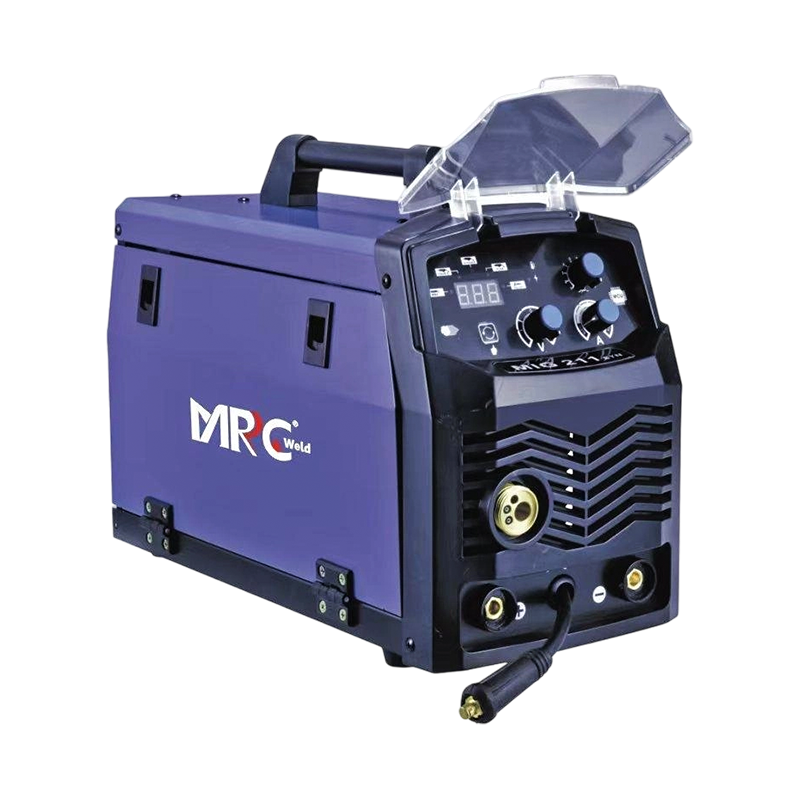
Mastering the use of a MIG Welding Machine opens doors to countless fabrication and repair possibilities. From understanding the fundamentals of the process and selecting a machine based on critical specs like duty cycle and amperage, to troubleshooting specific issues such as how to prevent porosity in MIG welding, knowledge is your most valuable tool. Whether you are determining the best gas for MIG welding stainless steel, comparing MIG vs stick welding for beginners, fine-tuning MIG welding settings for thin metal, or selecting a portable MIG welder for home use, the right information leads to better welds and more efficient work.
Partnering with a dedicated manufacturer like TAIZHOU MIRACHER MACHINERY CO., LTD. ensures you have not only a reliable machine but also the technical support and customization options needed to succeed in any welding endeavor. By combining proper technique, suitable equipment, and expert partnership, you can achieve strong, clean, and professional welds consistently.
[1] American Welding Society (AWS). *Welding Handbook, Volume 2: Welding Processes*. 9th ed., American Welding Society, 2004. (Reference regarding shielding gas effects on stainless steel corrosion resistance).
[2] Lincoln Electric. *The Procedure Handbook of Arc Welding*. The Lincoln Electric Company, 2000. (General reference for welding processes, techniques, and troubleshooting).
1. How Does an MMA Welding Machine Work? Explanation of the basic operation and princi...
View MoreI. Introduction Welding is a fundamental process in countless industries, joining metals ...
View MoreI. Introduction: The key guardian of car energy In the complex system of the car, the Car...
View MoreWhat is car battery charger fully Car battery charger fully is a device specially used to...
View More
Copyright © TAIZHOU MIRACHER MACHINERY CO., LTD. All Rights Reserved Custom Industrial Welding Equipment Manufacturers



 English
  Português
 sale@miracher.com
 0086-15988994409