Content
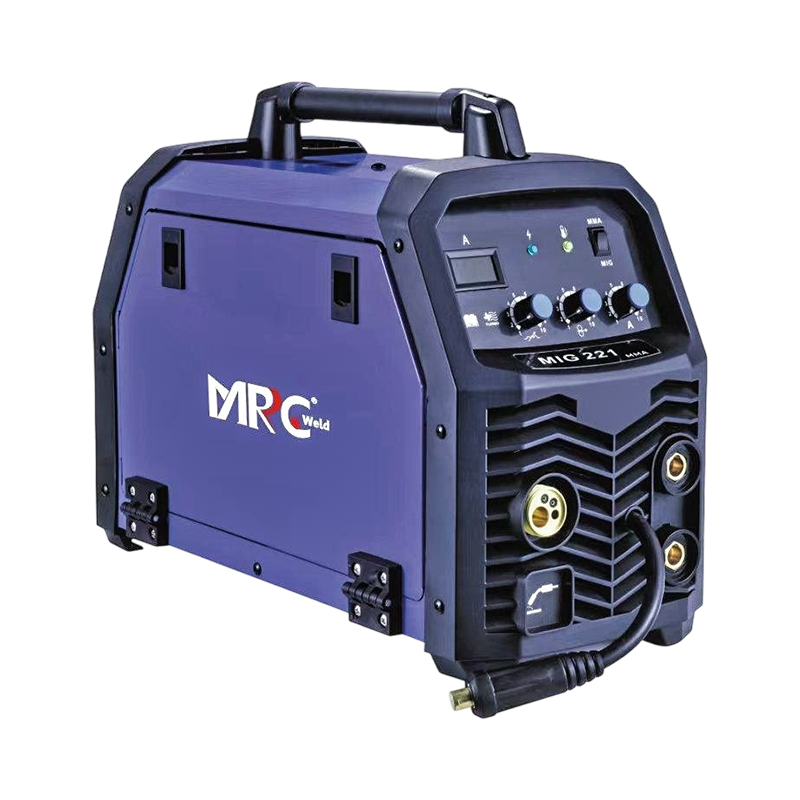
In the world of metal fabrication and repair, the MIG welding machine stands as a cornerstone of efficiency and versatility. Also known as Gas Metal Arc Welding (GMAW), this process has revolutionized industries by enabling faster, cleaner, and more consistent welds compared to traditional methods. For professionals and businesses seeking reliable equipment, understanding the nuances of MIG welding technology is crucial for making informed investment decisions. This guide delves into the technical aspects, application scenarios, and key considerations, providing a comprehensive resource to navigate your selection process.
MIG welding operates by feeding a continuous, consumable wire electrode through a welding gun. An electric arc forms between the wire and the base metal, melting both to form the weld pool. A shielding gas, typically argon or CO2 mixtures, is simultaneously released to protect the molten metal from atmospheric contamination.
Choosing the ideal machine requires matching its capabilities to your specific needs. A critical first step is understanding how to choose a MIG welder for aluminum, as this material demands specific features like AC/DC output, a spool gun, and 100% argon gas.
Not all MIG welders are created equal for different jobs. For instance, the process for best MIG welding machine for thin steel sheet involves low voltage and wire feed speed settings to prevent burn-through. Here’s a comparison of requirements:
| Material Type | Key Requirements | Recommended Wire Type |
|---|---|---|
| Mild Steel | CO2 or Argon/CO2 mix; standard DC output | ER70S-6 |
| Stainless Steel | Tri-mix gas (Helium/Argon/CO2); DC output | ER308L, ER316L |
| Aluminum | 100% Argon; AC/DC TIG/MIG combo or spool gun | ER4043, ER5356 |
MIG welding's speed and adaptability make it indispensable across numerous sectors. At our manufacturing base in Taizhou, Zhejiang, we see firsthand how different industries leverage this technology.
Achieving perfect welds consistently requires proper setup and the ability to diagnose issues. A common challenge is learning how to prevent porosity in MIG welding, which is often caused by inadequate shielding gas flow, contaminated materials, or drafts.
Addressing flaws quickly is key to quality work. For example, solving the issue of MIG welding spatter reduction techniques can involve adjusting voltage, using the correct gas mixture, or applying anti-spatter spray. Below is a quick-reference guide:
| Defect | Probable Cause | Corrective Action |
|---|---|---|
| Porosity | Contaminated base metal, low gas flow, windy environment | Clean metal thoroughly, check gas fittings/hose, use a welding screen. |
| Excessive Spatter | Voltage too low, incorrect polarity, CO2-rich gas mix | Increase voltage slightly, ensure DCEP polarity, consider Argon/CO2 mix. |
| Lack of Fusion | Travel speed too fast, amperage too low, improper angle | Slow down, increase amperage, maintain correct gun angle. |
| Burn-Through | Excessive heat input on thin material | Reduce voltage/amperage, increase travel speed, use a backing bar. |
Selecting a reliable equipment supplier is as important as choosing the machine itself. As a foreign trade enterprise based in a key Chinese manufacturing hub, we are committed to bridging the gap between advanced welding technology and global industrial needs. Our philosophy, "Quality Drives Efficiency," is embedded in our approach to providing not just machines, but comprehensive solutions.
Our integrated R&D, production, and quality control processes allow for stringent oversight. Every MIG welding machine benefits from precision engineering and rigorous testing, ensuring it meets the demands of high-performance environments like automotive production lines and heavy steel fabrication. This direct control is fundamental to delivering the cost-effective, reliable performance that our partners in Southeast Asia, the Middle East, and Europe depend on.
Yes, but only with a specific type of wire called "flux-cored wire." This wire has a flux compound inside that creates its own shielding gas when burned. This process is often referred to as FCAW (Flux-Cored Arc Welding). While it offers portability for outdoor work (wind doesn't affect it), slag removal is required, and the weld appearance is typically not as clean as with solid wire and gas shielding (true MIG).
The core difference lies in the electrode and process control. MIG uses a consumable wire electrode fed automatically, making it faster and generally easier to learn, ideal for longer joins and thicker materials. TIG uses a non-consumable tungsten electrode and a separate filler rod, operated manually. TIG offers superior precision and control, producing cleaner, higher-quality welds on thinner materials like aluminum and stainless steel, but it is significantly slower and requires more skill.
Shielding gas is critical to prevent atmospheric gases—primarily oxygen and nitrogen—from contaminating the molten weld pool. Without it, the weld would become brittle, porous, and weak. The gas forms a protective "blanket" over the arc and pool, ensuring a stable arc and resulting in a strong, clean, and sound weld with minimal spatter.
Proper storage is key to preventing moisture absorption and rust, which leads to porosity. Keep unused spools in their original plastic packaging in a dry, climate-controlled environment. For opened spools, use a dedicated storage box or bag with desiccant packs. Avoid leaving spools on the machine in humid or dusty workshops for extended periods.
Essential Personal Protective Equipment (PPE) includes:
1. How Does an MMA Welding Machine Work? Explanation of the basic operation and princi...
View MoreI. Introduction Welding is a fundamental process in countless industries, joining metals ...
View MoreI. Introduction: The key guardian of car energy In the complex system of the car, the Car...
View MoreWhat is car battery charger fully Car battery charger fully is a device specially used to...
View More
Copyright © TAIZHOU MIRACHER MACHINERY CO., LTD. All Rights Reserved Custom Industrial Welding Equipment Manufacturers



 English
  Português
 sale@miracher.com
 0086-15988994409