Content
Ask three workshop owners about a synergic MIG welding machine and you will get three different answers. One will say it cut his rework on aluminum in half. Another will say it is a control he never touches. The third will say he does not see the point. All three can be telling the truth, because synergic control fixes one specific problem: keeping arc voltage and wire feed speed matched to each other while conditions change. That is exactly where manual MIG machines fail most often, and the failures show up as spatter, burn-through, and weak fusion.
The short conclusion is this: a synergic MIG welding machine earns its extra cost when you weld aluminum or thin steel, change materials often, or run a team with different experience levels. If you weld thick mild steel with the same wire every day, the benefits will be smaller but still real.
Every MIG (GMAW) weld depends on two core parameters. Wire feed speed largely controls welding current, and arc voltage controls arc length and droplet transfer. On a non-synergic machine you set both separately and correct them as the work changes. On a synergic machine, the controller stores programs that map the two together. You select the material, wire diameter, and gas, then adjust a single control. The machine sets the matching voltage and keeps correcting it while you weld.
The word itself comes from synergy: the parameters work together instead of fighting each other. In pulsed MIG, synergic control releases regularly spaced current pulses that detach uniform molten droplets, which is why it works across short-circuit, globular, and spray transfer rather than being limited to one mode. You still choose the program, but the machine handles the calculations. If the way these values interact is new to you, an in-depth look at MIG welding machines explains the basics before you compare price lists.
The practical difference shows up in daily decisions. You set a non-synergic machine for 1.0 mm wire, move from 3 mm plate to a 0.8 mm body panel, and the arc changes immediately. You adjust voltage, then wire feed, then voltage again. An experienced welder does this in seconds by sound and feel. A less experienced one spends minutes and burns holes. On a synergic machine, you select the program for thin steel and the voltage follows the wire feed automatically.
| Task | Non-Synergic MIG | Synergic MIG |
|---|---|---|
| Setting up | Voltage and wire feed set separately | One control; the controller matches the second value |
| Changing material or wire diameter | Re-learn both settings each time | Select another program |
| Aluminum in short-circuit transfer | Frequent stubbing and burn-through | Stable arc and cleaner starts |
| Thin steel without pulse | Needs constant manual correction | Voltage follows feed speed automatically |
| Rework and spatter level | Depends heavily on operator skill | Usually lower on matched programs |
A synergic machine still leaves room for fine tuning. The one-knob concept does not lock the voltage. A trim or arc-force adjustment handles small differences in torch position, gas mixture, and wire condition. What the machine removes is the need to coordinate two unrelated values in real time, and that coordination is where most MIG errors come from.
Aluminum conducts heat quickly and melts at a relatively low temperature, which is a recipe for burn-through. Synergic control keeps current proportionate to the feed rate, so starts are cleaner and the puddle stays under control. If you weld aluminum regularly, look for double pulse as well: it raises and lowers heat in a fast rhythm, which reduces distortion and leaves a flatter, cleaner bead.
Auto repair and maintenance shops switch between body panels, brackets, and structural steel on the same day. On a synergic machine, each change is a program selection instead of a retuning session. That is why 5 kg spool machines in the 160 A to 350 A range have become the default for this kind of work: they hold enough wire for a full shift while still handling thin material.
One control does not turn a beginner into a senior welder, but it removes the most common cause of bad MIG welds, which is mis-matched settings. With the arc stable, the operator can concentrate on travel speed, nozzle angle, and stick-out distance, the parts of welding that no controller can do for you.
It is just as important to know the limits before spending the money. Synergic control will not:
The last point is the one to investigate before you buy. Synergic control is only as good as the programs stored in the machine. A manufacturer that welds real joints when developing the software makes a visible difference. A machine where synergic mode is only a sales label will frustrate your welders, so check the program list and the IGBT inverter platform behind it.
Once you have decided that synergic control fits your workflow, the model selection comes down to a short checklist. A complete walkthrough of the selection and setup process is available in our practical guide to choosing, setting up and mastering the machine, but these points matter most:
The right class depends on your daily work rather than on the maximum amperage printed on the box.
For automotive repair, thin sheet, and light fabrication, a compact 200 A machine with automatic wire feed is a logical starting point. The MIG200SYN synergic MIG welder with automatic feed runs on single phase, takes a 5 kg spool, and adds synergic control without the cost of a pulse machine. It is easy to move around the shop and covers the majority of body and light structural jobs.
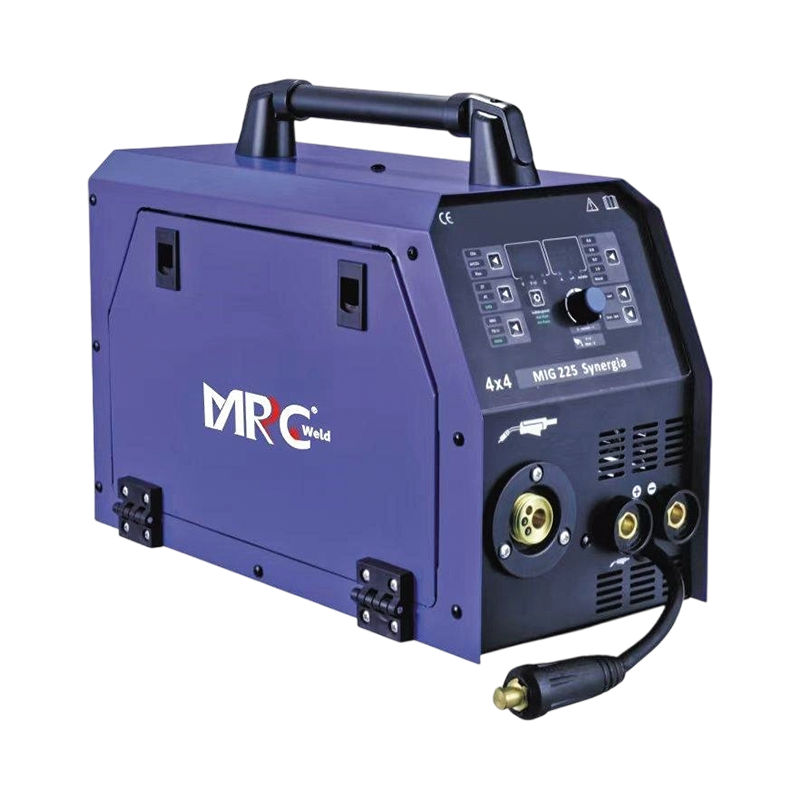 Wholesale MIG-200SYN (LED/LCD) SYNERGIC MIG WELDER WITH AUTO-FEED LIGHTWEIGHT POTAIZHOU MIRACHER MACHINERY CO., LTD is China wholesale MIG-200SYN (LED/LCD) SYNERGIC MIG WELDER WITH AUTO-FEED LIGHTWEIGHT PORTABLE WELDI...View Product →
For shops with a wide mix of steel and several operators sharing one unit, the MIG250SYN adaptive synergic welding system adds a digital control panel and a broader setting range. The adaptive behavior reduces the effect of small changes in torch angle and wire condition, which is exactly what keeps quality consistent when different hands use the same machine.
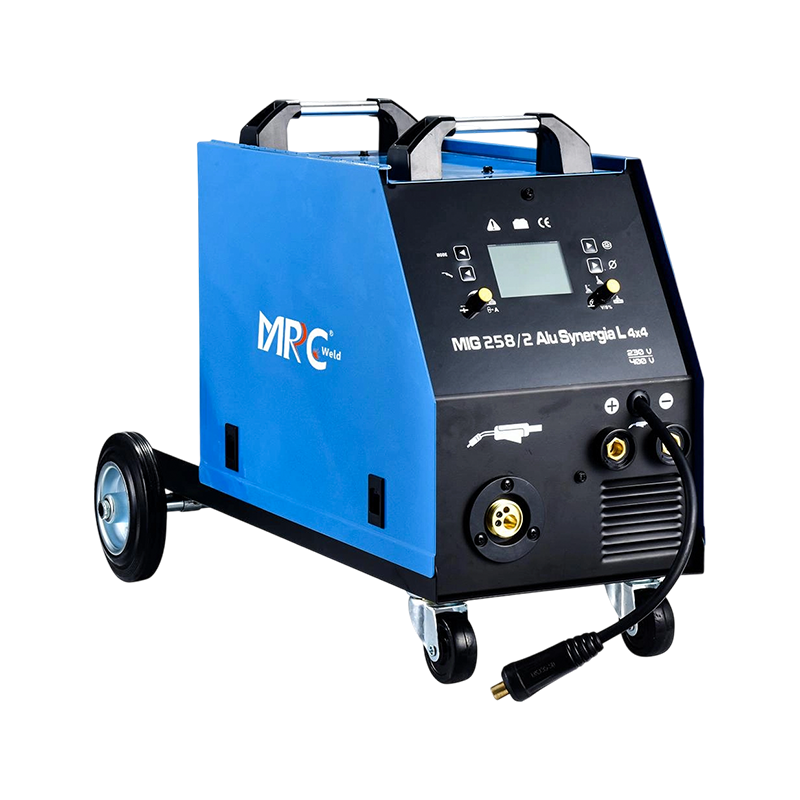 Wholesale MIG-250SYN INTELLIGENT ADAPTIVE WELDING SYSTEM ALL-SCENE DIGITAL WELDETAIZHOU MIRACHER MACHINERY CO., LTD is China wholesale MIG-250SYN INTELLIGENT ADAPTIVE WELDING SYSTEM ALL-SCENE DIGITAL WELDER Manufactur...View Product →
For heavier fabrication, aluminum work, and outdoor maintenance, the 300-350 A class is the honest choice. The 300-350 A synergic MIG machine with flux-cored and gasless modes combines automatic voltage tuning with a gasless FCAW option, so one unit handles solid wire indoors and flux-cored wire outdoors. Multi-material capability matters here because structural and energy work rarely involves a single metal.
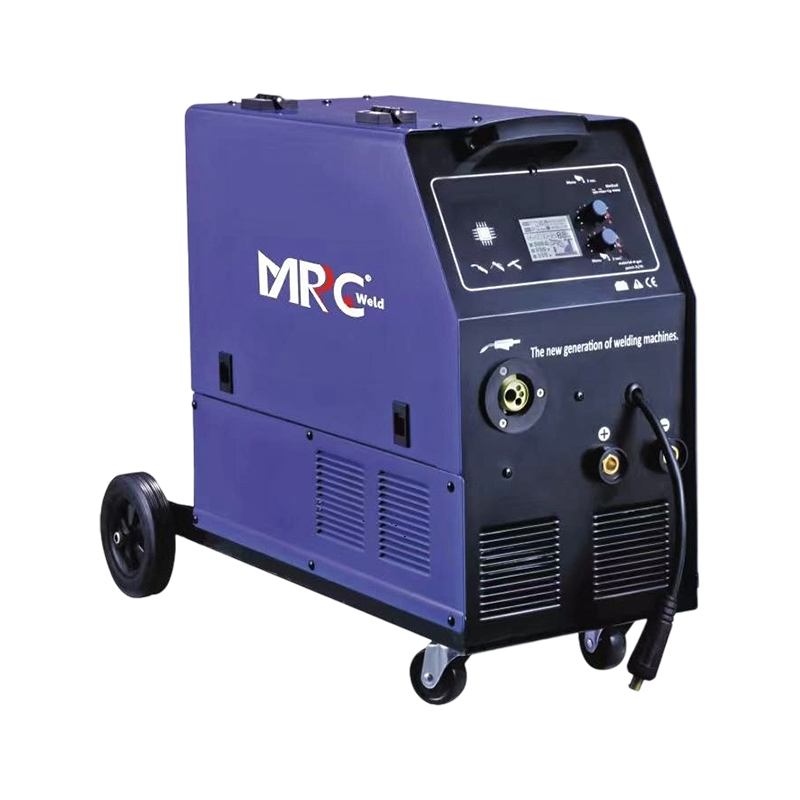 Wholesale MIG-300SYN/350SYN (LED/LCD) IGBT INVERTER WELDER SYNERGIC MIG/MAG & FLTAIZHOU MIRACHER MACHINERY CO., LTD is China wholesale MIG-300SYN/350SYN (LED/LCD) IGBT INVERTER WELDER SYNERGIC MIG/MAG & FLUX-CORED WEL...View Product →
Synergic control will not replace the welder. What it does is remove the most frequent cause of inconsistent MIG welds: fighting two knobs at once. If your shop mixes materials, thicknesses, or operators, it is a practical upgrade rather than a luxury. Browse the Miracher welding range directly to compare the synergic and double-pulse models side by side before you make the final call.
1. How Does an MMA Welding Machine Work? Explanation of the basic operation and princi...
View MoreI. Introduction Welding is a fundamental process in countless industries, joining metals ...
View MoreI. Introduction: The key guardian of car energy In the complex system of the car, the Car...
View MoreWhat is car battery charger fully Car battery charger fully is a device specially used to...
View More
Copyright © TAIZHOU MIRACHER MACHINERY CO., LTD. All Rights Reserved Custom Industrial Welding Equipment Manufacturers



 English
  Português
 sale@miracher.com
 0086-15988994409