Content
A small fabrication shop contacted us about a recurring problem: 3 mm aluminum brackets kept warping during MIG welding. The joint prep was clean, the wire was fresh, and the arc looked stable. But by the third part, the corners had pulled enough to ruin the fit-up, and every bracket needed hammer work before it would line up in the jig. The same shop switched to a double pulse welder for that job. The brackets came off the table flat, the beads showed a uniform ripple, and no grinding was needed before powder coating.
That contrast explains why double pulse MIG has moved from a specialist feature to a standard consideration when purchasing welding equipment. In this guide, we look at what double pulse welding really does, where it genuinely helps, where it adds cost without benefit, and which machine specifications matter most when you buy one.
Standard MIG welding feeds wire at a constant speed while the voltage setting controls arc length. Pulsed MIG adds a fast electrical pulse that cycles between a low background current and a high peak current. The peak current melts the wire tip into a droplet and propels it across the arc; the background current keeps the arc alive while average heat input stays low. That is why pulsed MIG is the default process for aluminum and thin-section steel.
Double pulse MIG layers a second, slower cycle on top of the fast pulse. The machine alternates between a hot phase, where the weld puddle grows and wets out, and a cold phase, where the puddle begins to freeze. This creates a distinct stacked-dime bead profile without the operator manually whipping the torch to imitate the pattern. The welding power source controls the rhythm, so the result is repeatable over long seams and across multiple parts.
The practical effect is simple: the welder sets the wire feed speed and the machine coordinates voltage, pulse frequency and the hot-cold cycle together. On a good machine this happens through synergic control, where one knob adjusts the package and the welding parameters follow. The basics of MIG machine behavior are covered in our detailed guide to MIG welding machines; here we focus on the double pulse layer.
Let us be direct about one point: double pulse does not increase weld strength. A correctly set double pulse weld has the same mechanical properties as a correctly set pulsed MIG weld. Some experienced welders argue that double pulse is mostly a cosmetic feature, and for thick carbon steel plate, they are largely right.
The honest counter-argument is that the thermal cycling creates real production benefits beyond appearance. The cold phase lowers the average heat input, which reduces distortion on thin and thermally sensitive material. The hot-cold rhythm holds the puddle in place on aluminum, where the molten pool is runny and tends to wander. A clean, uniform bead on the first pass also means less grinding, less wire brushing and less rework, which are measurable savings when you run the same part in batches.
| Aspect | Standard MIG | Pulsed MIG | Double pulse MIG |
|---|---|---|---|
| Heat input control | Basic; depends on operator | Good; spray transfer at lower current | Best on thin and non-ferrous material |
| Aluminum bead appearance | Rough, often sooty | Clean and consistent | Stacked-dime pattern, minimal cleanup |
| Distortion risk on thin sheet | High | Moderate | Low |
| Operator skill required | Lower entry level | Moderate | Moderate; pattern is machine-generated |
| Equipment cost | Lowest | Mid-range | Highest |
| Best justification | General steel repair | Aluminum and spray transfer work | Repeatable cosmetic welds and low distortion |
Aluminum is the clearest case. The metal conducts heat away from the joint quickly, the oxide layer floats on the puddle, and the puddle itself is fluid and hard to control. Double pulse keeps the heat cycling so the puddle freezes a little during each cold phase. That gives the operator a stable reference point and produces the uniform ripples that many customers expect on visible aluminum work.
On material under roughly 3 mm, distortion control often matters more than deposition speed. The lower average heat from double pulse keeps panels flatter and reduces the need for straightening. Fabricators making enclosures, trailer panels, automotive brackets and stainless trim use this behavior to keep parts inside tolerance.
When the same weld is repeated across a shift, consistency becomes a cost factor. Double pulse removes the operator's need to reproduce a manual whip pattern, so the bead look stays uniform even when different welders run the machine. Production shops also save on post-weld finishing because the ripple is clean and oxide residue is reduced.
If your work is mostly carbon steel above 5 mm, if appearance is not critical, or if you already run standard MIG efficiently with spray transfer, double pulse adds cost and setup complexity without a clear return. A good pulsed MIG machine covers most steel work; double pulse should be justified by the specific jobs described above.
Double pulse is practical only when the machine coordinates the parameters. Look for a synergic system where the wire feed setting drives voltage, pulse frequency and hot-cold timing automatically. If the machine forces you to set every parameter manually, the feature will be difficult to use in daily production. Our practical guide to choosing and setting up a welding machine explains how to evaluate these controls during a trial.
Basic machines offer fixed double pulse presets. Better machines let you adjust the pulse frequency and the duration of the hot and cold phases. That matters when you change material thickness or wire diameter, because the optimal rhythm changes with the joint.
Double pulse welding on aluminum tends to run at the upper end of the current range, which heats the torch and the power source. Check the duty cycle rating at your typical welding current. For long series of welds, an external cooling unit makes sense; our article on budget water cooling systems for welding torches covers the practical options.
MIG machines are sold in different regional versions. Check whether the unit accepts single-phase 220 V, three-phase 400 V, or both. The right voltage configuration is essential for export markets and for workshops that move equipment between sites. Dual voltage machines simplify that logistics problem.
Double pulse depends on uniform wire feed. A weak or drifting feeder distorts the hot-cold pattern and produces inconsistent ripples. Look for a four-roll drive or a well-designed two-roll system with a smooth cast and controlled tension, especially when feeding aluminum wire.
For a small repair shop or a fabricator who welds aluminum occasionally, the MIG200DP double pulse MIG welder offers a compact solution with LED and LCD readouts, synergic control and a manageable footprint. It is a practical entry point when you want double pulse capability without moving up to a three-phase machine.
 Wholesale MIG-200DP (LED) / (LCD) WELDING MACHINE WITH DOUBLE PULSE AND LED/LCD TAIZHOU MIRACHER MACHINERY CO., LTD is China wholesale MIG-200DP (LED) / (LCD) WELDING MACHINE WITH DOUBLE PULSE AND LED/LCD DISPLAY Manu...View Product →
For a shop that runs aluminum jobs regularly, the MIG250DP 250 A double pulse welder pairs IGBT inverter technology with LCD parameter display, giving enough current for boat repair, vehicle fabrication and structural aluminum work. This size is the most common choice for general fabricators who want double pulse as a daily tool.
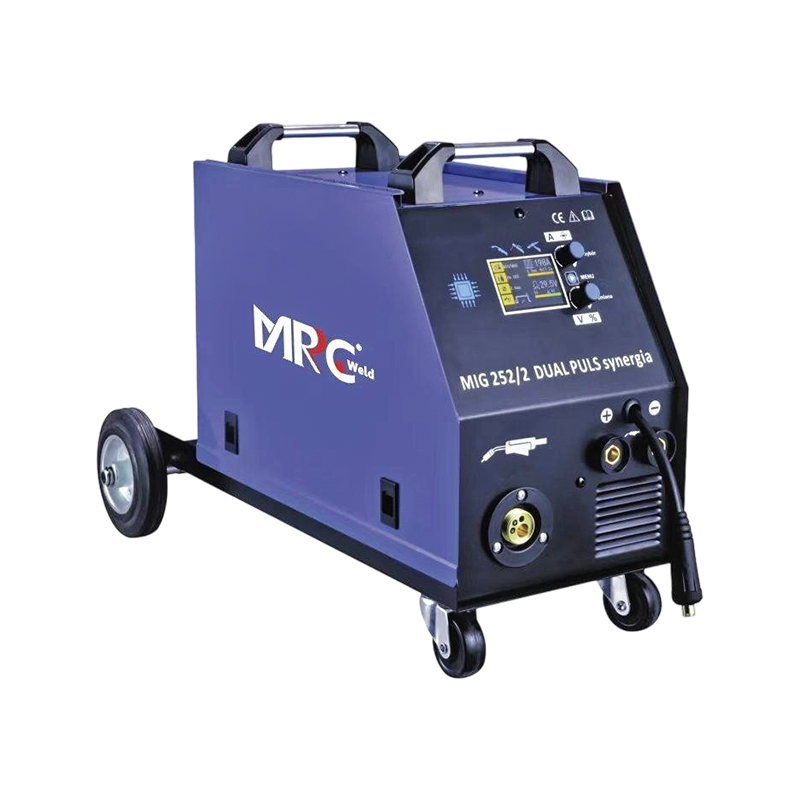 Wholesale A INVERTER WELDING MACHINE MIG-250DP (LCD) DOUBLE PULSE WELDER ManufacTAIZHOU MIRACHER MACHINERY CO., LTD is China wholesale A INVERTER WELDING MACHINE MIG-250DP (LCD) DOUBLE PULSE WELDER Manufacturers and C...View Product →
For production facilities and multi-workstation lines, the MIG300DP and MIG350DP multistation welders provide dual voltage operation and collaborative control for continuous shop-floor use. These models are aimed at companies where several welders work on the same type of joint and consistency is a contract requirement.
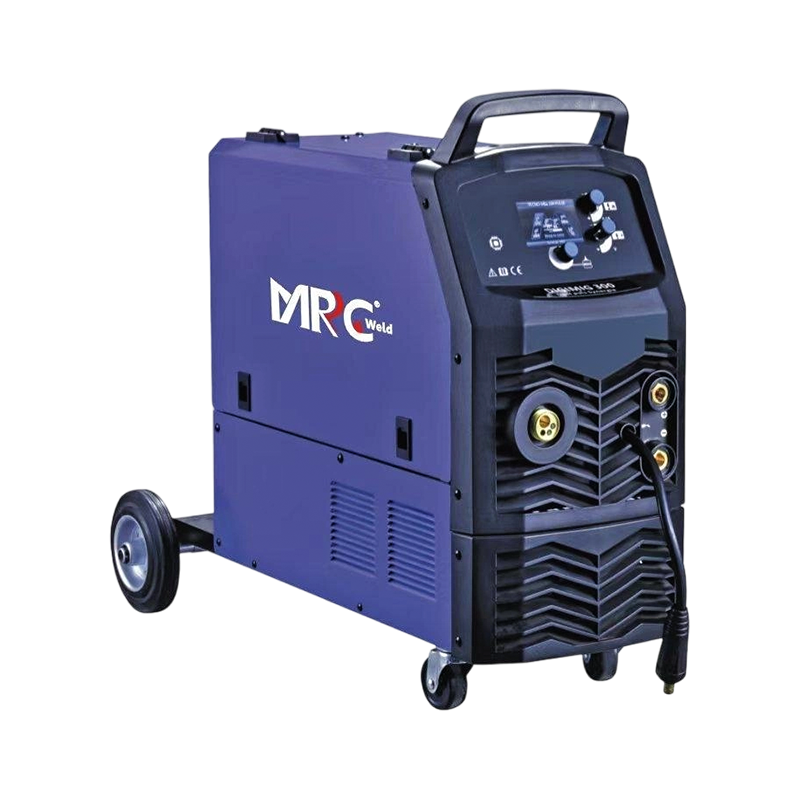 Wholesale MIG-300DP/350DP MULTI-STATION WELDING MACHINE (LED/LCD) DUAL-VOLTAGE TAIZHOU MIRACHER MACHINERY CO., LTD is China wholesale MIG-300DP/350DP MULTI-STATION WELDING MACHINE (LED/LCD) DUAL-VOLTAGE COLLABORATIV...View Product →
Double pulse MIG is not a magic upgrade for every welding task. It is a specific tool for specific conditions: aluminum and thin material, visible beads that must look uniform, and production work where repeatability reduces finishing cost. When those conditions are present, the feature pays for itself in fewer distorted parts, less grinding and fewer rejected welds.
Match the machine size to your workload. A 200 A class unit suits small shops and occasional aluminum work. A 250 A machine is often enough for most custom fabrication. A 300 A or 350 A unit belongs in a production environment with continuous operation. Use the specification checks above, test the machine on your own material, and confirm the voltage configuration for your market before you commit.
1. How Does an MMA Welding Machine Work? Explanation of the basic operation and princi...
View MoreI. Introduction Welding is a fundamental process in countless industries, joining metals ...
View MoreI. Introduction: The key guardian of car energy In the complex system of the car, the Car...
View MoreWhat is car battery charger fully Car battery charger fully is a device specially used to...
View More
Copyright © TAIZHOU MIRACHER MACHINERY CO., LTD. All Rights Reserved Custom Industrial Welding Equipment Manufacturers



 English
  Português
 sale@miracher.com
 0086-15988994409