Content
An inverter welding machine rectifies mains AC to DC, switches it at 20 kHz to 100 kHz through IGBT modules, and steps the voltage down with a transformer a fraction of the size of a 50/60 Hz unit. That single change drives almost every practical difference users notice: weight, arc stability, current precision and the load the machine puts on the supply.
An inverter welding machine is a welder whose power supply converts incoming AC to DC, chops that DC at high frequency with power semiconductors, and transforms it down to welding voltage. Because transformer core size falls as switching frequency rises, a 200 A inverter unit can weigh under 5 kg where a mains-frequency machine of identical output weighs 28 to 34 kg.
Weight is what buyers see first; arc control is what they feel. The control loop samples and corrects output thousands of times per second, so current can be set in 1 A steps and hot start, arc force and anti-stick can be tuned to the electrode in use. Typical inverter efficiency sits at 85 to 90 percent with a power factor near 0.9, against 55 to 65 percent and a power factor of 0.6 to 0.7 for transformer machines.
The trade-off is exposure. Semiconductors fail faster than copper windings when dust, humidity or unstable generator power is in the picture. Look for at least IP21S protection, a serviceable fan filter and a supplier that stocks control boards, because a machine that cannot be repaired in three weeks is scrap whatever its warranty paper says.
Duty cycle is the share of a ten-minute window a machine can weld at a stated current and ambient temperature, so a 60 percent rating at 200 A gives six minutes of arc and four minutes of cooling. The ambient behind that figure matters as much as the percentage itself, and it is the detail spec sheets usually leave out.
A rating taken at 25 C describes a different machine from one taken at 40 C. A welder rated 60 percent at 200 A and 25 C typically performs at 35 to 40 percent at 200 A in 40 C air, which is an ordinary summer workshop. IEC 60974-1 duty cycles are normally referenced to 40 C, so when the ambient is missing from a datasheet, ask for it in writing before ordering.
Duty cycle scales with current because heat rises with the square of it. A 200 A machine rated at 60 percent therefore reaches full 100 percent duty near 145 A, which is why buyers running continuous production should size the machine on the continuous figure rather than the peak.
| Machine class | Rated output | Duty cycle | Weight | Max input draw | Best fit |
| MMA 160 to 200 A mini inverter | 160 A | 60% at 160 A | 3.5 to 4.5 kg | 4.5 kVA | Repair work, 2.5 to 3.2 mm electrodes |
| MMA 200 to 250 A IGBT | 250 A | 60% at 200 A | 5 to 7 kg | 6.5 kVA | Structural steel, 4.0 mm electrodes |
| MIG 200 A synergic | 200 A | 60% at 200 A | 8 to 10 kg | 7.0 kVA | 0.8 to 1.0 mm wire, body panels |
| MIG 250 A double pulse | 250 A | 60% at 250 A | 12 to 14 kg | 9.5 kVA | 3 to 5 mm aluminium and stainless |
| TIG 200 A DC pulse | 200 A | 60% at 200 A | 8 to 9 kg | 6.0 kVA | 0.5 to 3 mm stainless and tube |
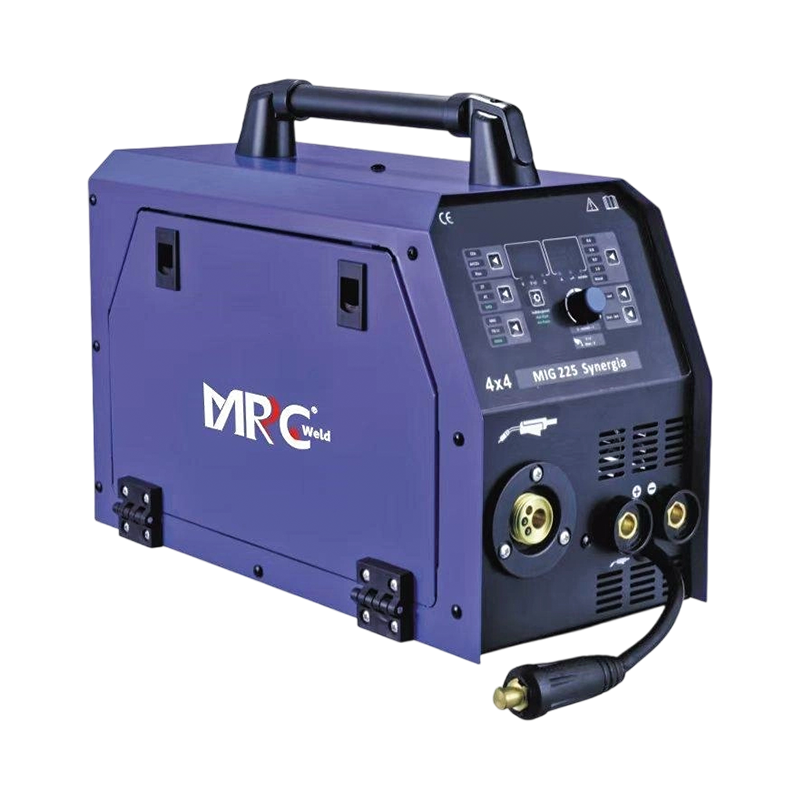 MIG-200SYN (LED/LCD) SYNERGIC MIG WELDER WITH AUTO-FEED LIGHTWEIGHT PORTABLE WELDING SYSTE● Digital display and knob, adjust parameters intuitive and convenient. ● The integrated SYNERGIC parameter optimization system ensures intuitive operation and streaml...View Product →
Process choice comes first. A 200 A output behaves very differently in MMA, MIG/MAG, TIG and plasma work, and the gas, wire and consumables that follow from that choice cost more over a year than the power source itself.
| Process | Consumable | Thickness | Shielding | Practical notes |
| MMA (SMAW) | 2.5 to 4.0 mm covered electrodes | 2 to 12 mm steel | Flux coating, no gas | Best outdoors and in wind, struggles below 1.5 mm sheet |
| MIG/MAG (GMAW) | 0.8 to 1.2 mm solid or flux-cored wire | 0.8 to 8 mm | CO2 or Ar/CO2 mix, none in gasless mode | Fastest deposition, needs clean metal and steady feed |
| TIG (GTAW) | 1.6 to 3.2 mm tungsten | 0.5 to 5 mm | Argon | Highest finish quality, slowest travel speed |
| Plasma cutting | Air and torch consumables | 14 to 35 mm | Compressed air | Cutting rather than joining, 40 A class handles about 14 mm |
Electrode diameter sets the current in MMA work: 2.5 mm rods run at 70 to 90 A, 3.2 mm at 100 to 130 A and 4.0 mm at 140 to 180 A. A 160 A inverter covers most site repair, while 250 A lets a crew run 4.0 mm electrodes without sitting at the thermal limit. Our notes on MMA manual metal arc welding machines cover electrode selection and setup in more detail.
TIG is slower and less tolerant of dust, and it stays the only sensible choice for stainless below 3 mm and tube joints that will be inspected. A 160 to 200 A DC unit with high-frequency ignition and pulse control covers most of that work, while TIG160P/200P pulse DC/AC units add AC output for aluminium.
MIG wins on deposition rate and on thin sheet. Synergic control sets voltage and wire speed from one dial for a given wire and gas, which shortens the learning curve and cuts rework on body panels. Where no gas cylinder is practical, gasless flux-cored wire in a 1 kg spool keeps a 120 A machine light enough to carry up a ladder.
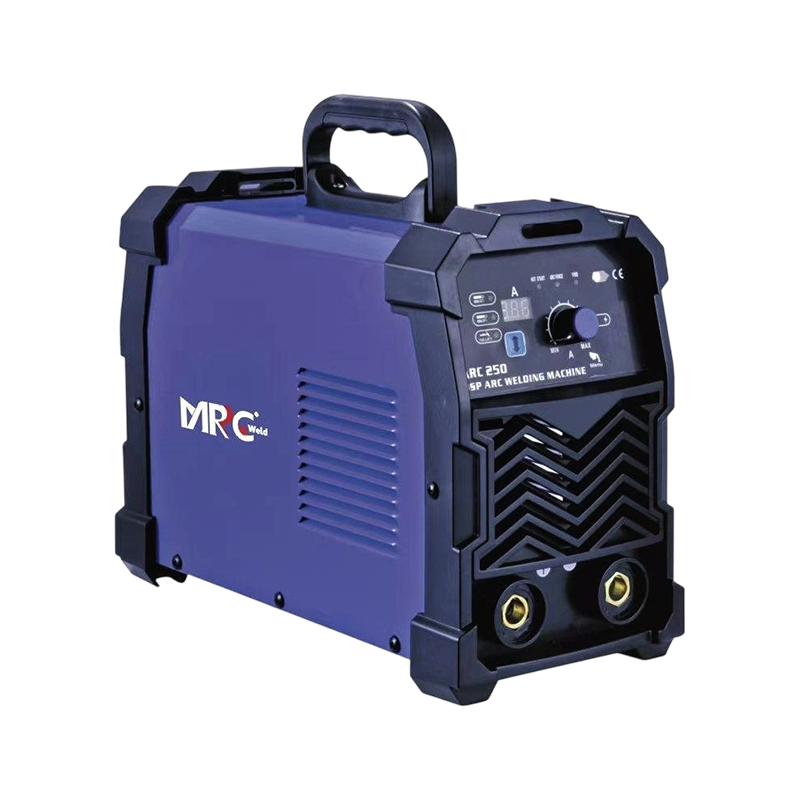 MMA-160/200/250 IGBTINNOVATIVE INVERTER WELDING MACHINE ENERGY-SAVING ANTI-STICK WELDING M● Instant arc ignition with 150% initial current boost for cold metal starts. ● Adopt IGBT inverter technology, stable output current, in line with international safet...View Product →
Buy for the lowest voltage you will weld on, because output at 110 to 120 V is typically 40 to 50 percent lower than at 220 to 240 V on the same machine.
Dual voltage inverter welding machines switch ranges automatically, but the current limit is set by physics rather than marketing copy. A 200 A unit on 120 V usually tops out near 120 to 140 A, and both its duty cycle and its breaker requirement change with the supply.
Six checks separate a machine that is still working after three seasons from one that comes back in a crate.
Aluminium and stainless above 3 mm push the requirement toward pulse control. Double pulse output alternates the waveform to control heat input, which reduces distortion and spatter on 3 to 5 mm aluminium and makes the difference between a usable bead and a hole on thin sheet.
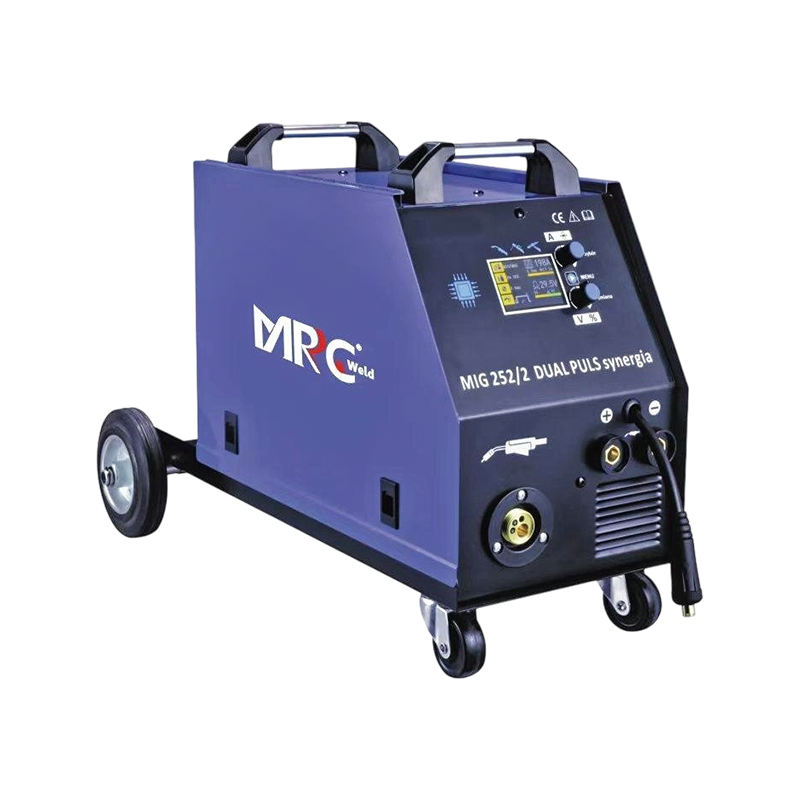 A INVERTER WELDING MACHINE MIG-250DP (LCD) DOUBLE PULSE WELDER● Microprocessor-controlled multi-process welder. ● Built-in synergy programmes. ● Adjustable gas outflow time. ● Adjustable pulse rate.View Product →
A 3.2 mm electrode at 100 to 130 A makes a sound root pass on 5 mm steel, so a 160 A machine covers it, and a 200 A unit lets you step up to 4.0 mm electrodes at 140 to 180 A for faster fill. With MIG, plan on 160 to 200 A with 1.0 mm wire.
Yes, when the generator is sized against maximum input draw rather than welding output. A 200 A machine drawing 6.5 kVA needs 10 to 13 kVA of generator capacity, with eco and idle-down modes switched off so the alternator holds voltage under load.
Cellulosic 6010 rods need high open-circuit voltage and a strong arc force response. Budget machines often cap open-circuit voltage near 60 to 70 V, which suits 7018 and rutile rods but makes 6010 hard to start and quick to stick.
For 3 to 5 mm aluminium and thin stainless, yes. Pulse control lowers average heat input, which cuts distortion and allows thinner material without burn-through. If your work stays below 3 mm in steel, a standard synergic machine does the same job for less.
1. How Does an MMA Welding Machine Work? Explanation of the basic operation and princi...
View MoreI. Introduction Welding is a fundamental process in countless industries, joining metals ...
View MoreI. Introduction: The key guardian of car energy In the complex system of the car, the Car...
View MoreWhat is car battery charger fully Car battery charger fully is a device specially used to...
View More
Copyright © TAIZHOU MIRACHER MACHINERY CO., LTD. All Rights Reserved Custom Industrial Welding Equipment Manufacturers


 English
 Português

 sale@miracher.com
 0086-15988994409