Content
A three-in-one welding machine looks like the strongest line on a sourcing sheet: one unit, three processes, one invoice, one spare-parts bin. The honest version matches what experienced buyers report on welding forums - a 3 in 1 machine is closer to two and a half in one. MIG and MMA arrive at full strength. TIG arrives with a caveat attached. For an importer stacking a container or a workshop replacing three tired units, knowing which caveat applies is the difference between a good purchase and a pallet of returns.
A 3 in 1 welding machine combines three welding circuits inside one inverter power source: MIG/MAG with a wire feeder, MMA stick welding, and DC TIG.
Fitting all of that into one housing is the trade-off. A shared output stage means a lighter, cheaper unit with less internal wiring, but it also means the three processes share one thermal budget and one duty-cycle ceiling.
None of this shows up in a headline specification. It shows up in the second month of ownership, when a customer discovers that the third process does not do what they assumed it would.
A 3 in 1 welding machine wins on mobile repair work, mixed-process job shops and distributor catalogue economics, and loses on continuous high-current production welding.
What it wins is logistics, not arc quality. A repair technician working from a service van does not want three machines, three mains leads and three consumable sets. One unit, one lead and one spares box covers a full day of mixed work. A distributor gets the same effect one level up: a single SKU to stock, a single set of accessories to hold, and a single technical query to answer on the phone.
The process that carries the most engineering weight is MIG, and it also carries the widest current span in the product line.
Look at how a welding range is normally arranged and the pattern is obvious. MIG models run from a 120 A lightweight unit up to 300 A and 350 A synergic and double-pulse machines. MMA sits between 120 A and 250 A. TIG occupies the narrowest band, 160 A to 200 A. A three-in-one built on the same logic puts its real capability in the MIG slot and treats TIG as an addition rather than a headline.
Four parameters decide whether the machine is genuinely useful after it arrives: input voltage, duty-cycle rating, wire spool capacity and TIG starting method.
| Specification | Why it decides the outcome | What to look for |
| Input voltage | A dual-voltage machine covers both a 110 V site supply and a 220 V workshop supply with the same unit | Single-phase 220 V, or 110/220 V dual voltage |
| Duty cycle | Sets how long the machine welds before it must cool, and shared output stages lose headroom first | A rating stated with its ambient temperature |
| Wire spool capacity | 1 kg spools suit repair and light domestic work; 5 kg spools sustain a working day | 1 kg for domestic, 5 kg for industrial use |
| TIG starting method | High-frequency starting means no contact with the workpiece; lift and scratch starting require it every time | High-frequency ignition if TIG is a primary process |
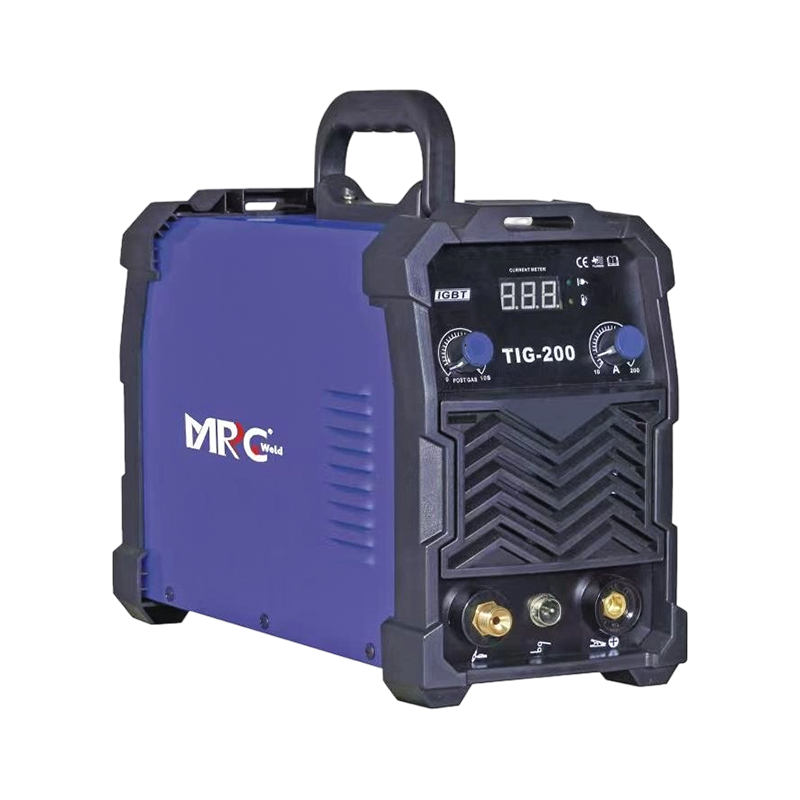 TIG/MMA-160/200 PORTABLE DC WELDING MACHINE WITH AN AUTOMATIC HIGH-FREQUENCY IGNITION● This multi-functional welding equipment features high-precision TIG welding and versatile MMA welding capabilities. ● It supports dual-mode welding, suitable for a c...View Product →
On a three-in-one machine, TIG is almost always DC, contact-starting and aluminium-free, so plan it as thin-steel DC TIG and treat everything else as a bonus.
That split is fine for one type of buyer and disqualifying for another. Sheet metal, exhaust and pipe work, where TIG is used for capping and thin-wall welds, never touches the missing features. Anyone welding aluminium weekly, or needing non-contact arc starting on a finished surface, should budget for a separate AC/DC TIG unit rather than expecting the third process to cover it.
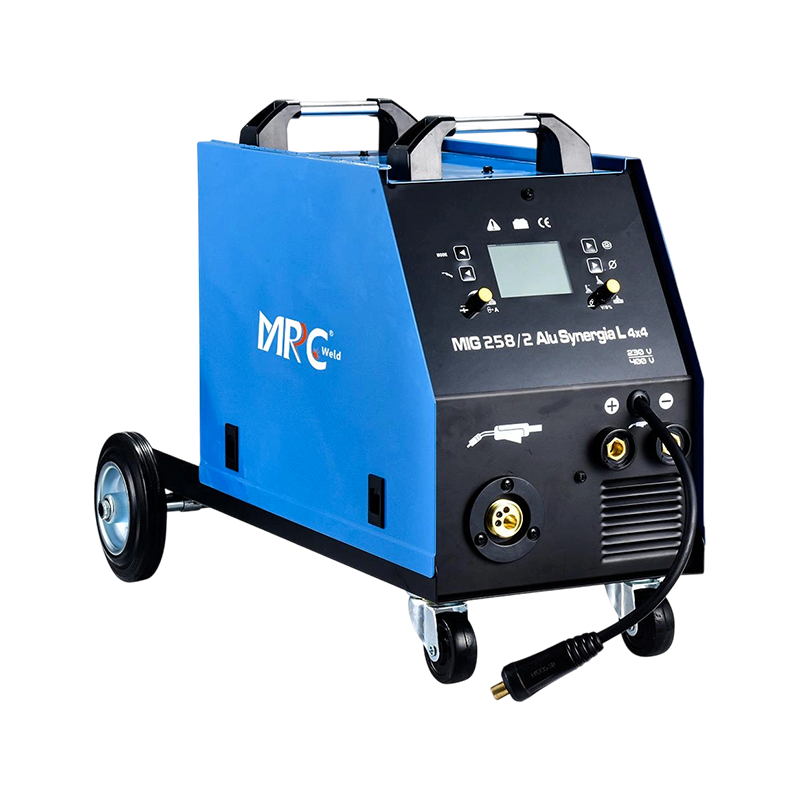 MIG-250SYN INTELLIGENT ADAPTIVE WELDING SYSTEM ALL-SCENE DIGITAL WELDER● 32-bit MCU+IGBT high-frequency inverter architecture. ● Arc Fault Detection (AFCI). ● Dynamic compensation of ±10% process deviation. ● 300mm wire spool capacity (15...View Product →
Confirm four things in order before the order is placed: the input voltage and plug type of the destination market, the accessory list included in the carton, spare-parts availability, and the duty-cycle figure written into the contract.
Distributors who already sell MIG/MAG welding machines and TIG welding machines mostly position a three-in-one as an entry-level SKU rather than a replacement for either line. That is the realistic role, and it is a profitable one when the specification is honest.
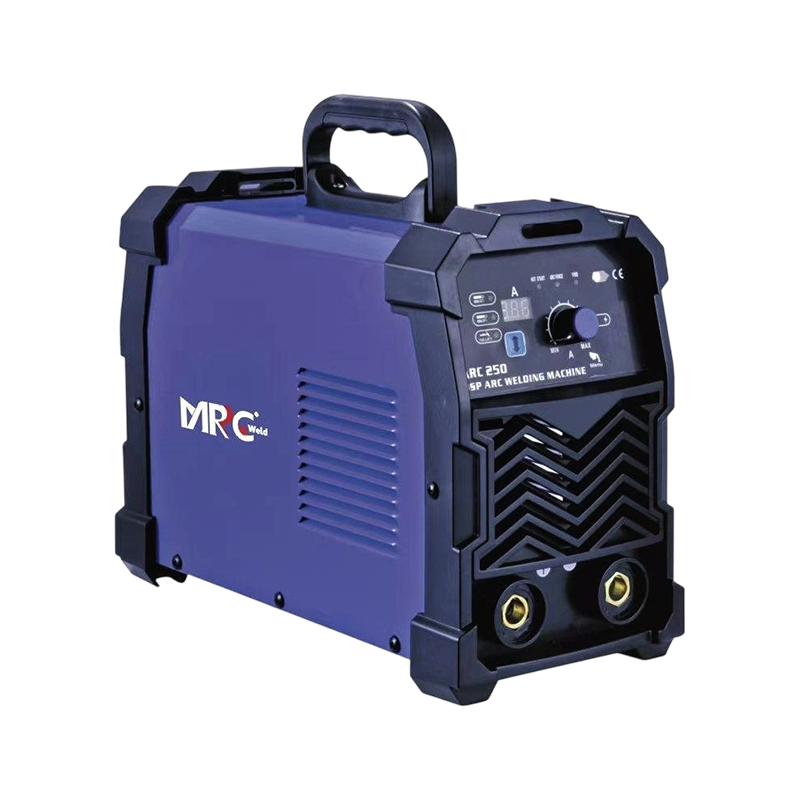 MMA-160/200/250 IGBTINNOVATIVE INVERTER WELDING MACHINE ENERGY-SAVING ANTI-STICK WELDING M● Instant arc ignition with 150% initial current boost for cold metal starts. ● Adopt IGBT inverter technology, stable output current, in line with international safet...View Product →
The reliable way to read a 3 in 1 welding machine is as a MIG unit plus a dependable stick mode, with a working TIG function attached. Measured against that description the promise holds up: one machine, one consumable line, and one purchase order covering the great majority of what a repair workshop actually does.
Usually not. Aluminium needs AC TIG output to break through the surface oxide layer, and TIG modes on three-in-one units are almost always DC. Aluminium work belongs on a MIG machine with double pulse or on a dedicated AC/DC TIG unit.
For mobile repair and small workshops, yes, because the reduction in equipment count outweighs the lost thermal headroom. For continuous high-current production the answer flips: three separate units run cooler, and a failure takes down one process instead of all three.
Either 0.8 mm or 1.0 mm flux-cored wire for gasless welding, or 0.6 mm to 1.0 mm solid wire with shielding gas, depending on the spool size the machine accepts. A 1 kg spool suits intermittent repair work, while a 5 kg spool is the practical choice for daily operation.
Start from the destination grid. Single-phase 220 V covers most workshops, while dual 110/220 V models handle both site power and domestic sockets and are the safer stock item for a distributor. Either way, ask what the actual output current is at each input voltage, because low-cost machines often derate on the lower supply.
1. How Does an MMA Welding Machine Work? Explanation of the basic operation and princi...
View MoreI. Introduction Welding is a fundamental process in countless industries, joining metals ...
View MoreI. Introduction: The key guardian of car energy In the complex system of the car, the Car...
View MoreWhat is car battery charger fully Car battery charger fully is a device specially used to...
View More
Copyright © TAIZHOU MIRACHER MACHINERY CO., LTD. All Rights Reserved Custom Industrial Welding Equipment Manufacturers


 English
 Português

 sale@miracher.com
 0086-15988994409