Content
In the evolving landscape of industrial fabrication, achieving consistent, high-quality welds with optimal efficiency is paramount. At the heart of this pursuit lies advanced welding technology, with the Synergic MIG Welding Machine standing out as a transformative solution. This guide delves deep into the principles, advantages, and practical applications of synergic MIG welding, providing valuable insights for professionals seeking to enhance their welding operations. As a dedicated manufacturer, TAIZHOU MIRACHER MACHINERY CO., LTD. leverages its expertise in R&D and production within China's key manufacturing hub of Taizhou, Zhejiang, to engineer welding equipment that embodies this sophisticated technology, delivering cost-effective performance for global industrial applications.
Synergic MIG welding, also known as synergic pulse MIG, represents a significant leap forward from conventional MIG/MAG processes. It utilizes a microprocessor-controlled power source that pre-programs the optimal relationship between key welding parameters—primarily wire feed speed (WFS) and voltage. When the operator sets one primary parameter, typically the WFS or the desired amperage, the machine automatically adjusts all other variables (voltage, pulse frequency, pulse width) to maintain a stable arc and ideal droplet transfer. This intelligent coordination simplifies operation and ensures repeatable results, making it a cornerstone of modern, efficient welding workflows.
The technology operates on pre-set synergic lines stored in the machine's memory. Each line is tailored for a specific combination of:
This automated synchronization reduces the need for manual fine-tuning, which is a common challenge with standard MIG machines.
Transitioning to a synergic MIG system offers multifaceted benefits that directly impact productivity, quality, and operational cost.
Selecting a machine requires careful consideration of specific features. Below is a detailed comparison to guide your decision. For instance, when evaluating a portable synergic MIG welder for aluminum, factors like weight, aluminum-specific synergic programs, and required amperage range become critical.
A key consideration is the machine's duty cycle at higher amperages. For example, a high duty cycle synergic MIG machine for fabrication shops must sustain prolonged welding without overheating, directly impacting project timelines and equipment longevity.
| Feature / Consideration | Standard MIG Welder | Advanced Synergic MIG Welder |
|---|---|---|
| Parameter Control | Manual, independent adjustment of voltage and WFS. | Single-knob (or digital) control with automatic parameter synchronization. |
| Arc Characteristic | Can be unstable at certain settings, leading to spatter. | Consistently stable, soft arc with minimal spatter across its range. |
| Material Versatility | Limited; requires extensive manual reprogramming for different materials. | High; features multiple pre-set synergic lines for steel, stainless, aluminum. |
| Ease of Use | Steeper learning curve, reliant on operator skill. | Simplified operation, reducing dependency on operator experience. |
| Optimal Use Case | Suitable for repetitive jobs on similar materials where parameters are fixed. | Ideal for job shops, fabrication with diverse materials, and critical quality applications. |
Furthermore, understanding the difference between synergic and pulse MIG welding is vital. While all synergic MIG is pulse-based, not all pulse MIG is synergic. Standard pulse MIG may still require manual tuning of pulse parameters, whereas synergic mode automates this entirely based on the selected program.
Synergic MIG welders excel in environments demanding quality, speed, and adaptability.
For such demanding fields, selecting a synergic MIG welding machine for thin stainless steel is crucial. The precise heat control prevents burn-through and preserves the corrosion-resistant properties of the stainless steel.
Successfully integrating this technology goes beyond purchasing a machine. It involves understanding your specific needs and partnering with a knowledgeable supplier. TAIZHOU MIRACHER MACHINERY CO., LTD., with its philosophy of "Quality Drives Efficiency," emphasizes this holistic approach. Our team supports clients from pre-sales consultation—helping identify the right machine specifications—through to installation guidance and after-sales support.
We recognize that industrial scenarios vary. Therefore, our product development includes support for customization, such as voltage adaptation or functional module adjustments, ensuring our Synergic MIG Welding Machines meet diverse market standards and specific project requirements.
Investing in the best synergic MIG welder under $2000 requires balancing budget with reliable performance from a trustworthy manufacturer committed to durability and support.
The primary benefit is simplified operation. Beginners can focus on technique (torch angle, travel speed) rather than complex parameter tuning. By setting the wire speed or material thickness, the machine handles the voltage and pulse characteristics, leading to better results faster and building operator confidence[1].
Yes, but it depends on the machine's pre-loaded programs. A high-quality synergic MIG welder will have distinct synergic lines for mild steel, stainless steel, and aluminum. Always ensure the machine you select has specific programs for the materials you intend to weld most frequently.
No, it is versatile across thicknesses. While exceptional for thin materials due to controlled heat input, synergic programs are also designed for thicker sections. The pulsed arc allows for good penetration and sidewall fusion on thicker joints, making it a capable all-around process.
Cost reduction occurs through several mechanisms: drastically less spatter waste (saving wire and gas), lower rework rates due to consistent quality, and reduced arc time from faster setup and higher travel speeds. These factors collectively improve the return on investment.
Key factors include: the number and relevance of pre-set synergic programs, duty cycle at your required amperage, digital interface clarity, reliability of the brand/manufacturer, available customization options (like voltage), and the comprehensiveness of after-sales service and technical support.
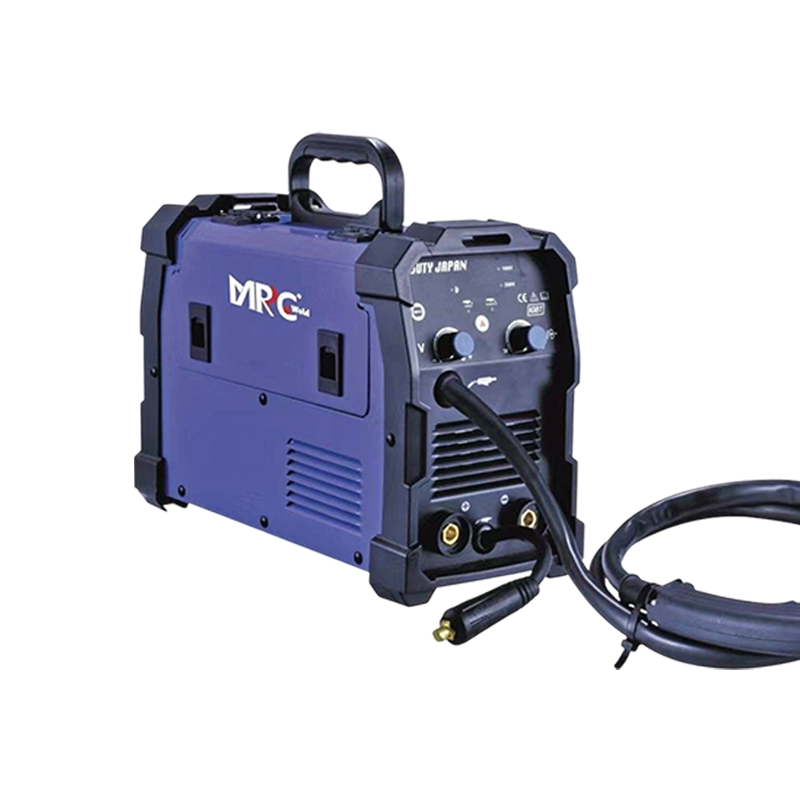
The Synergic MIG Welding Machine is more than just equipment; it is a strategic upgrade that enhances weld integrity, operational efficiency, and economic performance. By intelligently automating the complex interplay of welding parameters, it empowers businesses across automotive, fabrication, and general industry to achieve superior results. As technology advances, partnering with an innovative and service-oriented manufacturer like TAIZHOU MIRACHER MACHINERY CO., LTD. ensures access to tailored, reliable solutions that drive productivity and support the sustainable development of modern manufacturing.
[1] American Welding Society (AWS). *Welding Handbook, Volume 2: Welding Processes*. 9th ed., AWS, 2007. (This handbook provides foundational knowledge on various welding processes, including the principles of gas metal arc welding which underpin synergic MIG technology).
[2] Norrish, John. *Advanced Welding Processes*. Woodhead Publishing, 2006. (This text offers in-depth analysis of advanced processes like pulsed MIG/MAG welding, discussing the theory and benefits of controlled metal transfer that synergic systems utilize).
1. How Does an MMA Welding Machine Work? Explanation of the basic operation and princi...
View MoreI. Introduction Welding is a fundamental process in countless industries, joining metals ...
View MoreI. Introduction: The key guardian of car energy In the complex system of the car, the Car...
View MoreWhat is car battery charger fully Car battery charger fully is a device specially used to...
View More
Copyright © TAIZHOU MIRACHER MACHINERY CO., LTD. All Rights Reserved Custom Industrial Welding Equipment Manufacturers



 English
  Português
 sale@miracher.com
 0086-15988994409